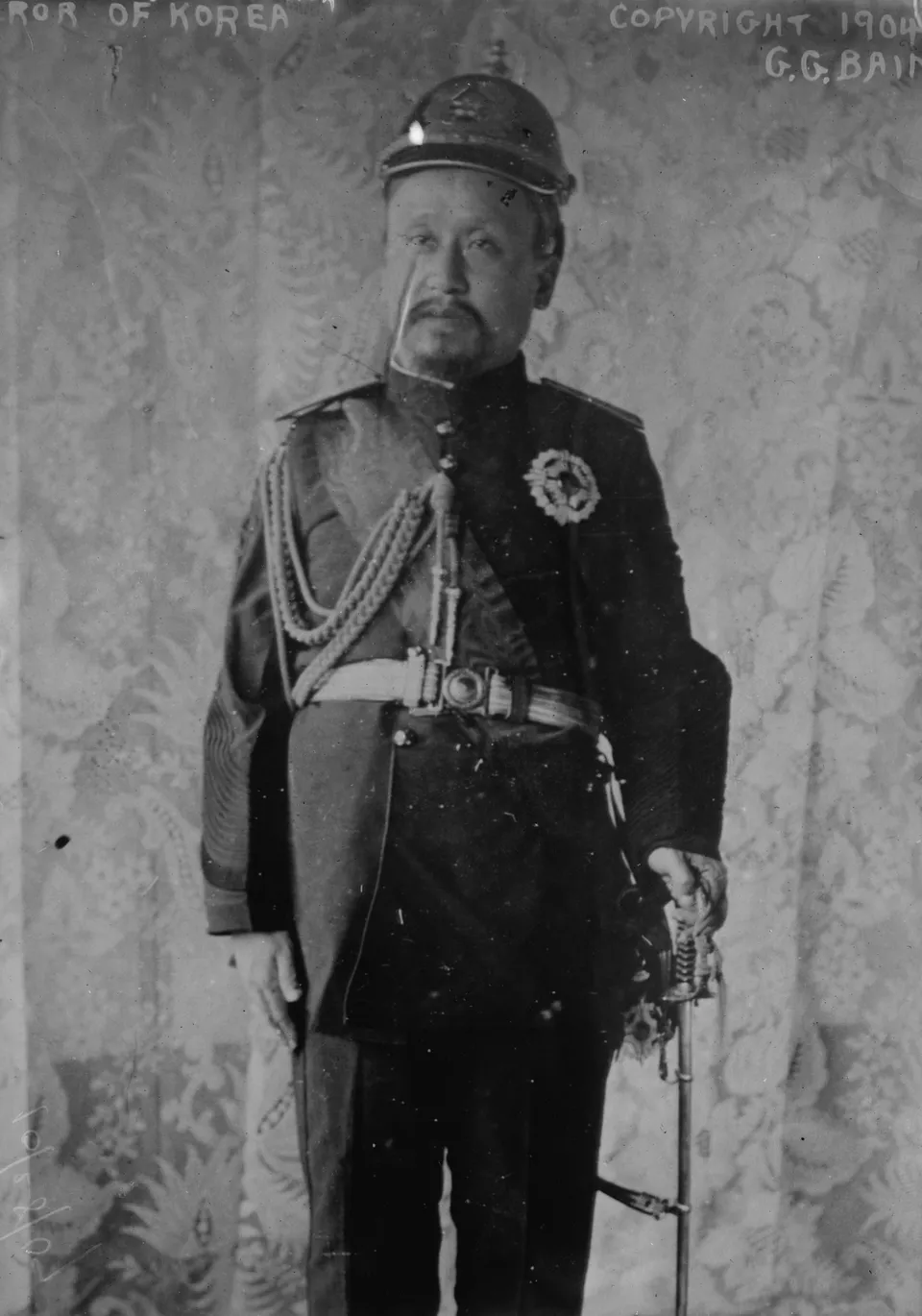
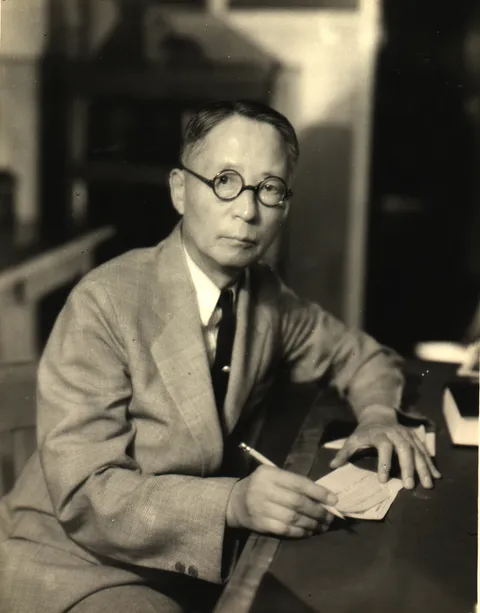
Photograph of Emperor Gojong

Bain News Service, publisher · Public domain · Source

Person1852 – 1919

Gojong

Twenty-sixth king of Joseon and first emperor of the Korean Empire

The Heungseon Daewongun's second son, he came to the throne at 12 in 1863. After taking personal rule in 1873 he opened the country with the Treaty of Ganghwa in 1876 and pursued reform through the Tongni Gimu Amun and the Byeolgigun. He lived through the Imo Incident, the Gapsin Coup, the Donghak Peasant Revolution, the Gabo Reform and the Eulmi Incident, and in 1896 moved to the Russian legation. Returning to Gyeongungung in 1897, he proclaimed the Korean Empire, pursued the Gwangmu Reform and promulgated the Daehan-guk gukje in 1899. Opposing the Eulsa Treaty of 1905, he sent secret emissaries to The Hague in 1907 and was forced to abdicate. His death in 1919 helped spark the March First Movement.

Where they went

OpenFreeMap © OpenMapTiles © OpenStreetMap contributors

41 related events

  1. 1

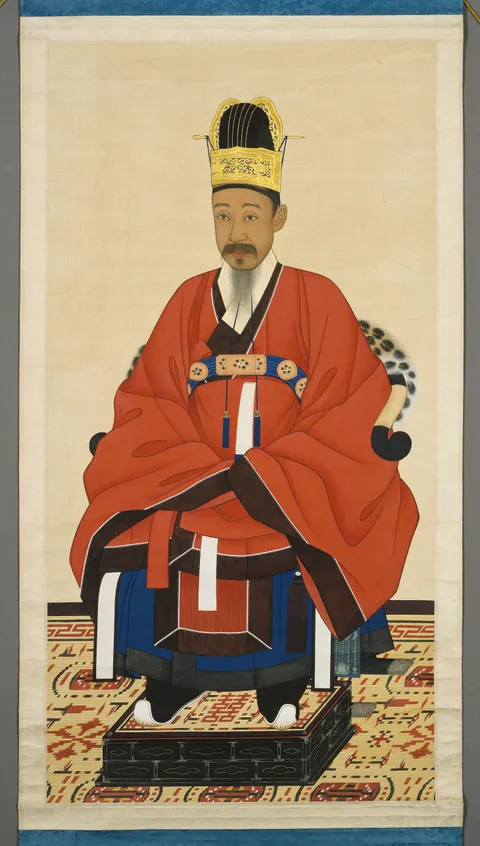
    When Gojong took the throne at twelve, his father the Daewongun seized power and attacked the abuses of in-law government, seeking to strengthen the crown and relieve the people.

  2. 2
    1865 – 1868Gyeongbokgung rebuiltmonarch

    The Daewongun rebuilt Gyeongbokgung, in ruins since 1592; the forced contributions and debased coins that paid for it caused wide resentment.

  3. 3

    To pay for rebuilding Gyeongbokgung, the Heungseon Daewongun issued the dangbaekjeon, a coin rated at 100 times the Sangpyeong Tongbo, setting off steep inflation.

  4. 4

    The Heungseon Daewongun levied the military cloth tax per household rather than per adult male, so yangban households also had to pay.

  5. 5

    The Japanese warship Un’yō approached Chojijin on Ganghwa, exchanged fire, and landed on Yeongjongdo to plunder; Japan used the clash to force the Treaty of Ganghwa.

  6. 6

    Joseon's first modern treaty, signed with Japan on 27 February 1876. It opened Busan and two other ports and contained unequal terms.

  7. 7

    The late Joseon painter Jang Seung-eop painted figures, animals, birds and flowers with bold brushwork. Grouped with Kim Hong-do and Sin Yun-bok as the “Three Won”, he bridged traditional and modern Korean painting.

  8. 8

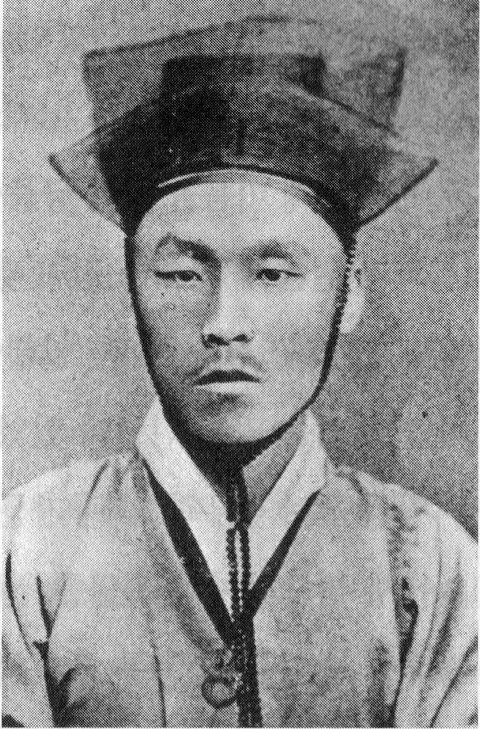
    As A Strategy for Korea circulated, more than ten thousand Yeongnam Confucian scholars led by Yi Man-son petitioned against the reforms and relations with America.

  9. 9

    The government set up the Office for Extraordinary State Affairs to manage reform (1880) and a new-style army, the Byeolgigun, trained by a Japanese officer (1881).

  10. 10

    With Japanese entering Ulleungdo to cut timber, the Joseon government sent Yi Gyu-won as inspector and then decided to resettle the island.

  11. 11
    1882Imo Incidentmonarch

    Old-style soldiers angry over unpaid wages rose up and attacked the Japanese legation. The Daewongun briefly returned to power until Qing troops seized him.

  12. 12

    The Joseon government set up the Jeonhwanguk mint and issued the dangojeon coin. The nickel coins later minted there in excess became the pretext for the 1905 currency reform.

  13. 13
    1884Gapsin Coupmonarch

    Kim Ok-gyun and other radical reformers staged a coup at the banquet opening the new post office; Qing troops intervened and it collapsed in three days.

  14. 14
    1885 – 1886Founding of Paichai and Ewha Schoolsrelated figure

    American Protestant missionaries founded Paichai Hakdang (1885, Appenzeller) and Ewha Hakdang (1886, Mary Scranton) in Jeong-dong, Seoul. Ewha was Korea’s first modern school for women.

  15. 15
    1886 – 1894Founding of Yugyeong Gongwonmonarch

    The government invited the American teachers Hulbert, Gilmore and Bunker and founded Yugyeong Gongwon, the first modern state school.

  16. Peasant armies led by Jeon Bong-jun rose against corrupt officials and foreign powers, triggering the First Sino-Japanese War.

  17. 16

    When the peasants took Jeonju, the government called in Qing troops and Japan sent its own. In return for reform and the withdrawal of both armies, the peasants made peace with the government and withdrew.

  18. 1894 – 1896Gabo Reformmonarch

    A deliberative council abolished the class system and the civil service exam and overhauled government; the cabinet of Kim Hong-jip led it under Japanese pressure.

  19. 17
    1894 – 1895First Sino-Japanese Warrelated figure

    Qing and Japan fought over Korea. Victorious at Pungdo, Seonghwan, Pyongyang and the Yellow Sea, Japan ended Qing suzerainty over Korea and took Taiwan in the Treaty of Shimonoseki.

  20. 18

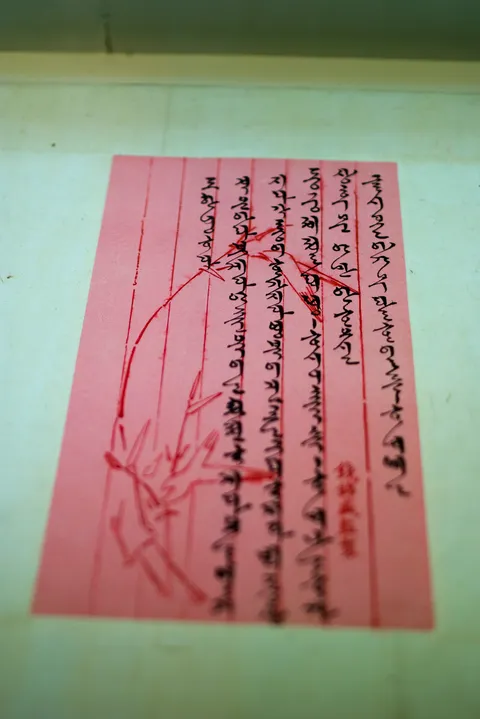
    Gojong went to the royal ancestral shrine and proclaimed the Fourteen Articles setting out the course of reform — the charter of the second Gabo Reform.

  21. 19
    1895 – 1896Eulmi Righteous Armiesrelated figure

    Enraged by the queen’s murder and the topknot decree, Confucian scholars such as Yu In-seok and Yi So-eung raised righteous armies; most disbanded after Gojong urged them to in 1896.

  22. 20
    1895 – 1896The 23 Bu and the 13 Provincesmonarch

    In the second Gabo Reform the eight provinces were abolished and the country divided into 23 bu; after the king’s flight to the Russian legation they were reorganized into 13 provinces, the basis of today’s provinces.

  23. 21

    Gojong proclaimed the Rescript on Building the Nation through Education, then founded the Hanseong Normal School and primary schools, laying down a modern school system.

  24. 22

    On 8 October 1895 Japanese agents and soldiers sent by Minister Miura Gorō broke into Geoncheonggung in Gyeongbokgung and assassinated Empress Myeongseong.

  25. 23

    The Kim Hong-jip cabinet installed after the queen’s assassination adopted the solar calendar, the era name Geonyang, smallpox vaccination and primary schools — and ordered men to cut off their topknots.

  26. 24

    Gojong slipped out of Gyeongbokgung with the crown prince and moved into the Russian legation, where he stayed a year and formed a pro-Russian cabinet.

  27. 1896 – 1898Independence Clubmonarch

    Seo Jae-pil founded the Independence Club with officials and intellectuals; it raised the Independence Gate and held mass assemblies calling for national sovereignty, civil rights and self-strengthening reform.

  28. 25
    1897 – 1904Gwangmu Reformleader

    On the principle of "old ways as the root, new ways for reference", the Korean Empire strengthened the emperor’s power and pressed land surveys and title deeds, industry and modern infrastructure.

  29. 26

    Back at Gyeongungung, Gojong ascended as emperor at the Hwangudan altar, renaming the country the Korean Empire with the era name Gwangmu.

  30. 27

    The Korean Empire set up a land survey office to survey land nationwide and issued jigye, modern certificates of land ownership.

  31. 28

    Ministers and citizens met together at Jongno and adopted the Six Articles. Gojong accepted them and reorganized the Privy Council, but the Independence Club was soon dissolved.

  32. 29

    The Korean Empire issued a nine-article basic law declaring it an independent empire and an autocracy in which the emperor held unlimited power.

  33. 30
    1900 – 1910Seokjojeon Hall, Deoksugungrelated figure

    A Western-style stone building raised in Gyeongungung (Deoksugung) under the Korean Empire — a neoclassical hall begun in 1900 and finished in 1910.

  34. 31

    The Korean Empire raised Ulleungdo to Uldo County and declared in its official gazette that the county governed all of Ulleungdo, Jukdo and Seokdo (Dokdo).

  35. 32
    1904 – 1905Russo-Japanese Warrelated figure

    Japan and Russia fought over Korea and Manchuria. Victorious Japan won recognition of its exclusive control over Korea in the Treaty of Portsmouth.

  36. 33

    Having started the war with Russia and occupied Seoul, Japan forced a protocol on Korea that let it take over any Korean land it needed for the war.

  37. 34
    1905Eulsa Treatymonarch

    On 17 November 1905, with troops surrounding Gyeongungung, Itō Hirobumi forced a treaty stripping the Korean Empire of its diplomatic rights; a Japanese Residency-General was set up and soon meddled in domestic affairs too.

  38. 35

    Gojong sent Yi Sang-seol, Yi Jun and Yi Wi-jong to the Second Hague Peace Conference to declare the 1905 treaty void; Japanese obstruction and the indifference of the powers kept them out of the hall.

  39. 36

    Using the Hague mission as a pretext, Japan and pro-Japanese ministers forced Gojong to give up the throne to Sunjong, who took the era name Yunghui.

  40. 37

    On a secret edict from Gojong, Im Byeong-chan organized former righteous-army figures into the Dongnip Uigunbu, aiming to restore the monarchy.

  41. 38

    The 33 national representatives proclaimed independence at Taehwagwan while students and citizens read the declaration in Tapgol Park and began demonstrating. The protests spread from the cities to the countryside and abroad.

Related works

  • TV episode: Naked Korean History Episode 52: How Did Heungseon Daewongun Make His Second Son Gojong King?TV episode · 2023 · Hong Mun-gi · tvN STORY

People who appear alongside

  • Heungseon Daewongun1820 – 1898

    Gojong's father and regent, who rebuilt Gyeongbokgung and rejected Western trade

  • Kim Hong-jip1842 – 1896

    Prime minister who led the Gabo Reform; killed by a crowd after the king fled to the Russian legation

  • Kim Ok-gyun1851 – 1894

    Radical reformer who led the 1884 coup, fled to Japan and was assassinated in Shanghai

  • Park Yeong-hyo1861 – 1939

    Radical reformer and son-in-law of King Cheoljong who led the Gapsin Coup with Kim Ok-gyun and headed a coalition cabinet with Kim Hong-jip in the second Gabo Reform

  • Homer B. Hulbert1863 – 1949

    American teacher at Yugyeong Gongwon who wrote the Hangeul geography "Samin pilji" and, as Gojong’s secret envoy, protested the Eulsa Treaty and aided the Hague emissaries

  • Choe Ik-hyeon1833 – 1907

    Confucian loyalist whose memorials toppled the Daewongun and opposed opening to Japan; raised a righteous army in 1906 and died in captivity on Tsushima

  • Empress Myeongseong1851 – 1895

    Gojong's queen, who resisted Japanese influence and was assassinated in Gyeongbokgung

  • Seo Jae-pil (Philip Jaisohn)1864 – 1951

    Joined the 1884 coup, lived in exile in the US, then returned to found The Independent

Themes this person appears in

  • Changes in the Land SystemAD 687 – 1950

    From nogeup to the end of office land — how the rights granted to officials shrank, and gave way to modern land ownership

  • Changes in TaxationAD 755 – 1894

    From land tax, tribute and labour to cash taxes in the Gabo Reform — burdens shifting from people and households to land

  • History of Korean CurrencyAD 996 – 1905

    From Geonwon Jungbo to the 1905 currency reform — how coins took hold in an economy of rice and cloth, and how monetary sovereignty was lost

  • Central Government Through the AgesAD 250 – 1899

    From the noble councils of the Three Kingdoms to the State Council, the Border Defense Council and the Gabo cabinet — how central government shifted between aristocratic consensus and royal power

  • Local Administration Through the AgesAD 250 – 1896

    From the five regions of the Three Kingdoms through nine provinces, the five circuits and two frontiers and the eight provinces to the thirteen — how directly the centre came to rule the regions

  • Military Systems Through the AgesAD 685 – 1907

    From the Nine Oath Banners to the Two Armies and Six Guards, the Five Commands and garrison system, the Five Army Camps and the Board of Marshals — armies rebuilt at every crisis

  • Educational Institutions Through the AgesAD 372 – 1943

    From the Taehak and Gukhak to the Gukjagam and Seonggyungwan, modern schools and the colonial education ordinances — state schools that trained officials and the private schools that filled the gaps

  • The Opening of East Asia1839 – 1901

    From the Opium War to the Boxer Protocol — sixty years in which China, Japan and Korea, forced open by Western gunboats, each tried to reform and went separate ways

  • Imperialism and the Partition of the World1839 – 1914

    From the Tanzimat to Sarajevo — seventy-five years in which the powers carved up West Asia, India, Southeast Asia, Africa and the Pacific, and the peoples there answered with reform and resistance

  • Changes in Architecture1200 – 1910

    From Geungnakjeon at Bongjeongsa to Seokjojeon at Deoksugung — Goryeo bracket styles, Joseon palaces, walls and multi-storey temple halls, and the Western buildings of the Korean Empire

  • The Course of Korean PaintingAD 450 – 1897

    From Goguryeo tomb murals to Jang Seung-eop — daily life and guardian deities, Goryeo Buddhist painting, early Joseon landscapes, true-view landscapes and genre painting, literati and folk painting

  • Pyongyang194 BC – 2007

    From Wanggeom-seong of Gojoseon to the inter-Korean summits — capital of Goguryeo, Western Capital of Goryeo, the great city on the Taedong

  • Seoul18 BC – 1988

    From Hanseong Baekje to the June Democratic Struggle — the Han River land every kingdom fought for, and Joseon’s capital for five centuries

  • Ganghwa Island1000 BC – 2011

    From dolmens to the Treaty of Ganghwa — Goryeo’s refuge capital and the stage of Korea’s opening, the island the kingdom fell back on in every crisis

  • ChungjuAD 450 – 1895

    From the Goguryeo stele to Tangeumdae — Jungwon, the middle of the Namhan River route that the Three Kingdoms fought over

  • Busan1443 – 1979

    Port of the Japan House and of the 1876 opening — Korea’s gateway to Japan, and wartime capital in the Korean War

  • JeonjuAD 685 – 1894

    From Wansanju, capital of Later Baekje, to the ancestral seat of the Joseon royal house — where the Annals were saved and the Donghak army took the fortress

  • Ulleungdo and DokdoAD 512 – 1905

    From Isabu’s conquest of Usan-guk to Imperial Decree No. 41 — two East Sea islands recorded as Korean throughout