Culture1865 – 1868

Gyeongbokgung rebuilt

The Daewongun rebuilt Gyeongbokgung, in ruins since 1592; the forced contributions and debased coins that paid for it caused wide resentment.
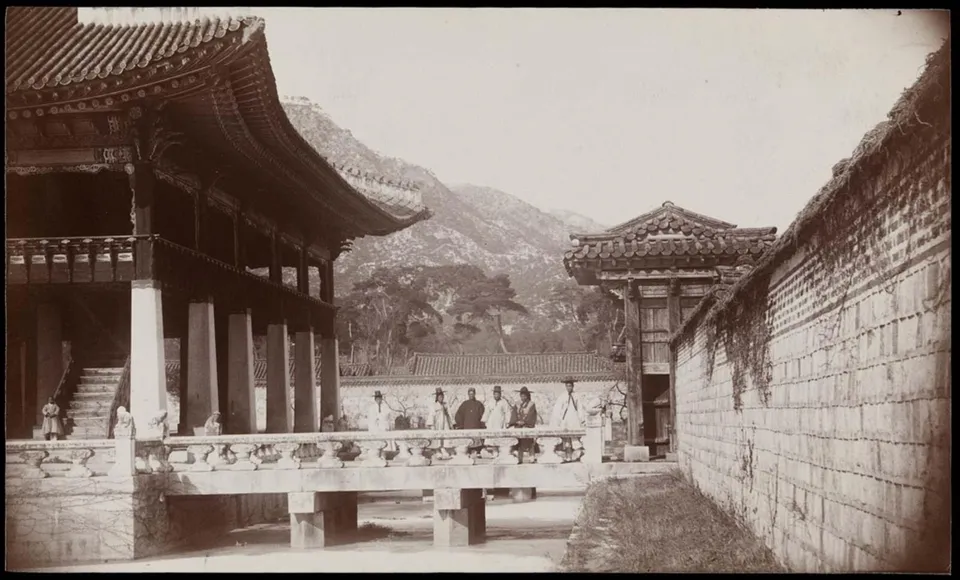
Gyeonghoeru in the rebuilt Gyeongbokgung — photographed by Percival Lowell, 1884

Percival Lowell · Public domain · Source

To restore royal prestige worn down by in-law clan rule, the Daewongun began rebuilding Gyeongbokgung in 1865. Commoners were conscripted for labour and even trees in yangban grave plots were felled for timber. He extracted nominally voluntary “contributions”, charged tolls at the capital gates and added a surtax on land.

The dangbaekjeon coin, issued at a face value of 100 regular coins but worth far less, set off soaring prices. Gojong moved into the new palace in 1868, but the resentment of yangban and commoners alike was one reason for the Daewongun’s fall.

The map in 1865

OpenFreeMap © OpenMapTiles © OpenStreetMap contributors

States and rulers at the time
Joseon — Gojong
Places
Gyeongbokgung

People

  • Heungseon Daewongun1820 – 1898

    leader · Gojong's father and regent, who rebuilt Gyeongbokgung and rejected Western trade

  • Gojong1852 – 1919

    monarch · Twenty-sixth king of Joseon and first emperor of the Korean Empire

Before and after

Themes that include this event

  • Changes in Architecture1200 – 1910

    From Geungnakjeon at Bongjeongsa to Seokjojeon at Deoksugung — Goryeo bracket styles, Joseon palaces, walls and multi-storey temple halls, and the Western buildings of the Korean Empire