Institutions over timeAD 250 – 189612 events

Local Administration Through the Ages

From the five regions of the Three Kingdoms through nine provinces, the five circuits and two frontiers and the eight provinces to the thirteen — how directly the centre came to rule the regions
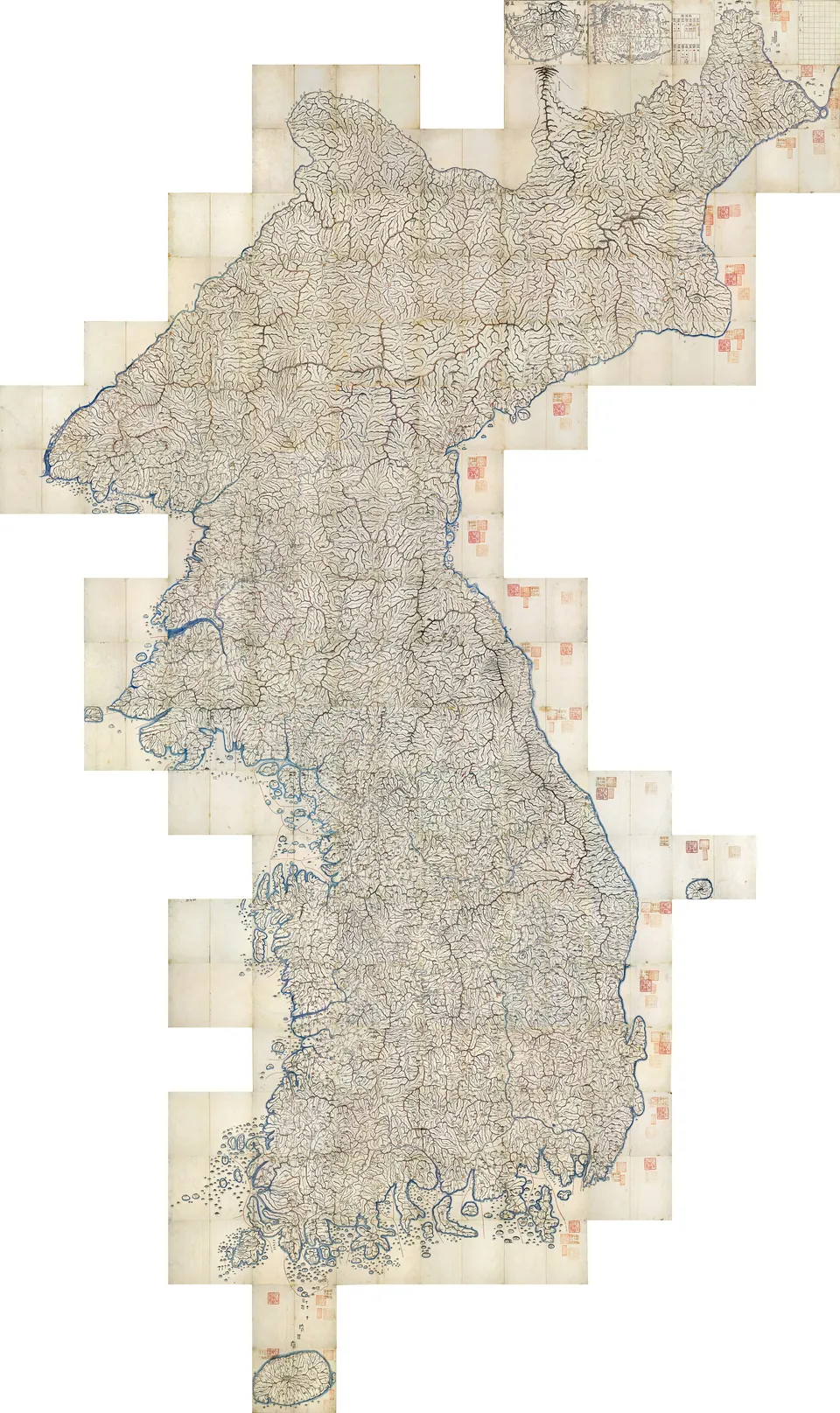
대동여지도(1861) — 김정호가 8도의 군현을 담아 펴낸 조선 지도

Kim Jeong-ho · Public domain · Source

At a glance

PeriodLocal systemKey points
GoguryeoFive capital wards; five regions (yoksal)Three capitals; governors command troops
Baekje, Ungjin period (King Muryeong)22 damnoRoyal kin sent to control the regions
Baekje, Sabi period (King Seong)Five capital wards; five bang (bangnyeong)22 central bureaus
Silla (King Jijeung –)Six capital wards; ju and gun (gunju)First gunju at Siljik; later five ju and sogyeong
Unified Silla (King Sinmun)Nine ju (dodok), five sogyeongInspectors (oesajeong); sangsuri hostage system
Balhae (King Seon)Five capitals, 15 bu, 62 juMalgal villages under native chiefs
Early Goryeo (Taejo)Sasimgwan and giin systemsWinning over and checking local magnates
Goryeo (Seongjong, 983)First governors sent to 12 mokLocal magnates made hyangni clerks
Goryeo (Hyeonjong –)Five circuits (anchalsa), two frontiers (byeongmasa), GyeonggiMore unsupervised counties; hyang, bugok, so
JoseonEight provinces (gwanchalsa); magistrates in every countyHyangni lowered; yuhyangso and gyeongjaeso
Second Gabo Reform (1895)23 bu; all counties made gunEight provinces abolished; local officials’ powers cut
After the Russian legation flight (1896)13 provincesFive provinces split north/south → basis of today’s provinces

The theme on the map

OpenFreeMap © OpenMapTiles © OpenStreetMap contributors

12 events in this theme

  1. The Three Kingdoms ranked their aristocrats by office grades and decided great matters in noble councils: the daedaero and the council of chiefs in Goguryeo, the chief jwapyeong and the Jeongsaam council in Baekje, and the sangdaedeung and the Hwabaek council in Silla.

  2. King Muryeong sent royal kin to govern the 22 damno districts and traded with the Liang dynasty, restoring Baekje’s strength.

  3. King Jijeung fixed the country’s name as Silla and the ruler’s title as wang (king), promoted ox ploughing and banned human sacrifice at burials.

  4. King Seong moved the capital to Sabi (Buyeo) on the Geum River plain and renamed the country Nambuyeo ("Southern Buyeo").

  5. King Sinmun divided the realm into nine provinces (ju) and set up five secondary capitals (sogyeong), completing the provincial system of unified Silla.

  6. King Seon subdued most of the Malgal and pushed into Liaodong, giving Balhae its greatest extent, and organized five capitals, 15 prefectures and 62 districts; Tang called Balhae the Flourishing Land in the East.

  7. Wang Geon both embraced and checked the regional lords, pursued a northward policy, and left his successors the Ten Injunctions before he died.

  8. Adopting Choe Seung-ro’s memorial, King Seongjong built the two-chancellery, six-ministry system, set up twelve provincial governorships and founded the National University.

  9. Under Hyeonjong the provinces were reorganized around four protectorates and eight governorships, and a capital region (Gyeonggi) was set up around Gaegyeong; the five circuits and the two military frontier regions took shape thereafter.

  10. Joseon built a central government around the State Council and Six Ministries, checked by the Three Offices, and a local administration sending governors and magistrates to the eight provinces. It was codified in the Gyeongguk daejeon (1485).

  11. Gojong went to the royal ancestral shrine and proclaimed the Fourteen Articles setting out the course of reform — the charter of the second Gabo Reform.

  12. In the second Gabo Reform the eight provinces were abolished and the country divided into 23 bu; after the king’s flight to the Russian legation they were reorganized into 13 provinces, the basis of today’s provinces.

Key people

  • Gojong1852 – 1919

    Twenty-sixth king of Joseon and first emperor of the Korean Empire

  • Kim Hong-jip1842 – 1896

    Prime minister who led the Gabo Reform; killed by a crowd after the king fled to the Russian legation

  • King MuryeongAD 462 – AD 523

    Twenty-fifth king of Baekje, who sent royal kin to the 22 damno districts and revived the kingdom

  • King JijeungAD 437 – AD 514

    Twenty-second ruler of Silla, who fixed the names Silla and wang (king), promoted ox ploughing and annexed Usan-guk

  • King Seong of BaekjeAD 554

    Twenty-sixth king of Baekje, who moved the capital to Sabi and died at Gwansan Fortress

  • King SinmunAD 692

    Munmu's son and 31st king of Silla, who crushed Kim Heum-dol's revolt and strengthened royal power through the National Academy, the nine provinces and office-land grants

  • King Seon (Dae In-su)AD 830

    Balhae's tenth king, who subdued most of the Malgal, reached Liaodong and organized five capitals, 15 prefectures and 62 districts; Balhae was then called the Flourishing Land in the East

  • Taejo Wang GeonAD 877 – AD 943

    Songak magnate who served Gung Ye, took Naju, overthrew Gung Ye to found Goryeo in 918 and reunified the Later Three Kingdoms in 935–936

  • King SeongjongAD 960 – AD 997

    Sixth king of Goryeo, who adopted Choe Seung-ro’s 28-article memorial and built a Confucian central and local administration

  • Choe Seung-roAD 927 – AD 989

    Confucian scholar of Silla head-rank-six origin whose 28-article memorial shaped Seongjong’s Confucian state

  • King HyeonjongAD 992 – 1031

    Eighth king of Goryeo, who weathered the second and third Khitan invasions and began the first Tripitaka

  • Taejong (Yi Bang-won)1367 – 1422

    Third king of Joseon, who seized power in the Strifes of Princes and strengthened royal authority
