Politics12th day of the 12th lunar month, 1894 (7 January 1895)(Lunar)

Proclamation of the Fourteen Articles (Hongbeom 14-jo)

Gojong went to the royal ancestral shrine and proclaimed the Fourteen Articles setting out the course of reform — the charter of the second Gabo Reform.
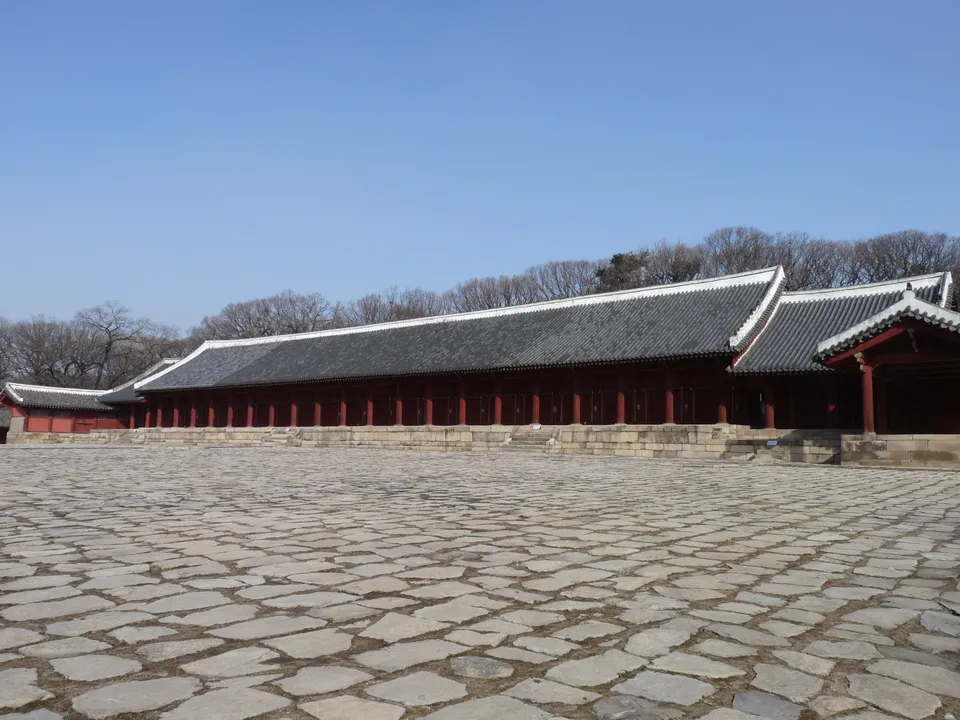
Jeongjeon of Jongmyo, where King Gojong proclaimed the Fourteen Articles in 1895

João Trindade · CC BY 2.0 · Source

Gaining the upper hand in the war with Qing, Japan abolished the deliberative council and installed a coalition cabinet of Kim Hong-jip and Park Yeong-hyo to lead reform. The articles pledged to sever dependence on Qing and lay the foundation of independence, to separate royal household affairs from state affairs, to fix taxes by law under the finance ministry, to curb the powers of local officials, and to send able young men abroad to study.

The second reform turned the State Council into a cabinet and the eight ministries into seven, replaced the eight provinces with 23 districts, set up courts to separate justice from administration, and issued an edict on education that founded a teachers’ college and primary schools.

The map in 1894

OpenFreeMap © OpenMapTiles © OpenStreetMap contributors

States and rulers at the time
Joseon — Gojong
Japan — Emperor Meiji

People

  • Gojong1852 – 1919

    monarch · Twenty-sixth king of Joseon and first emperor of the Korean Empire

  • Kim Hong-jip1842 – 1896

    leader · Prime minister who led the Gabo Reform; killed by a crowd after the king fled to the Russian legation

  • Park Yeong-hyo1861 – 1939

    leader · Radical reformer and son-in-law of King Cheoljong who led the Gapsin Coup with Kim Ok-gyun and headed a coalition cabinet with Kim Hong-jip in the second Gabo Reform

Before and after

Themes that include this event

  • Central Government Through the AgesAD 250 – 1899

    From the noble councils of the Three Kingdoms to the State Council, the Border Defense Council and the Gabo cabinet — how central government shifted between aristocratic consensus and royal power

  • Local Administration Through the AgesAD 250 – 1896

    From the five regions of the Three Kingdoms through nine provinces, the five circuits and two frontiers and the eight provinces to the thirteen — how directly the centre came to rule the regions