Eulmi Reform and the Topknot Decree
The Kim Hong-jip cabinet installed after the queen’s assassination adopted the solar calendar, the era name Geonyang, smallpox vaccination and primary schools — and ordered men to cut off their topknots.
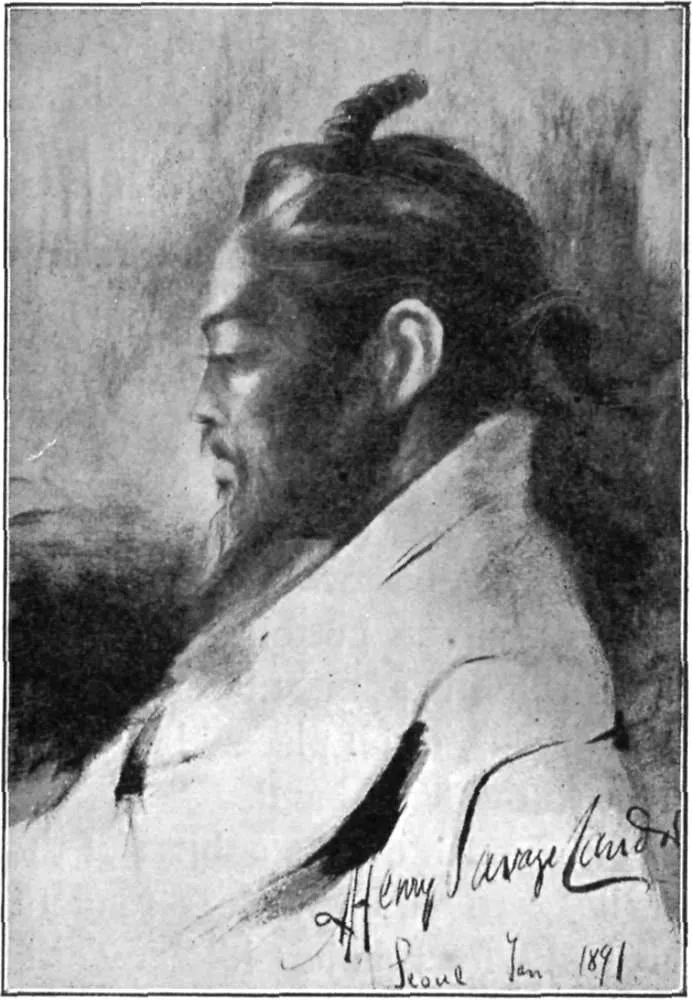
A. Henry Savage-Landor · Public domain · Source
After the Triple Intervention weakened Japan, Joseon leaned toward Russia; Japan responded with the murder of the queen, drove out the pro-Russian faction and pushed reform again (the third Gabo Reform, or Eulmi Reform). The 17th day of the 11th lunar month of 1895 became 1 January 1896 under the solar calendar, with the new era name Geonyang. Vaccination and primary schools were introduced, the postal service reopened, and new guard units were stationed in the capital and provinces.
The topknot decree enraged scholars and commoners, who held that "body, hair and skin are received from one’s parents". Choe Ik-hyeon declared, "You may cut off my head, but not my hair." The assassination and the decree set off the Eulmi righteous armies, and when the king fled to the Russian legation the next year the cabinet fell and the reforms stopped.
