Person1861 – 1939

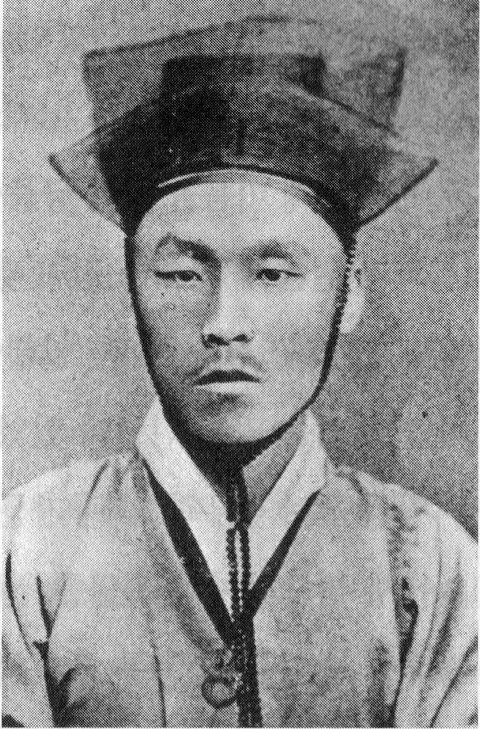
Park Yeong-hyo

Radical reformer and son-in-law of King Cheoljong who led the Gapsin Coup with Kim Ok-gyun and headed a coalition cabinet with Kim Hong-jip in the second Gabo Reform

Married to King Cheoljong's daughter Princess Yeonghye, he held the title Geumneungwi. Sent to Japan as envoy after the Imo Incident of 1882, he is said to have been the first to use the Taegeukgi as the national flag. In 1884 he staged the Gapsin Coup with Kim Ok-gyun, Hong Yeong-sik and others, and fled to Japan when it failed. Returning in 1894, he formed a coalition cabinet with Kim Hong-jip in the second Gabo Reform and led the proclamation of the Fourteen-Article Hongbeom, but was accused of treason the next year and fled again. After the annexation he accepted a marquisate from Japan.

Where they went

OpenFreeMap © OpenMapTiles © OpenStreetMap contributors

5 related events

  1. 1
    1870 – 1879Rise of Enlightenment Thoughtparticipant

    Park Gyu-su, O Gyeong-seok, Yu Hong-gi and others, heirs of the Northern Learning school who absorbed knowledge of the West reaching Korea through Qing, argued for opening the country and making it rich and strong. Their students Kim Ok-gyun, Park Yeong-hyo, Yu Gil-jun and others became the Enlightenment Party.

  2. 2
    1882Treaty of Jemulpodiplomat

    Pressing claims over the legation burned in the Imo Incident, Japan won an indemnity and the right to station legation guards in Seoul.

  3. 3
    1884Gapsin Coupleader

    Kim Ok-gyun and other radical reformers staged a coup at the banquet opening the new post office; Qing troops intervened and it collapsed in three days.

  4. 1894 – 1896Gabo Reformparticipant

    A deliberative council abolished the class system and the civil service exam and overhauled government; the cabinet of Kim Hong-jip led it under Japanese pressure.

  5. 4

    Gojong went to the royal ancestral shrine and proclaimed the Fourteen Articles setting out the course of reform — the charter of the second Gabo Reform.

People who appear alongside

  • Kim Hong-jip1842 – 1896

    Prime minister who led the Gabo Reform; killed by a crowd after the king fled to the Russian legation

  • Gojong1852 – 1919

    Twenty-sixth king of Joseon and first emperor of the Korean Empire

  • Kim Ok-gyun1851 – 1894

    Radical reformer who led the 1884 coup, fled to Japan and was assassinated in Shanghai

  • Hong Yeong-sik1855 – 1884

    Radical reformer and head of the Post Office, at whose opening banquet the Gapsin Coup began; he was killed when the coup failed

  • Yu Gil-jun1856 – 1914

    Studied in Japan and the US after the 1881 inspection mission and the 1883 mission to America; wrote "Observations on a Journey to the West" and took part in the Gabo and Eulmi reforms

  • Park Gyu-su1807 – 1877

    Grandson of Park Ji-won; as governor of Pyeongan he burned the General Sherman, later urged opening to trade and taught the reformers

  • O Gyeong-seok1831 – 1879

    Interpreter who brought back from Qing books on Western affairs such as the Haiguo tuzhi and Yinghuan zhilüe, a pioneer of enlightenment thought

  • Yu Hong-gi1831

    Daechi. A chungin physician who studied enlightenment ideas with O Gyeong-seok and guided young reformers such as Kim Ok-gyun, earning the name "prime minister in plain clothes"

Themes this person appears in

  • Changes in TaxationAD 755 – 1894

    From land tax, tribute and labour to cash taxes in the Gabo Reform — burdens shifting from people and households to land

  • Central Government Through the AgesAD 250 – 1899

    From the noble councils of the Three Kingdoms to the State Council, the Border Defense Council and the Gabo cabinet — how central government shifted between aristocratic consensus and royal power

  • Local Administration Through the AgesAD 250 – 1896

    From the five regions of the Three Kingdoms through nine provinces, the five circuits and two frontiers and the eight provinces to the thirteen — how directly the centre came to rule the regions

  • The Opening of East Asia1839 – 1901

    From the Opium War to the Boxer Protocol — sixty years in which China, Japan and Korea, forced open by Western gunboats, each tried to reform and went separate ways

  • Seoul18 BC – 1988

    From Hanseong Baekje to the June Democratic Struggle — the Han River land every kingdom fought for, and Joseon’s capital for five centuries