World history1839 – 190130 events

The Opening of East Asia

From the Opium War to the Boxer Protocol — sixty years in which China, Japan and Korea, forced open by Western gunboats, each tried to reform and went separate ways

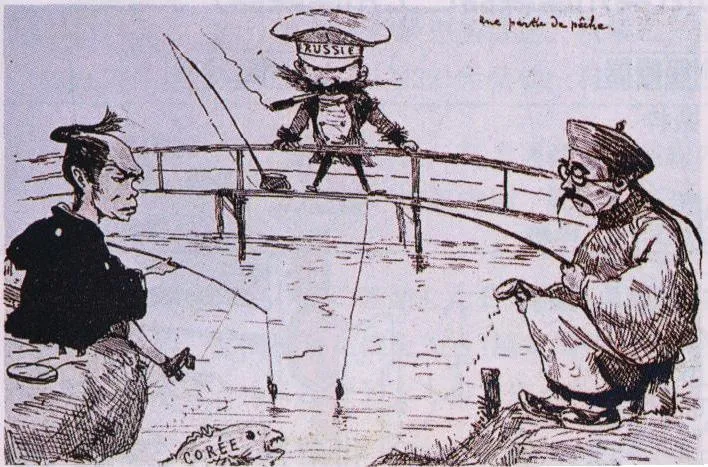
조선이라는 물고기를 낚으려는 일본과 청, 그리고 지켜보는 러시아 — 조르주 비고의 풍자화, 『도바에』 1887년

Georges Ferdinand Bigot (1860-1927) · Public domain · Source

At a glance

TopicQing ChinaJapanKorea
What forced it openOpium War 1840–1842Perry’s black ships 1853Unyo incident 1875
First treatyNanjing 1842 (five ports)Kanagawa 1854Ganghwa 1876
Unequal termsConsular courts, MFN (1843)Consular courts, fixed tariffs (1858)Extraterritoriality, no tariffs (1876)
Clashes with the WestBeijing falls, Yuanmingyuan burned 1860Satsuma, Chōshū bombarded 1863–1864French 1866 and US 1871 expeditions
Revolt from withinTaiping 1851–1864Satsuma Rebellion 1877Donghak Peasant Revolution 1894
Reform sloganSelf-Strengthening — Chinese substanceMeiji — civilisation and enlightenmentEnlightenment — Eastern ways, Western tools
What was reformedArsenals, shipyards, Beiyang FleetPrefectures, conscription, land taxNew foreign-affairs office, new army 1880–81
Study missionsStudents to the US 1872Iwakura Mission 1871–1873Missions to Japan, Tianjin, the US
Reform from belowHundred Days → coup of 1898People’s Rights movement 1874–Gapsin Coup 1884, Independence Club
Top-down overhaulNew Policies 1901–Meiji government from 1871Gabo–Eulmi reforms 1894–1895
ConstitutionOutline constitution 1908Meiji Constitution 1889Daehan Gukje 1899
End of the tributary orderLoses Vietnam after French war 1885Taiwan 1874, annexes Ryukyu 1879Qing trade regulations 1882
After the Sino-Japanese WarCedes Taiwan, pays 200m taelsReturns Liaodong after Triple InterventionTie to Qing ends → queen murdered
Fate of the unequal treatiesBoxer Protocol 1901 — foreign troopsExtraterritoriality ends 1899, tariffs 1911Eulsa Treaty 1905 — diplomacy lost

The theme on the map

OpenFreeMap © OpenMapTiles © OpenStreetMap contributors

30 events in this theme

  1. When Qing China cracked down on opium smuggling, Britain went to war and won. By the Treaty of Nanjing China ceded Hong Kong and opened five ports — the start of the opening of East Asia.

  2. 1851 – 1864Taiping Rebellion

    A peasant army led by Hong Xiuquan rose to "destroy the Manchus and restore the Han", set up the Taiping Heavenly Kingdom with Nanjing as its capital and defied the Qing for fourteen years until Han Chinese militias and Western-led troops crushed it.

  3. Commodore Perry of the United States arrived with warships to demand that Japan open its ports. The next year the Tokugawa shogunate signed the Treaty of Kanagawa, opening Shimoda and Hakodate and ending more than two centuries of seclusion.

  4. Using the Arrow incident as a pretext, Britain and France attacked Qing China and occupied Beijing. Under the treaties of Tianjin and Beijing China opened more ports, while Russia, acting as mediator, gained the Maritime Province and came to share a border with Korea.

  5. The Tokugawa shogunate signed a commercial treaty with the United States without the emperor’s consent. Granting consular jurisdiction and denying Japan tariff autonomy, the unequal treaty fuelled the "revere the emperor, expel the barbarians" movement and the fall of the shogunate.

  6. Han Chinese officials who had crushed the Taiping adopted Western arms and technology under the slogan "Chinese learning as substance, Western learning for use", founding arsenals, shipyards and modern enterprises. Defeats by France and Japan exposed its limits.

  7. Citing the persecution of Catholics, a French squadron occupied Ganghwa. Yang Heon-su drove it off at Jeongjok Fortress, and the French withdrew with looted royal archives.

  8. The Tokugawa shogunate fell and a new imperial government pushed through Western-style modernisation.

  9. A US squadron sent over the General Sherman incident attacked Ganghwa. Eo Jae-yeon fell at Gwangseongbo, and the Daewongun put up steles rejecting peace with the West.

  10. The Meiji government abolished the feudal domains and replaced them with prefectures, creating a centralised state, then drove modernization from above with the end of status distinctions, conscription, land-tax reform, a school system and state-led industry.

  11. 1871 – 1873Iwakura Mission

    Half of the Meiji leadership spent a year and nine months in the United States and Europe, sounding out revision of the unequal treaties and studying Western institutions and industry.

  12. A campaign for a national assembly and a constitution, begun when Itagaki Taisuke and others who had left the government demanded an elected legislature. The government promised to open a parliament in 1890.

  13. Citing the murder of Ryukyuan castaways by Indigenous Taiwanese, Japan sent troops to southern Taiwan — the Meiji government’s first overseas military expedition.

  14. The Japanese warship Un’yō approached Chojijin on Ganghwa, exchanged fire, and landed on Yeongjongdo to plunder; Japan used the clash to force the Treaty of Ganghwa.

  15. Joseon's first modern treaty, signed with Japan on 27 February 1876. It opened Busan and two other ports and contained unequal terms.

  16. The last and largest revolt of former samurai, launched by Satsuma warriors who had lost their privileges, with Saigō Takamori at their head. The government’s conscript army crushed it.

  17. Japan abolished the Ryukyu Kingdom, which had owed allegiance to both Qing China and Satsuma, and made it Okinawa Prefecture — a sign that the China-centred tributary order was beginning to crumble.

  18. Joseon’s first treaty with a Western country, signed with the US at Jemulpo through Qing mediation; it included extraterritoriality and most-favoured-nation terms.

  19. 1884 – 1885Sino-French War

    China and France fought over suzerainty in Vietnam. China lost its claim to Vietnam, and in the meantime the Gapsin Coup broke out in Korea.

  20. Kim Ok-gyun and other radical reformers staged a coup at the banquet opening the new post office; Qing troops intervened and it collapsed in three days.

  21. Japan promulgated the first modern constitution in East Asia and opened the Imperial Diet the following year. It was a constitution granted by the emperor, in whom sovereignty resided.

  22. Peasant armies led by Jeon Bong-jun rose against corrupt officials and foreign powers, triggering the First Sino-Japanese War.

  23. 1894 – 1896Gabo Reform

    A deliberative council abolished the class system and the civil service exam and overhauled government; the cabinet of Kim Hong-jip led it under Japanese pressure.

  24. Japan signed a new treaty with Britain abolishing consular jurisdiction (extraterritoriality). In 1911 it regained tariff autonomy as well, completing the revision of the unequal treaties.

  25. Qing and Japan fought over Korea. Victorious at Pungdo, Seonghwan, Pyongyang and the Yellow Sea, Japan ended Qing suzerainty over Korea and took Taiwan in the Treaty of Shimonoseki.

  26. The treaty that ended the Sino-Japanese War gave Japan Taiwan and a huge indemnity, but the Triple Intervention of Russia, Germany and France forced it to return the Liaodong Peninsula. The powers then scrambled to lease Chinese territory.

  27. 1896 – 1898Independence Club

    Seo Jae-pil founded the Independence Club with officials and intellectuals; it raised the Independence Gate and held mass assemblies calling for national sovereignty, civil rights and self-strengthening reform.

  28. Kang Youwei and Liang Qichao persuaded the Guangxu Emperor to launch reforms toward a constitutional monarchy on the Meiji model, but Empress Dowager Cixi’s coup ended them after about a hundred days.

  29. Under the slogan "Support the Qing, destroy the foreigners", the Boxers attacked churches and railways and besieged the foreign legations in Beijing. An eight-nation alliance occupied Beijing, and by the Boxer Protocol China paid a vast indemnity and accepted foreign troops on its soil.

  30. The Korean Empire issued a nine-article basic law declaring it an independent empire and an autocracy in which the emperor held unlimited power.

Key people

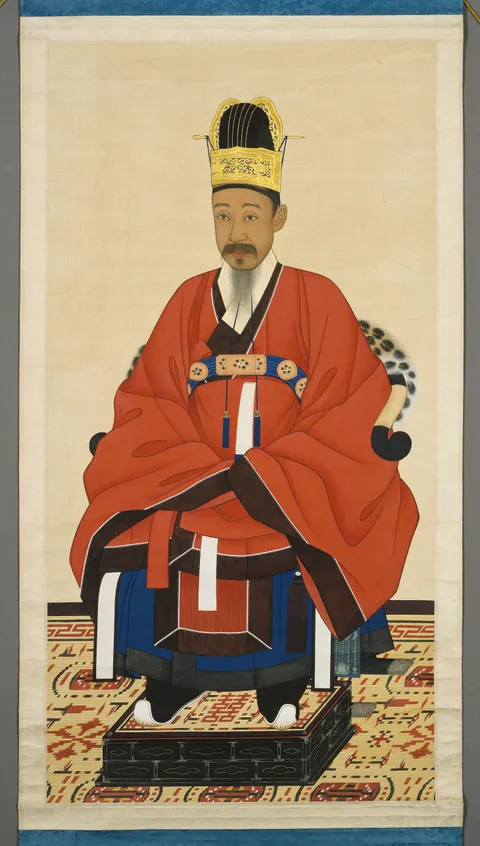
  • Gojong1852 – 1919

    Twenty-sixth king of Joseon and first emperor of the Korean Empire

  • Li Hongzhang1823 – 1901

    Qing viceroy who steered policy toward Korea after 1882 and signed the Tianjin Convention and the Treaty of Shimonoseki with Itō Hirobumi

  • Ōkubo Toshimichi1830 – 1878

    Satsuma statesman who led the early Meiji government, pushing through the abolition of the domains and state-led industry, and opposed invading Korea

  • Saigō Takamori1828 – 1877

    Satsuma leader of the Meiji Restoration who resigned when his call to send a mission to Korea was rejected, and died leading the Satsuma Rebellion

  • Itō Hirobumi1841 – 1909

    First prime minister of Japan who forced the 1905 protectorate treaty and became the first Resident-General; shot by Ahn Jung-geun at Harbin

  • Zeng Guofan1811 – 1872

    Han Chinese official who raised the Xiang Army to crush the Taiping and launched the Self-Strengthening Movement

  • Heungseon Daewongun1820 – 1898

    Gojong's father and regent, who rebuilt Gyeongbokgung and rejected Western trade

  • Emperor Meiji1852 – 1912

    Emperor of Japan (r. 1867–1912) in whose name the shogunate was overthrown, the Meiji reforms carried out and the Meiji Constitution promulgated

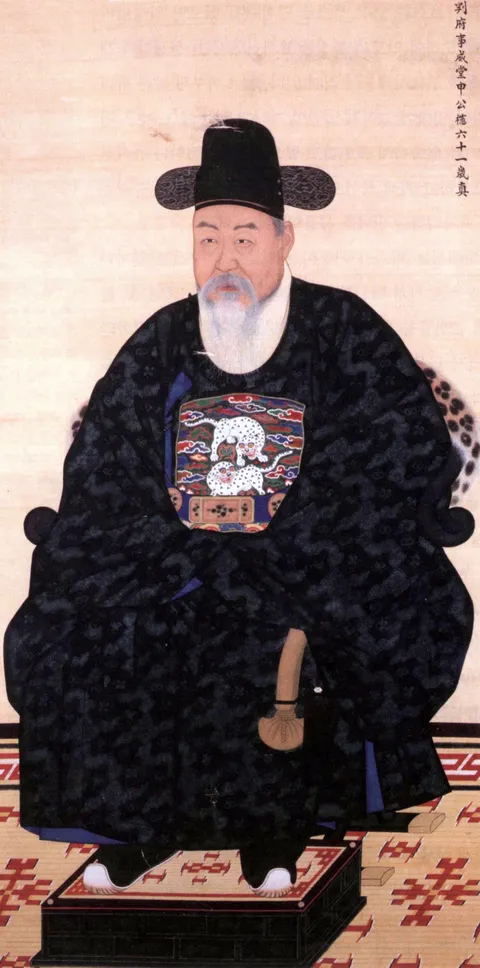
  • Sin Heon1810 – 1884

    Joseon envoy who signed the Treaty of Ganghwa and the treaty with the United States

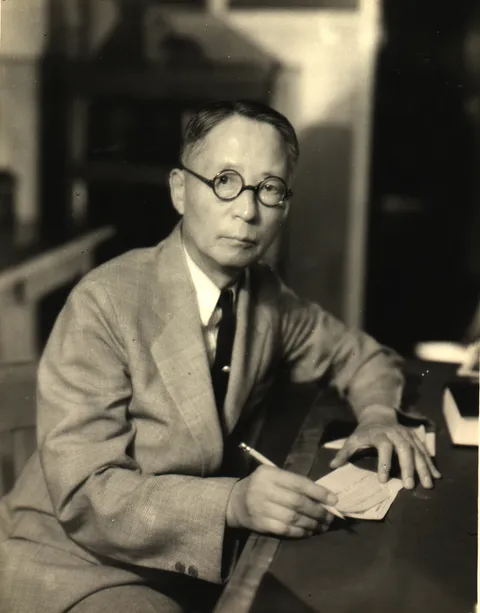
  • Seo Jae-pil (Philip Jaisohn)1864 – 1951

    Joined the 1884 coup, lived in exile in the US, then returned to found The Independent

  • Park Yeong-hyo1861 – 1939

    Radical reformer and son-in-law of King Cheoljong who led the Gapsin Coup with Kim Ok-gyun and headed a coalition cabinet with Kim Hong-jip in the second Gabo Reform

  • Mutsu Munemitsu1844 – 1897

    Japanese foreign minister (1892–1896) who ended extraterritoriality through treaty revision with Britain and steered the Sino-Japanese War and the Treaty of Shimonoseki