Perry Expedition and Treaty of Kanagawa
Also called: Black Ships, Convention of Kanagawa
Commodore Perry of the United States arrived with warships to demand that Japan open its ports. The next year the Tokugawa shogunate signed the Treaty of Kanagawa, opening Shimoda and Hakodate and ending more than two centuries of seclusion.
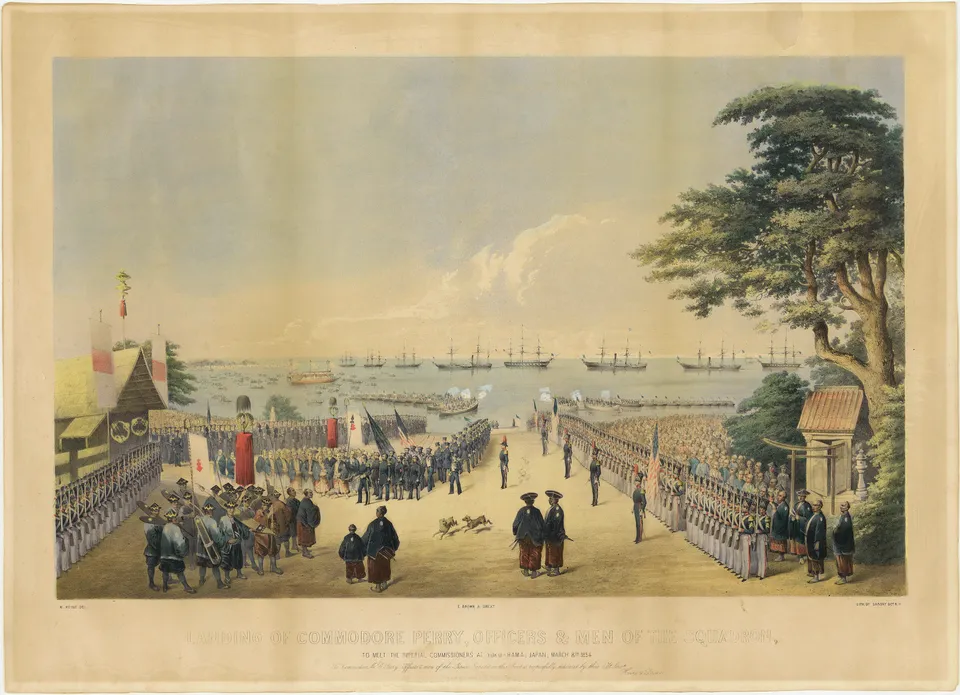
Wilhelm Heine · Public domain · Source
To keep out Christianity the Tokugawa shogunate had for over two hundred years limited foreign trade to the Dutch and Chinese at Nagasaki. The United States, now crossing the Pacific to trade with China and hunt whales, needed Japanese ports. In July 1853 Commodore Perry appeared at Uraga, at the mouth of Edo Bay, with a squadron led by steamships — the "black ships" — and delivered the president’s letter demanding that Japan open up.
Perry returned, and on 31 March 1854 he and the shogunate signed the Treaty of Kanagawa at Yokohama. Shimoda and Hakodate were opened to supply American ships, castaways were to be aided, a consul could be stationed, and the United States received most-favoured-nation status. Similar treaties with Britain, Russia and the Netherlands followed. Because the shogunate consulted the imperial court and the daimyo, its authority began to slip.