ConflictFebruary – 24 September 1877

Satsuma Rebellion

Also called: Seinan War

The last and largest revolt of former samurai, launched by Satsuma warriors who had lost their privileges, with Saigō Takamori at their head. The government’s conscript army crushed it.
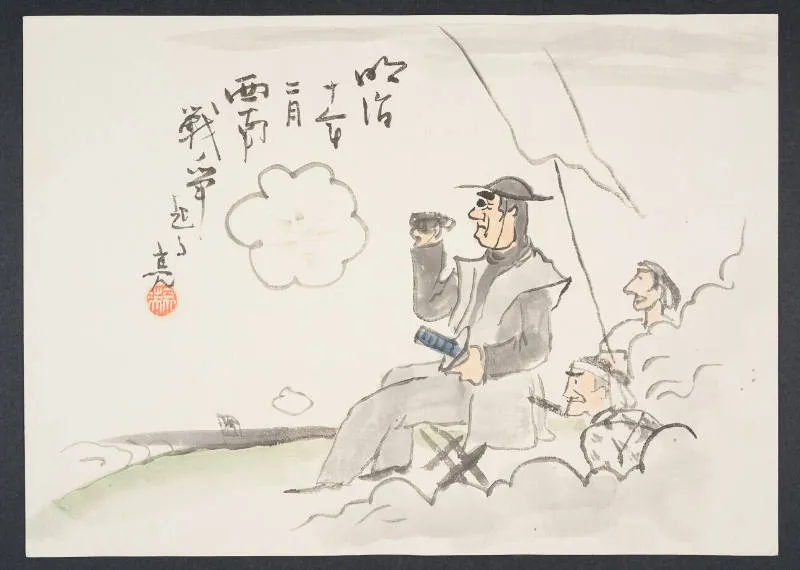
The Satsuma Rebellion (1877) by Hattori Ryōei, 1927 — Honolulu Museum of Art

Hattori Ryōei · Public domain · Source

The abolition of the domains, conscription, the 1876 ban on wearing swords and the end of hereditary stipends stripped the samurai of their privileges and livelihoods. In February 1877 tens of thousands of Satsuma samurai rose behind Saigō Takamori, who had gone home to Kagoshima after the 1873 split over Korea and opened private academies. The rebels failed to take Kumamoto Castle, were driven back at Tabaruzaka, and the revolt ended with Saigō’s death at Shiroyama on 24 September. The victory of a conscript army of commoners ended the age of armed revolt, and opposition shifted to the Freedom and People’s Rights Movement.

The map in 1877

OpenFreeMap © OpenMapTiles © OpenStreetMap contributors

States and rulers at the time
Japan — Emperor Meiji

People

  • Saigō Takamori1828 – 1877

    commander · Satsuma leader of the Meiji Restoration who resigned when his call to send a mission to Korea was rejected, and died leading the Satsuma Rebellion

  • Ōkubo Toshimichi1830 – 1878

    related figure · Satsuma statesman who led the early Meiji government, pushing through the abolition of the domains and state-led industry, and opposed invading Korea

Before and after

Related works

Dramatized works (films, dramas, novels) may differ from the historical record.

Themes that include this event

  • The Opening of East Asia1839 – 1901

    From the Opium War to the Boxer Protocol — sixty years in which China, Japan and Korea, forced open by Western gunboats, each tried to reform and went separate ways