Self-Strengthening Movement
Also called: Westernization Movement, Yangwu Movement
Han Chinese officials who had crushed the Taiping adopted Western arms and technology under the slogan "Chinese learning as substance, Western learning for use", founding arsenals, shipyards and modern enterprises. Defeats by France and Japan exposed its limits.
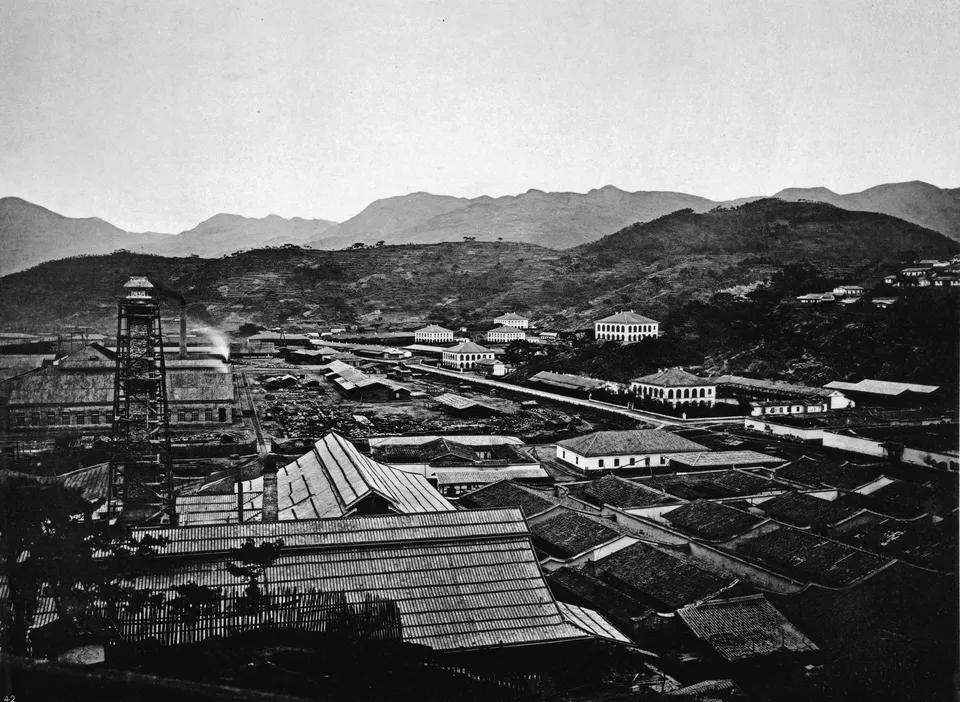
John Thomson · Public domain · Source
Chastened by the Second Opium War and the Taiping, the Qing created the Zongli Yamen in 1861 and set out to learn from the West. Han officials such as Zeng Guofan, Li Hongzhang and Zuo Zongtang led the way. Their principle was "Chinese learning as substance, Western learning for use": keep China’s institutions and Confucian ethics as the foundation and borrow only Western techniques.
They built arsenals and shipyards — the Jiangnan Arsenal in Shanghai (1865), the Fuzhou Navy Yard (1866), the Tianjin Machine Bureau — opened the Tongwen Guan language school and sent students to the United States. Modern enterprises followed, such as the China Merchants Steam Navigation Company, along with mines, railways and telegraphs, and in 1888 the Beiyang Fleet was established. Korea’s 1881 study mission to Tianjin to learn arms making belongs to this period.
But the political system was left untouched, and officials pursued their projects separately without pooling strength. Defeats in the Sino-French War (1884–1885) and the Sino-Japanese War (1894–1895) laid bare its limits, and the Hundred Days’ Reform, which sought to change institutions too, followed.