Rise of Enlightenment Thought
Also called: Gaehwa thought
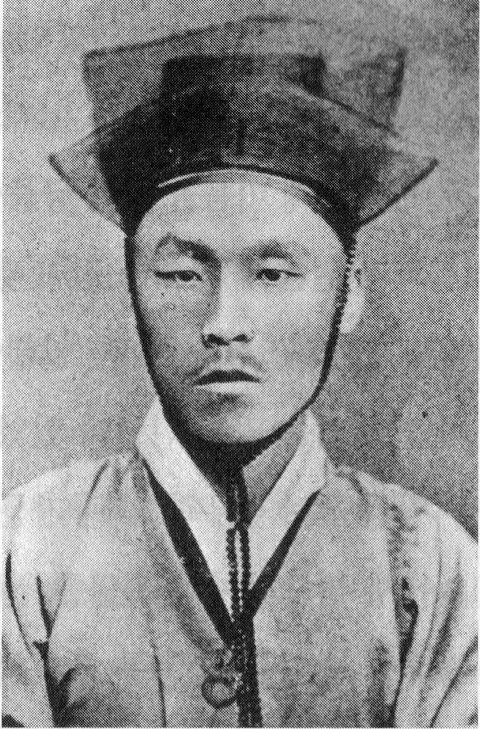
Park Gyu-su, O Gyeong-seok, Yu Hong-gi and others, heirs of the Northern Learning school who absorbed knowledge of the West reaching Korea through Qing, argued for opening the country and making it rich and strong. Their students Kim Ok-gyun, Park Yeong-hyo, Yu Gil-jun and others became the Enlightenment Party.
As Western powers pressed on East Asia in the mid-nineteenth century, some scholars heir to the Northern Learning ideal of "practical use for the people’s welfare" came to believe that Korea should open its doors and adopt Western technology to become rich and strong. Park Gyu-su, grandson of Park Ji-won, twice travelled to Qing and saw its Self-Strengthening reforms against the Western powers; after the Daewongun stepped down he urged relations with Japan (opening for trade). The interpreter O Gyeong-seok brought back from Qing books on world geography and Western affairs such as Wei Yuan’s Haiguo tuzhi and Xu Jiyu’s Yinghuan zhilüe, and the chungin physician Yu Hong-gi (Daechi) read them with him and developed enlightenment ideas.
In the 1870s young men of yangban families — Kim Ok-gyun, Park Yeong-hyo, Hong Yeong-sik, Seo Gwang-beom, Yu Gil-jun — gathered to learn in Park Gyu-su’s study, while Yu Hong-gi, called the "prime minister in plain clothes", guided Kim Ok-gyun and others. After the Treaty of Ganghwa (1876) they took part in the government’s reforms as the Enlightenment Party, and after the Imo Incident they split over the pace and method of reform into moderate and radical factions. Yu Hong-gi disappeared after the failed Gapsin Coup of 1884.