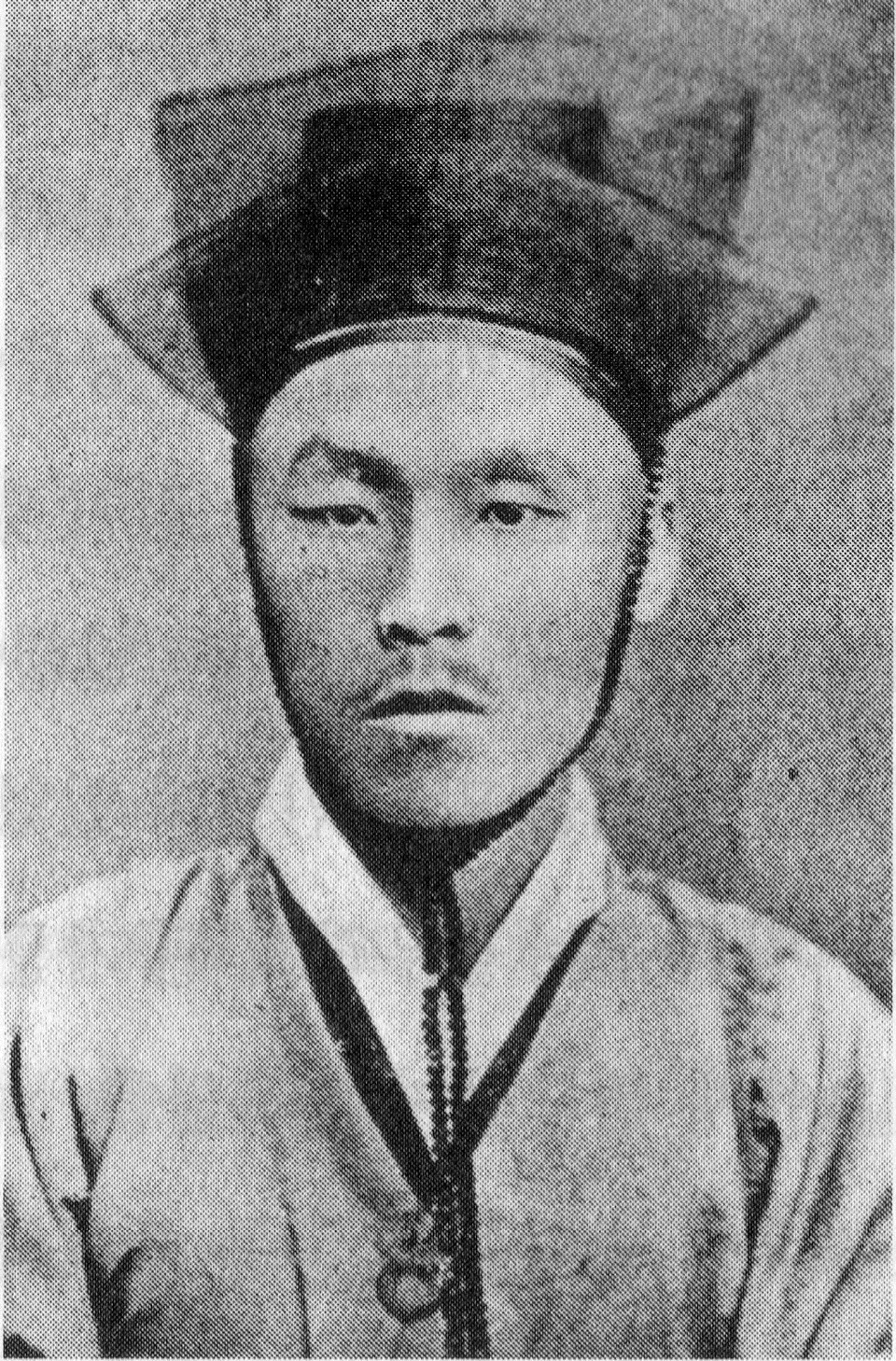
Photograph of Kim Ok-gyun

Unknown author · Public domain · Source

Person1851 – 1894

Kim Ok-gyun

Radical reformer who led the 1884 coup, fled to Japan and was assassinated in Shanghai

He learned enlightenment ideas under Park Gyu-su. He urged rapid reform on the model of Japan's Meiji Restoration and tried, without success, to raise a loan in Japan. In 1884, with Hong Yeong-sik, Park Yeong-hyo, Seo Gwang-beom, Seo Jae-pil and others, he staged a coup at the banquet celebrating the opening of the Postal Administration and announced a 14-point programme, but Qing troops ended it in three days. He was assassinated by Hong Jong-u in Shanghai in 1894.

Where they went

OpenFreeMap © OpenMapTiles © OpenStreetMap contributors

4 related events

  1. 1
    1870 – 1879Rise of Enlightenment Thoughtparticipant

    Park Gyu-su, O Gyeong-seok, Yu Hong-gi and others, heirs of the Northern Learning school who absorbed knowledge of the West reaching Korea through Qing, argued for opening the country and making it rich and strong. Their students Kim Ok-gyun, Park Yeong-hyo, Yu Gil-jun and others became the Enlightenment Party.

  2. 2
    1882Order to Resettle Ulleungdorelated figure

    With Japanese entering Ulleungdo to cut timber, the Joseon government sent Yi Gyu-won as inspector and then decided to resettle the island.

  3. 3
    1883 – 1904Mint Bureau (Jeonhwanguk) Foundedrelated figure

    The Joseon government set up the Jeonhwanguk mint and issued the dangojeon coin. The nickel coins later minted there in excess became the pretext for the 1905 currency reform.

  4. 4
    1884Gapsin Coupleader

    Kim Ok-gyun and other radical reformers staged a coup at the banquet opening the new post office; Qing troops intervened and it collapsed in three days.

Related works

  • TV episode: Naked Korean History Episode 41: Why Was Kim Ok-gyun, Leader of the Gapsin Coup, Dismembered?TV episode · 2023 · Hong Mun-gi · tvN STORY

People who appear alongside

  • Gojong1852 – 1919

    Twenty-sixth king of Joseon and first emperor of the Korean Empire

  • Park Yeong-hyo1861 – 1939

    Radical reformer and son-in-law of King Cheoljong who led the Gapsin Coup with Kim Ok-gyun and headed a coalition cabinet with Kim Hong-jip in the second Gabo Reform

  • Hong Yeong-sik1855 – 1884

    Radical reformer and head of the Post Office, at whose opening banquet the Gapsin Coup began; he was killed when the coup failed

  • Park Gyu-su1807 – 1877

    Grandson of Park Ji-won; as governor of Pyeongan he burned the General Sherman, later urged opening to trade and taught the reformers

  • O Gyeong-seok1831 – 1879

    Interpreter who brought back from Qing books on Western affairs such as the Haiguo tuzhi and Yinghuan zhilüe, a pioneer of enlightenment thought

  • Yu Hong-gi1831

    Daechi. A chungin physician who studied enlightenment ideas with O Gyeong-seok and guided young reformers such as Kim Ok-gyun, earning the name "prime minister in plain clothes"

  • Yu Gil-jun1856 – 1914

    Studied in Japan and the US after the 1881 inspection mission and the 1883 mission to America; wrote "Observations on a Journey to the West" and took part in the Gabo and Eulmi reforms

  • Seo Jae-pil (Philip Jaisohn)1864 – 1951

    Joined the 1884 coup, lived in exile in the US, then returned to found The Independent

Themes this person appears in

  • History of Korean CurrencyAD 996 – 1905

    From Geonwon Jungbo to the 1905 currency reform — how coins took hold in an economy of rice and cloth, and how monetary sovereignty was lost

  • The Opening of East Asia1839 – 1901

    From the Opium War to the Boxer Protocol — sixty years in which China, Japan and Korea, forced open by Western gunboats, each tried to reform and went separate ways

  • Seoul18 BC – 1988

    From Hanseong Baekje to the June Democratic Struggle — the Han River land every kingdom fought for, and Joseon’s capital for five centuries

  • Ulleungdo and DokdoAD 512 – 1905

    From Isabu’s conquest of Usan-guk to Imperial Decree No. 41 — two East Sea islands recorded as Korean throughout