King Seong Moves the Capital to Sabi
King Seong moved the capital to Sabi (Buyeo) on the Geum River plain and renamed the country Nambuyeo ("Southern Buyeo").
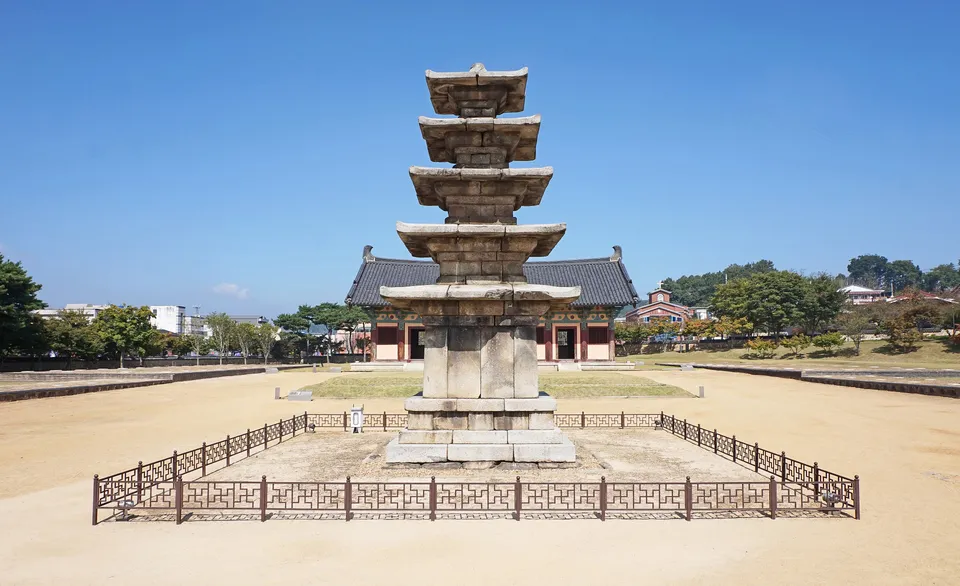
Ungjin (Gongju), ringed by hills and river, was easy to defend but too cramped for growth. Steadied under Muryeong, Baekje under King Seong moved to Sabi, with the broad plain of the lower Geum and an open route to the sea. The name Nambuyeo proclaimed descent from Buyeo.
Seong created 22 central offices and divided the capital into five wards and the provinces into five regions. He traded with Liang, promoted Buddhism — the monk Gyeomik, back from India, spread the Vinaya school — and in 552 sent images and sutras to Wa.
In 551 he recovered the lower Han with Silla, lost it to Silla in 553 and was killed the next year at Gwansan Fortress. Sabi remained the capital until Baekje fell in 660; Busosan Fortress, the five-storey pagoda of Jeongnimsa and the Neungsan-ri temple site, where the Gilt-bronze Incense Burner of Baekje was found, survive from this era.