Politics685

Nine Provinces and Five Secondary Capitals

King Sinmun divided the realm into nine provinces (ju) and set up five secondary capitals (sogyeong), completing the provincial system of unified Silla.
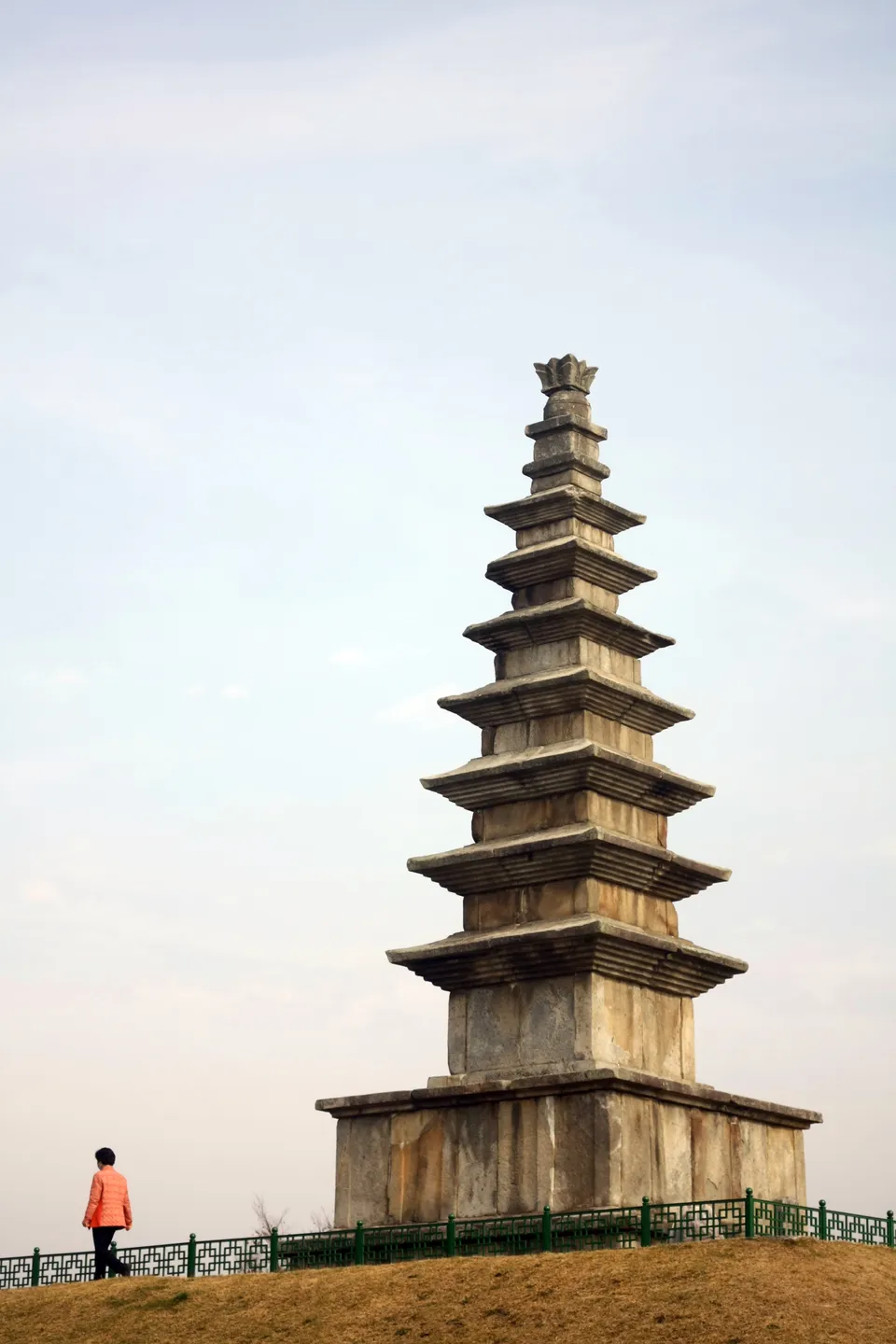
Seven-story pagoda at Tappyeong-ri, Chungju — a Unified Silla pagoda in Jungwon-gyeong, one of the five secondary capitals

Dalgial · CC BY-SA 4.0 · Source

Three provinces lay in old Silla and Gaya (Sangju, Yangju, Gangju), three in old Baekje (Ungju, Jeonju, Muju) and three in old Goguryeo (Hanju, Sakju, Myeongju). Governors (dodok) ran the provinces and magistrates the counties below, inspected by oesajeong censors; under the sangsuri system local notables were kept in the capital as hostages.

The five secondary capitals — Gugwon, Bugwon, Seowon, Namwon and Geumgwan — offset the remoteness of Gyeongju in the southeast and housed resettled old aristocracies. The army was reorganized into the Nine Oath Banners (seodang) in the capital and Ten Garrisons (jeong) in the provinces; the banners enrolled Goguryeo, Baekje and Malgal people as well as Silla men.

The map in AD 685

OpenFreeMap © OpenMapTiles © OpenStreetMap contributors

States and rulers at the time
Silla — King Sinmun

People

  • King SinmunAD 692

    monarch · Munmu's son and 31st king of Silla, who crushed Kim Heum-dol's revolt and strengthened royal power through the National Academy, the nine provinces and office-land grants

Before and after

Themes that include this event

  • Local Administration Through the AgesAD 250 – 1896

    From the five regions of the Three Kingdoms through nine provinces, the five circuits and two frontiers and the eight provinces to the thirteen — how directly the centre came to rule the regions

  • Military Systems Through the AgesAD 685 – 1907

    From the Nine Oath Banners to the Two Armies and Six Guards, the Five Commands and garrison system, the Five Army Camps and the Board of Marshals — armies rebuilt at every crisis

  • Cheongjuc. 700,000 years ago – 1728

    From the Heungsu child of Durubong Cave to the Jikji — Silla’s secondary capital Seowon, where the oldest surviving metal-type book was printed

  • ChungjuAD 450 – 1895

    From the Goguryeo stele to Tangeumdae — Jungwon, the middle of the Namhan River route that the Three Kingdoms fought over

  • Gimhae150 BC – AD 685

    From Guya of Byeonhan to Geumgwan Gaya — centre of the early Gaya league, built on iron and sea routes

  • JinjuAD 685 – 1923

    Centre of western Gyeongsang — site of the sieges of Jinju, the 1862 peasant uprising and the butchers’ equality movement

  • JeonjuAD 685 – 1894

    From Wansanju, capital of Later Baekje, to the ancestral seat of the Joseon royal house — where the Annals were saved and the Donghak army took the fortress

  • GwangjuAD 685 – 1980

    Mujinju, where Gyeon Hwon first rose — city of the 1929 student independence movement and the May 18 Democratic Uprising