Eulsa Treaty
Also called: Japan–Korea Treaty of 1905, Eulsa Treaty
On 17 November 1905, with troops surrounding Gyeongungung, Itō Hirobumi forced a treaty stripping the Korean Empire of its diplomatic rights; a Japanese Residency-General was set up and soon meddled in domestic affairs too.
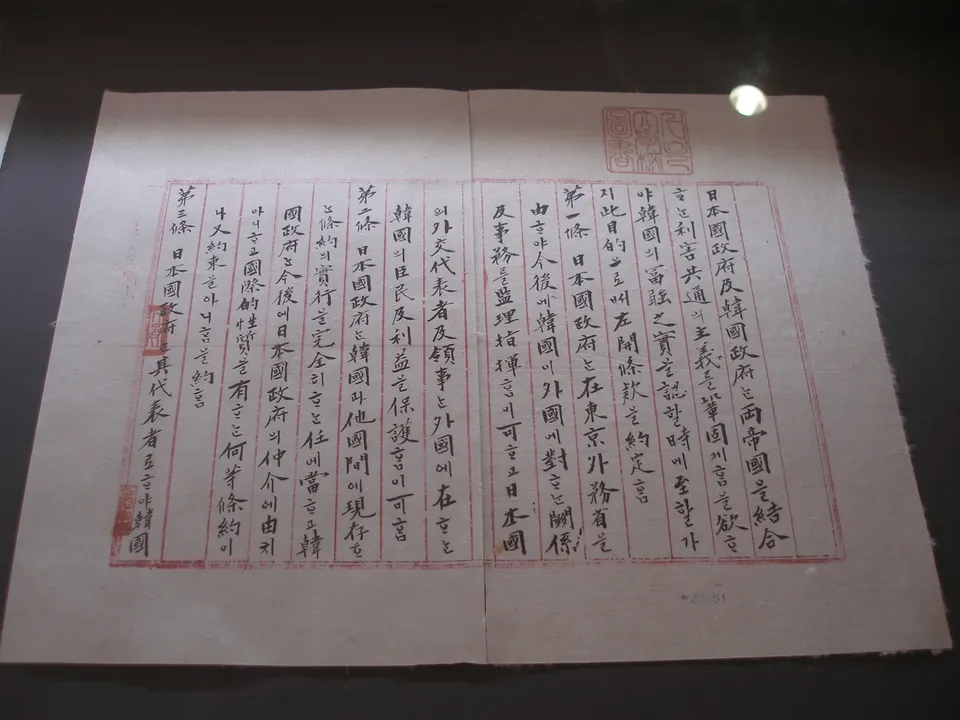
RYU Cheol · CC BY-SA 3.0 · Source
Japan sent Itō Hirobumi as special envoy, and he browbeat the ministers in the Jungmyeongjeon hall. Gojong and Prime Minister Han Gyu-seol refused to the end, but Itō declared the treaty concluded with the assent of five ministers — Lee Wan-yong (education), Yi Ji-yong (home affairs), Park Je-sun (foreign affairs), Yi Geun-taek (army) and Gwon Jung-hyeon (agriculture) — remembered as the Five Eulsa Traitors. Gojong never signed or ratified it, and the Korean government and most Korean scholars hold that, obtained by coercion, it is void under international law. Japan called it the Second Japan–Korea Agreement or the Eulsa Protectorate Treaty; Korean textbooks call it the Eulsa neugyak, the "treaty forced in the eulsa year".
Korea lost control of its foreign relations and became a Japanese protectorate. In February 1906 the Residency-General opened in Seoul with Itō as the first Resident-General, and the foreign legations left.
Jang Ji-yeon wrote "Today We Cry Out in Lament"; Min Yeong-hwan, Jo Byeong-se and others took their own lives; Na Cheol and O Gi-ho organized a band to kill the five ministers. Gojong sent Homer Hulbert to America, published a letter repudiating the treaty in the Daehan maeil sinbo and in 1907 sent envoys to The Hague. Righteous armies rose across the country.
