Paintings of Jang Seung-eop
Also called: Owon
The late Joseon painter Jang Seung-eop painted figures, animals, birds and flowers with bold brushwork. Grouped with Kim Hong-do and Sin Yun-bok as the “Three Won”, he bridged traditional and modern Korean painting.
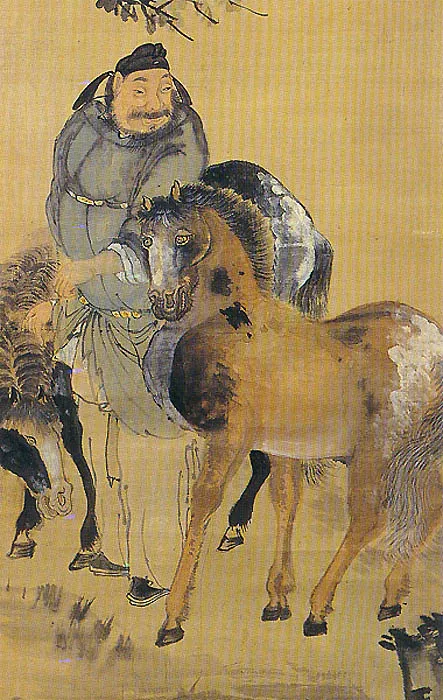
장승업 (張承業 1843~1897), Jang Seungeop, or Owon · Public domain · Source
Jang Seung-eop (1843–1897, pen name Owon) was orphaned young and learned painting by watching in the household that took him in. His talent won him a summons from King Gojong to paint at court, though he is said to have run away several times, disliking restraint. With Danwon (Kim Hong-do) and Hyewon (Sin Yun-bok) he is called one of the “Three Won”, after the character in their pen names.
Steeped in Chinese styles, he painted landscapes, figures, horses and hawks, birds and flowers and still lifes of vessels and flowers with vigorous, free brushwork. His style passed to his pupils An Jung-sik and Jo Seok-jin, who in turn trained painters such as Yi Sang-beom and No Su-hyeon, laying the foundation of modern Korean painting.
