Seokjojeon Hall, Deoksugung
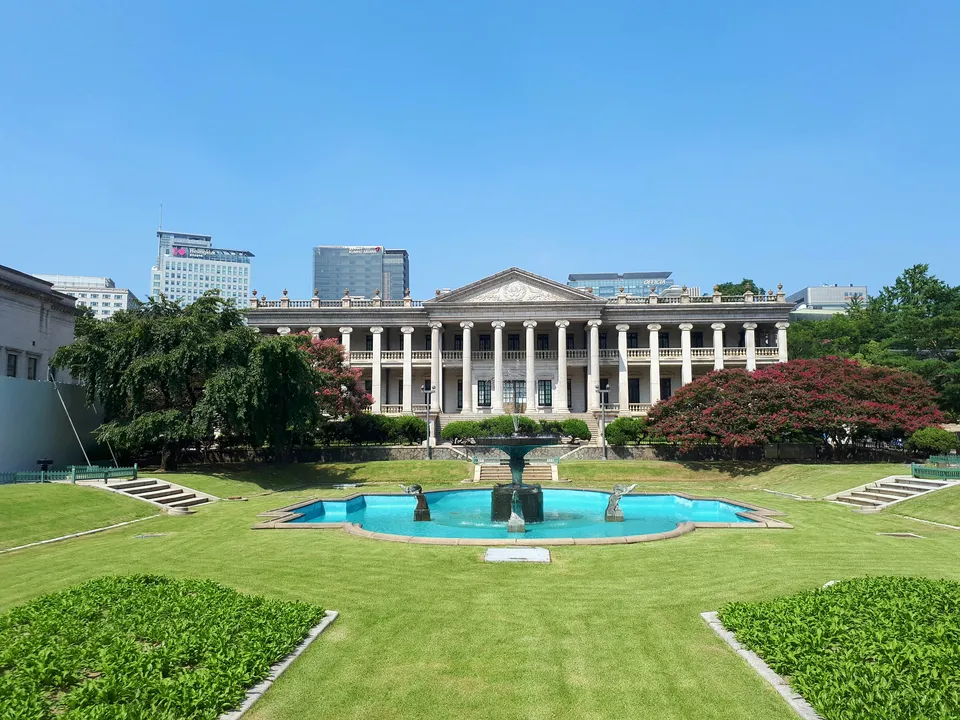
A Western-style stone building raised in Gyeongungung (Deoksugung) under the Korean Empire — a neoclassical hall begun in 1900 and finished in 1910.
Kimhs5400(블루시티) · CC BY-SA 4.0 · Source
Begun in 1900 inside Gyeongungung (now Deoksugung), the palace Gojong made his imperial seat, it was completed in 1910. Designed by the British architect Harding, it is a three-storey stone building in the neoclassical style, with Ionic columns and a triangular pediment on the front. The ground floor held living rooms, the first floor audience rooms and a hall, and the top floor the imperial couple’s bedrooms; a Western garden with a fountain lies in front.
Built in the Gwangmu Reform years, when the Korean Empire sought the look of a modern state, it was finished in the very year the country lost its sovereignty. After liberation the US–Soviet Joint Commission met here in 1946–1947. Today it is the Daehan Empire History Museum.
With the Gothic Myeongdong Cathedral (1898) it is the Western-style building of the opening era most often seen in the exam.
