World history1517 – 179630 events

Reformation and Absolutism

From Luther’s Ninety-five Theses to Catherine the Great — the wars of religion of a divided Christendom ended at Westphalia, and absolute monarchs armed with divine right, standing armies, bureaucracies and mercantilism, followed by the enlightened despots of eastern Europe, contended for the balance of power among sovereign states
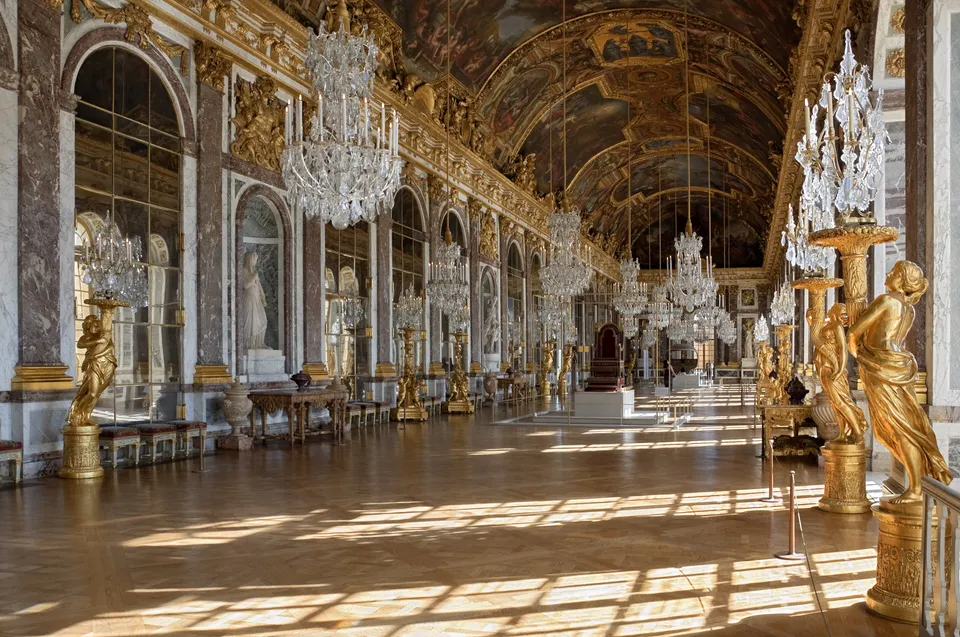
베르사유 궁전의 거울의 방 — 루이 14세가 1678~1684년에 꾸민 절대 왕정의 상징

Myrabella · CC BY-SA 3.0 · Source

At a glance

YearStateEventKey point
1517Holy Roman EmpireLuther’s Reformation95 Theses; faith and scripture alone
1534EnglandAct of SupremacyHenry VIII; Church of England
1541Switzerland (Geneva)Calvin’s reformPredestination, calling; merchants
1545–1563PapacyCouncil of TrentCounter-Reformation; Jesuits (1540)
1555Holy Roman EmpirePeace of AugsburgPrinces may pick Lutheranism; no Calvinism
1562–1598FranceWars of ReligionSt Bartholomew; Edict of Nantes
1568–1648NetherlandsDutch RevoltAgainst Philip II; 1581 independence
1588EnglandArmada defeatedElizabeth I; basis of sea power
1618–1648Holy Roman EmpireThirty Years’ WarLast war of religion → power struggle
1648Holy Roman EmpirePeace of WestphaliaCalvinism legal; Swiss, Dutch independent
1661–1715FranceLouis XIVDivine right; Colbert; Versailles
1697–1725RussiaPeter the GreatWesternisation; Northern War; St Petersburg
1701–1714SpainSpanish Succession warTreaty of Utrecht; Gibraltar to Britain
1740–1786PrussiaFrederick the GreatEnlightened despot; “first servant”
1756–1763Prussia · BritainSeven Years’ WarSilesia kept; British colonial lead
1772–1795Russia · Prussia · AustriaPartitions of PolandCatherine II; Poland vanishes

The theme on the map

OpenFreeMap © OpenMapTiles © OpenStreetMap contributors

30 events in this theme

  1. Martin Luther posted his Ninety-five Theses in Wittenberg, starting the Reformation.

  2. In April 1521 Luther stood before Emperor Charles V at the Diet of Worms and refused to recant; outlawed by the Empire, he translated the Bible into German under the protection of the Elector of Saxony.

  3. In 1524–1525 peasants across southern and central Germany, inspired by the Reformation, rose up demanding the end of serfdom and other reforms, but were crushed by the princes — with Luther on the princes’ side.

  4. The Ottoman sultan Suleiman I destroyed the Hungarian army at Mohács and three years later besieged Habsburg Vienna. The Ottomans had driven deep into Europe and reached the height of their power.

  5. In 1534 Henry VIII of England broke with the pope over his divorce, passed the Act of Supremacy and made himself head of the English Church — the beginning of the Church of England (Anglicanism).

  6. In 1540 Pope Paul III approved Ignatius of Loyola’s Society of Jesus, which through education and overseas missions became the spearhead of the Catholic Reformation (Counter-Reformation).

  7. Returning to Geneva in 1541, Calvin built a strict godly community and taught predestination and the calling of daily work; backed by merchants and craftsmen, Calvinism spread as Huguenots, Beggars (Geuzen), Puritans and Presbyterians.

  8. 1545 – 1563Council of Trent

    In 1545–1563 the Catholic Church held the Council of Trent, reaffirming papal authority and traditional doctrine while reforming the Church from within — the heart of the Counter-Reformation (Catholic Reformation).

  9. At the 1555 Imperial Diet of Augsburg, the princes of the Holy Roman Empire won the right to choose Catholicism or Lutheranism for their lands; individual freedom of belief and Calvinism were not recognised.

  10. From 1562 France was torn for more than thirty years by civil war between Catholics and Calvinist Protestants (Huguenots); in 1598 Henry IV ended it with the Edict of Nantes, granting the Huguenots freedom of conscience.

  11. 1568 – 1648Dutch Revolt

    In 1568 the largely Calvinist northern provinces of the Netherlands, ruled by Philip II of Spain, rose up under William of Orange; they declared independence in 1581 and won recognition at the Peace of Westphalia in 1648.

  12. On 7 October 1571 the fleet of the Holy League of Spain, Venice and the Papal States crushed the Ottoman fleet off Lepanto in Greece — seen as the moment Ottoman expansion in the Mediterranean was checked.

  13. In 1588 the great fleet (the “Invincible Armada”) that Philip II of Spain sent against England was checked by the English navy in the Channel and then wrecked by storms — a starting point for England’s rise as a sea power.

  14. 1592 – 1598Imjin War

    A seven-year war that began with Japan's invasion of Joseon in 1592 and lasted until 1598. Ming China sent troops, turning it into an East Asian international war.

  15. 1618 – 1648Thirty Years’ War

    The last great war of religion, fought mainly in the Holy Roman Empire from the 1618 revolt of Bohemian Protestants until 1648; as Denmark, Sweden and France joined in, it became a struggle for European supremacy.

  16. Qing invaded Joseon. King Injo held out at Namhansanseong before surrendering at Samjeondo.

  17. The treaties concluded at Münster and Osnabrück in 1648 ended the Thirty Years’ War, recognised Calvinism and the independence of Switzerland and the Netherlands, and opened the modern order of sovereign states standing side by side.

  18. 1653 – 1666Hamel’s shipwreck

    The Dutch ship Sperwer was wrecked on Jeju. Hendrick Hamel and his crew spent 13 years in Joseon before escaping, and his account introduced Korea to Europe.

  19. Ruling in person from 1661, Louis XIV invoked the divine right of kings and perfected absolute monarchy through a standing army, a bureaucracy and Colbert’s mercantilism, moving his court to the Palace of Versailles in 1682.

  20. Three times Sukjong replaced the ruling faction wholesale (1680, 1689, 1694); along the way the Westerners split into the Noron and Soron.

  21. In 1685 Louis XIV revoked the Edict of Nantes with the Edict of Fontainebleau and outlawed Protestantism; hundreds of thousands of Huguenots fled to the Netherlands, England, Prussia and elsewhere.

  22. Peter the Great of Russia learned Western techniques on his Grand Embassy (1697–1698) and remade the army, administration and customs on Western lines; defeating Sweden in the Great Northern War, he reached the Baltic and made Saint Petersburg (founded 1703) his new capital.

  23. When the Spanish Habsburg line died out, France and Spain fought Britain, the Netherlands and Austria in 1701–1714 over the accession of Louis XIV’s grandson as Philip V; under the Treaty of Utrecht Philip kept his throne, but Britain gained Gibraltar and lands in North America.

  24. Frederick II of Prussia, who came to the throne in 1740, seized Silesia and made Prussia a great power; calling the ruler “the first servant of the state”, he was an enlightened despot who reformed from above.

  25. When Maria Theresa inherited the Habsburg lands in 1740, Prussia invaded Silesia and France, Bavaria and others joined in; the Treaty of Aix-la-Chapelle (1748) confirmed her inheritance, but Silesia went to Prussia.

  26. Yeongjo inscribed his policy of appointing officials impartially, regardless of faction, on a stele at the royal academy.

  27. 1756 – 1763Seven Years’ War

    In 1756–1763 Austria, seeking to regain Silesia, allied with France and Russia against Prussia, while Britain and France fought for colonies in North America and India; Britain defeated France and won colonial supremacy.

  28. Catherine II, who took the throne in a palace coup in 1762, styled herself an enlightened despot but after Pugachev’s Rebellion strengthened noble privilege and serfdom, and fought the Ottoman Empire to win the Black Sea coast and Crimea.

  29. In three partitions in 1772, 1793 and 1795, Russia, Prussia and Austria divided up the lands of the Polish–Lithuanian Commonwealth; Poland disappeared from the map until 1918.

  30. Jeongjo built a new fortress at Suwon, where he had moved his father’s tomb. Jeong Yak-yong helped design it and introduced a crane; the work was recorded in a detailed royal protocol.

Key people

  • Frederick the Great1712 – 1786

    King of Prussia (r. 1740–1786) who seized Silesia and made Prussia a great power — an enlightened despot who called the ruler “the first servant of the state”

  • Philip II of Spain1527 – 1598

    King of Spain (r. 1556–1598), son of Charles V, who won at Lepanto and united Portugal with Spain but faced the Dutch Revolt and the defeat of his Armada

  • Louis XIV1638 – 1715

    King of France (r. 1643–1715), the “Sun King” and model absolute monarch, who built Versailles and pursued mercantilism through Colbert

  • Maria Theresa1717 – 1780

    Habsburg heiress who ruled Austria, Hungary and Bohemia (1740–1780), fighting the War of the Austrian Succession and the Seven Years’ War while reforming her realm

  • Martin Luther1483 – 1546

    German theologian who launched the Reformation with his Ninety-five Theses in 1517, preached salvation “by faith alone” and authority “by scripture alone”, and translated the Bible into German

  • Charles V1500 – 1558

    King of Spain (as Charles I) and Holy Roman Emperor, who sponsored Magellan’s voyage and under whom the Aztec and Inca empires were conquered

  • Voltaire1694 – 1778

    French Enlightenment writer who praised English liberty and fiercely attacked the intolerance and superstition of the Church

  • Catherine the Great1729 – 1796

    Empress of Russia (r. 1762–1796), German-born, who took the throne in a palace coup, professed enlightened despotism and expanded Russia to the Black Sea and through the partitions of Poland

  • Thomas Müntzer1525

    German radical reformer who led the Thuringian peasant army in the German Peasants’ War and was executed after the defeat at Frankenhausen

  • Suleiman I1494 – 1566

    Ottoman sultan (r. 1520–1566) who crushed Hungary, besieged Vienna and dominated the Mediterranean at the height of the empire; known as “the Lawgiver”

  • Henry VIII1491 – 1547

    Tudor king of England (r. 1509–1547) who broke with the pope over his divorce and made himself head of the Church of England by the Act of Supremacy (1534)

  • Ignatius of Loyola1491 – 1556

    Basque soldier turned priest from Spain who founded the Society of Jesus with his companions in 1534, won papal approval in 1540 and became its first superior general