Rise of Prussia and Frederick the Great
Also called: Enlightened despotism, Enlightened absolutism, Frederick II of Prussia
Frederick II of Prussia, who came to the throne in 1740, seized Silesia and made Prussia a great power; calling the ruler “the first servant of the state”, he was an enlightened despot who reformed from above.
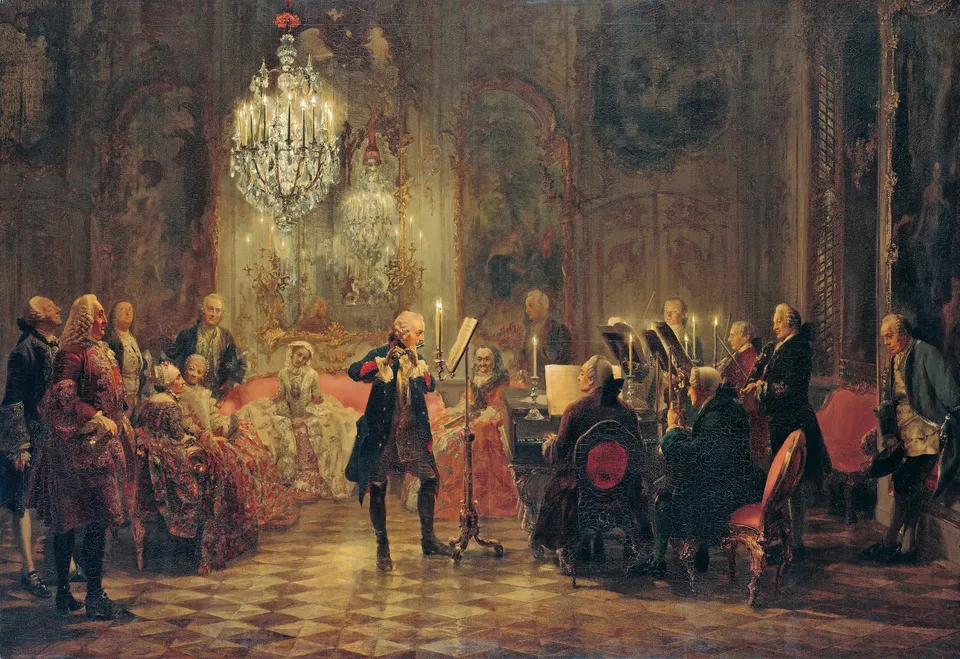
Adolph von Menzel · Public domain · Source
Brandenburg, ruled by the Hohenzollerns from the 15th century, joined with the Duchy of Prussia and became a kingdom in 1701. The “Soldier King” Frederick William I built a strong army officered by the Junkers (landed nobility) and a frugal bureaucracy.
Taking the throne in May 1740, Frederick II seized Austrian Silesia that winter. A devotee of the Enlightenment who befriended Voltaire and played the flute and wrote at his palace of Sanssouci, he abolished torture, practised religious toleration and promoted potato growing and industry. Such rule — embracing Enlightenment ideas and reforming from above while keeping power in the monarch’s hands — is called enlightened despotism, practised also by Joseph II of Austria and Catherine II of Russia.
But he left the Junkers’ privileges and serfdom untouched, slowing the growth of a middle class. At the same time in Joseon, King Yeongjo (r. 1724–1776) pursued the policy of impartiality (tangpyeong) to restrain factions and lightened the people’s military-tax burden with the Equal Service Law (1750).