Second Siege of Vienna
Also called: Battle of Vienna, Battle of Kahlenberg
The Ottoman grand vizier Kara Mustafa besieged the Habsburg capital Vienna for two months with a huge army but was crushingly defeated by a relief army led by King John III Sobieski of Poland.
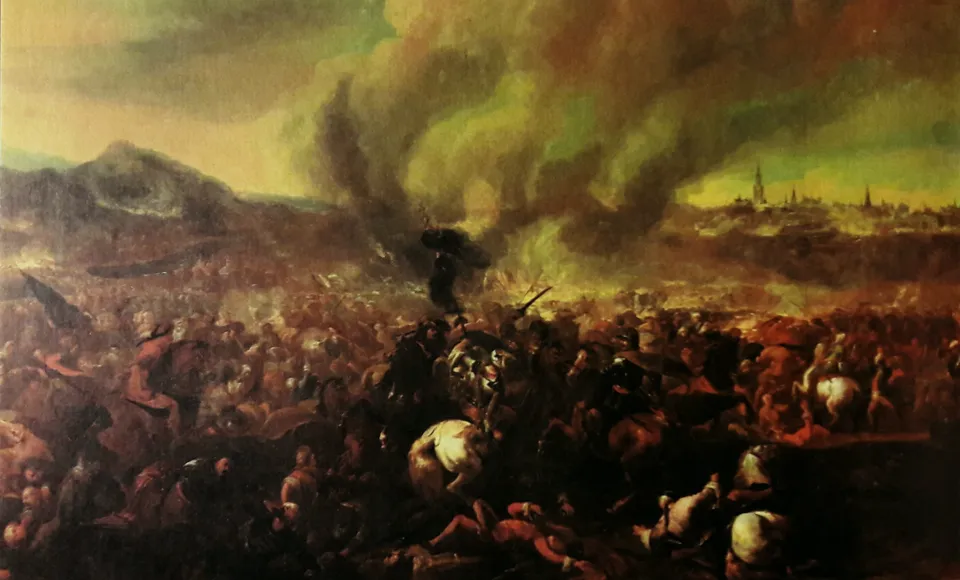
Ferdinand van Kessel the Elder · Public domain · Source
Revived in the mid-17th century under the Köprülü grand viziers, the Ottoman Empire in 1683 sent a great army under the grand vizier Kara Mustafa, ostensibly to support anti-Habsburg rebels in Hungary. From 14 July it besieged Vienna, digging mines beneath the walls and blowing them up, but the garrison held out for two months.
On 12 September a relief army under King John III Sobieski of Poland and princes of the Holy Roman Empire attacked down the Kahlenberg heights north of the city, and a charge of the Polish winged hussars broke the Ottoman army. Kara Mustafa was executed at Belgrade at the end of the year. The next year Austria, Poland and Venice formed a Holy League under papal sponsorship and counter-attacked; the Ottomans lost Hungary and began their retreat from Europe. Joseon at this time was ruled by Sukjong, under whom power passed back and forth between factions in sudden changes of government (hwanguk).