French Wars of Religion and the Edict of Nantes
Also called: Edict of Nantes, Huguenot Wars, St Bartholomew’s Day massacre
From 1562 France was torn for more than thirty years by civil war between Catholics and Calvinist Protestants (Huguenots); in 1598 Henry IV ended it with the Edict of Nantes, granting the Huguenots freedom of conscience.
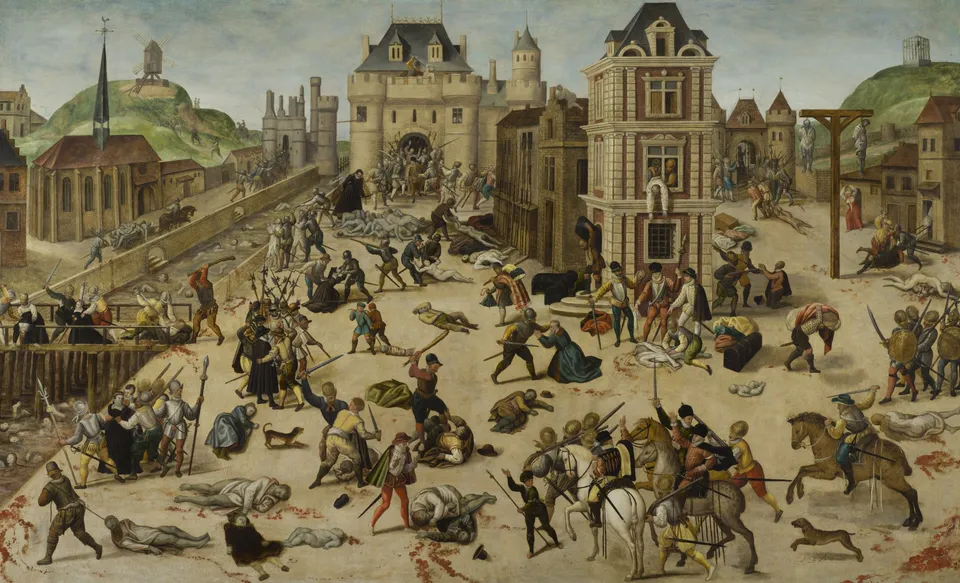
François Dubois · Public domain · Source
Calvinism spread quickly among French nobles and townspeople, who became known as Huguenots. While the regent Catherine de’ Medici steered between the two camps behind her young sons, the Catholic house of Guise and the Protestant house of Bourbon fought for influence over the crown. War broke out in March 1562 when the Duke of Guise’s troops killed Huguenots at worship at Vassy.
On St Bartholomew’s Day, 24 August 1572, Huguenot leaders gathered in Paris for a royal wedding were massacred, and thousands died in Paris and the provinces. When the Valois line died out, the Huguenot leader Henry of Navarre inherited the throne as Henry IV, founding the Bourbon dynasty, and in 1593 converted to Catholicism to win over Catholic Paris.
In April 1598 Henry IV issued the Edict of Nantes, keeping Catholicism as the state religion while granting the Huguenots freedom of conscience, worship in designated places and access to public office — a law that let two confessions live side by side in one European kingdom. Royal power grew stronger by settling the religious divide, paving the way for absolutism. In the same year (1598) the seven-year Imjin War in Joseon ended with the Battle of Noryang.