Luther at the Diet of Worms
Also called: Edict of Worms, Reichstag zu Worms
In April 1521 Luther stood before Emperor Charles V at the Diet of Worms and refused to recant; outlawed by the Empire, he translated the Bible into German under the protection of the Elector of Saxony.
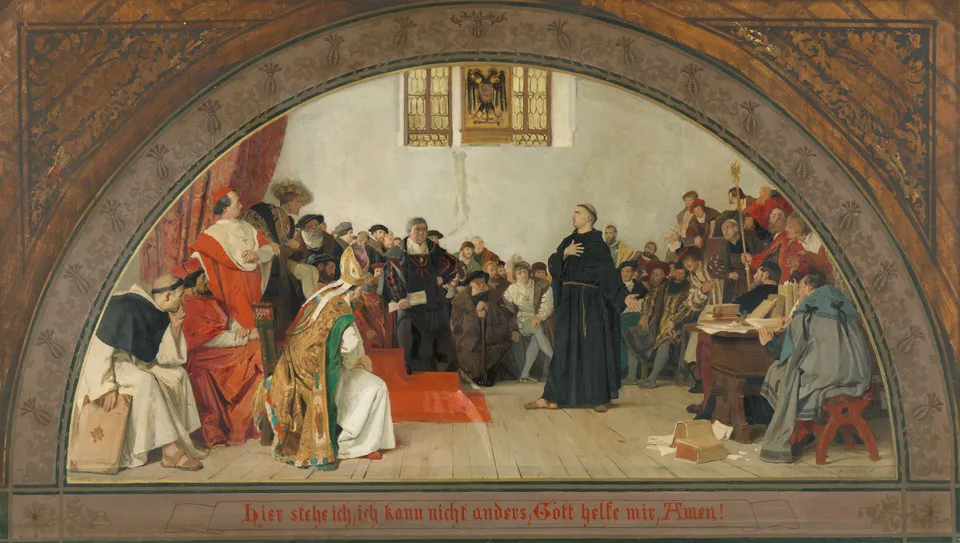
Anton von Werner · Public domain · Source
After the Ninety-five Theses (1517), Luther argued at the Leipzig Disputation (1519) that popes and councils could err, and in 1520, in widely printed pamphlets such as To the Christian Nobility of the German Nation, proclaimed the priesthood of all believers. When Pope Leo X threatened him with excommunication, Luther publicly burned the bull at Wittenberg, and he was excommunicated early in 1521.
The new emperor, Charles V, summoned him to the Diet of Worms. On 17–18 April Luther answered that unless refuted by scripture and plain reason he could not recant. The Edict of Worms in May declared him a heretic and outlaw and banned his writings, but Elector Frederick of Saxony hid him at the Wartburg, where he translated the New Testament into German (published 1522).
Tied down by wars with France and the Ottomans, the emperor could not enforce the edict, and the princes who backed Luther multiplied. When they protested against a decision of the Diet of Speyer in 1529, the reformers came to be called “Protestants”. Around the same time in Joseon, Jo Gwang-jo pushed reforms such as the recommendation exam (hyeollyanggwa) until he fell in the Gimyo Purge (1519).