Seven Years’ War
Also called: Seven Years War, Diplomatic Revolution, French and Indian War, Treaty of Paris (1763)
In 1756–1763 Austria, seeking to regain Silesia, allied with France and Russia against Prussia, while Britain and France fought for colonies in North America and India; Britain defeated France and won colonial supremacy.
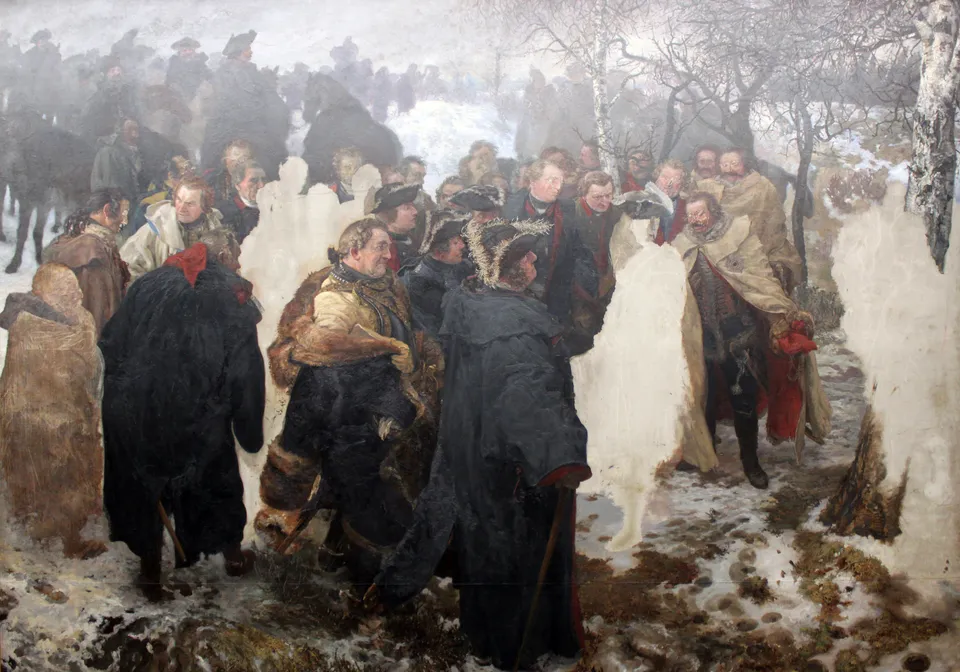
Adolph von Menzel · Public domain · Source
Through the “Diplomatic Revolution” (1756) Maria Theresa allied with her old enemy France and drew in Russia as well to encircle Prussia. Backed by Britain, Frederick II struck first at Saxony in 1756 and won at Leuthen (1757), but was badly defeated at Kunersdorf (1759) and his capital was in danger. He survived when Empress Elizabeth of Russia died in 1762 and her successor Peter III, an admirer of Frederick, made peace, and the Treaty of Hubertusburg (1763) left him Silesia.
Overseas, Britain fought France in the French and Indian War, taking Quebec (1759), and also drove French power out of India. By the Treaty of Paris (1763) Britain gained Canada, Louisiana east of the Mississippi and Spanish Florida, securing colonial supremacy.
Fought across several continents, the war is sometimes called the “first world war”. When Britain taxed its colonies to pay its war debts, the American Revolution followed, and France’s financial crisis led to the French Revolution. In 1762, during the war, King Yeongjo of Joseon had Crown Prince Sado shut in a rice chest to die (the Imo Incident).