War of the Spanish Succession
Also called: Treaty of Utrecht, Battle of Blenheim
When the Spanish Habsburg line died out, France and Spain fought Britain, the Netherlands and Austria in 1701–1714 over the accession of Louis XIV’s grandson as Philip V; under the Treaty of Utrecht Philip kept his throne, but Britain gained Gibraltar and lands in North America.
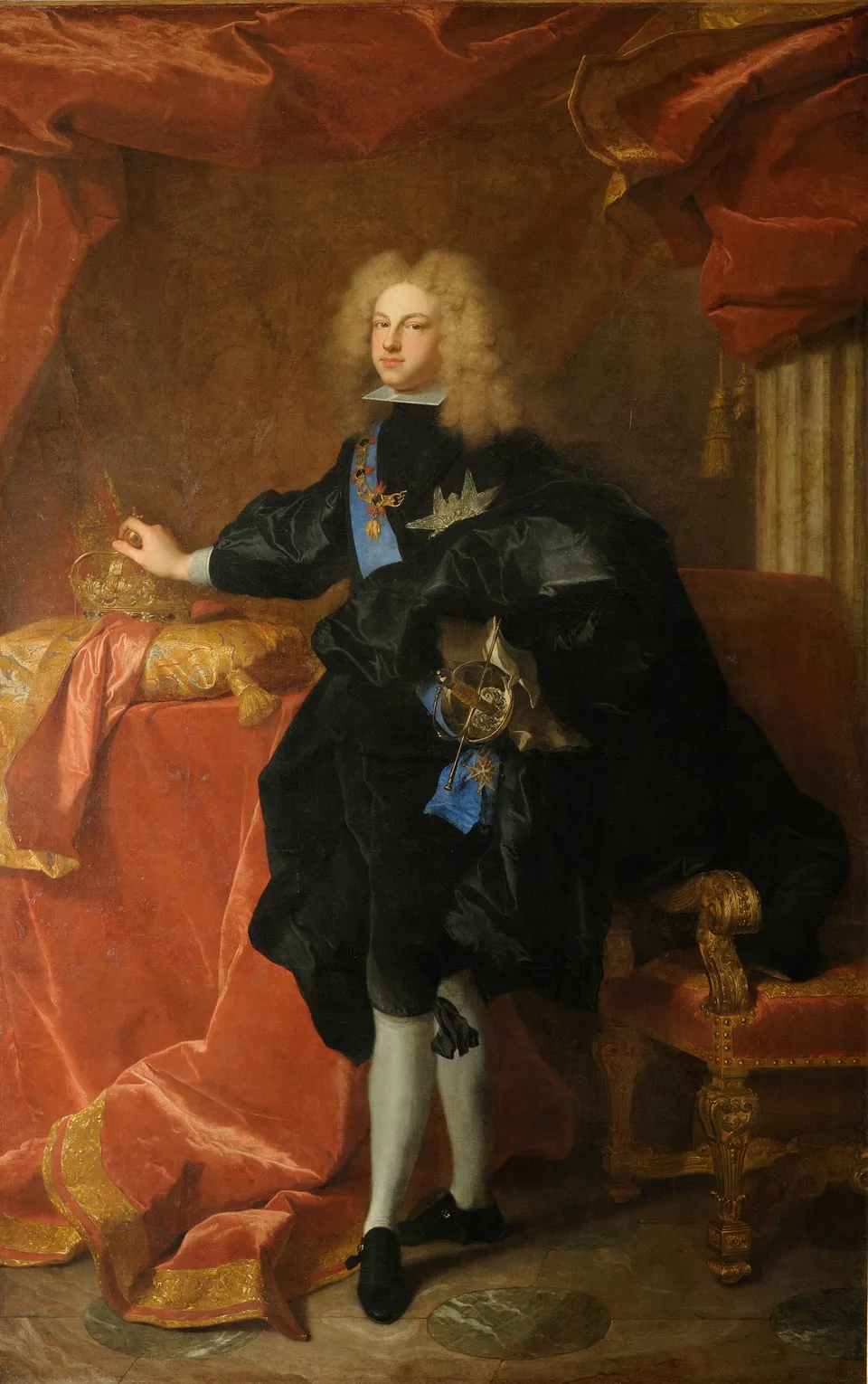
Hyacinthe Rigaud · Public domain · Source
In 1700 the childless Charles II of Spain died, naming Louis XIV’s grandson Philip, Duke of Anjou, as his heir. Fearing that France and Spain would be united under one dynasty, England, the Netherlands and Austria formed a Grand Alliance and went to war, and Britain’s Duke of Marlborough and Austria’s Prince Eugene won a great victory at Blenheim (1704).
By the Treaties of Utrecht (1713) and Rastatt (1714), Philip V kept the Spanish crown on condition that the French and Spanish crowns never be united. Britain gained Gibraltar, Minorca, and Newfoundland, Nova Scotia and Hudson Bay in North America, plus the right to supply slaves to Spain’s colonies, setting it on the road to naval supremacy; Austria received the Spanish Netherlands, Milan and Naples. The balance of power — preventing any one state from growing too strong — became the guiding principle of European diplomacy. In 1712, during the war, Joseon and the Qing set up the Baekdusan boundary stele to fix their border.