Thirty Years’ War
Also called: Thirty Years War, Defenestration of Prague
The last great war of religion, fought mainly in the Holy Roman Empire from the 1618 revolt of Bohemian Protestants until 1648; as Denmark, Sweden and France joined in, it became a struggle for European supremacy.
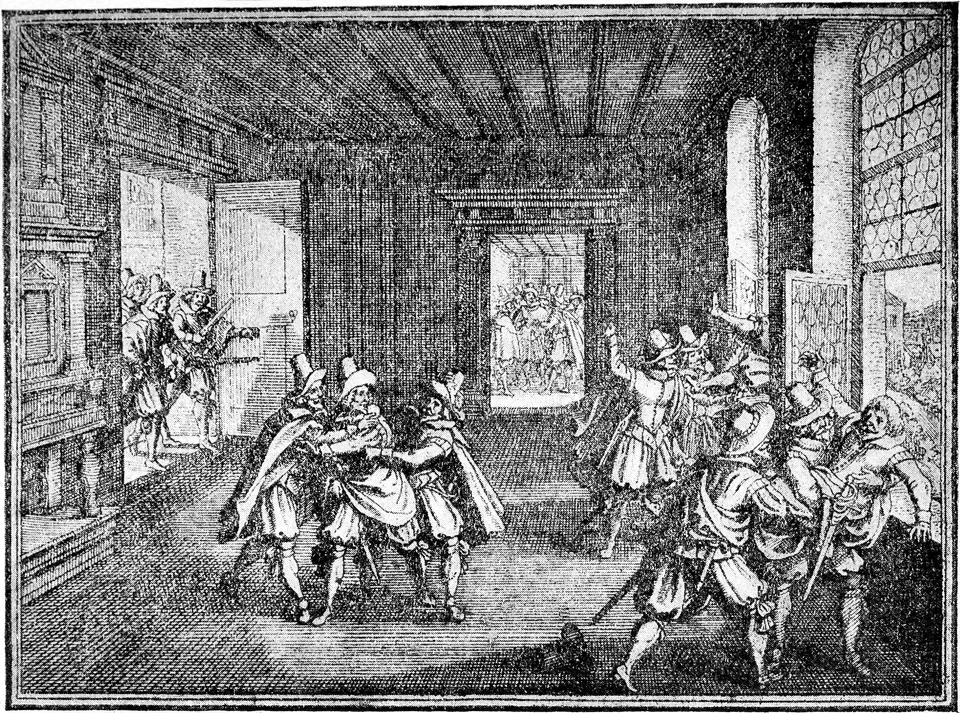
Matthäus Merian · Public domain · Source
Tension ran high because the Peace of Augsburg had not recognised Calvinism and Protestant and Catholic leagues of princes faced each other. On 23 May 1618 Protestant nobles in Bohemia threw the Catholic emperor’s officials from a window of Prague Castle (the Defenestration of Prague), sparking a revolt that was crushed at the White Mountain in 1620.
Denmark (1625) and then Gustavus Adolphus of Sweden (1630) invaded in the name of the Protestant cause. Gustavus beat the imperial forces under Wallenstein but fell at Lützen (1632). From 1635 Catholic France, guided by Cardinal Richelieu, fought openly on the Protestant side to break the Habsburgs, and the war turned from a war of religion into a contest of power between states.
Mercenary plundering, famine and plague devastated Germany, and some regions lost more than a third of their people. The war ended with the Peace of Westphalia (1648). At the same time in East Asia the Later Jin (Qing) was rising, and Joseon, after Gwanghaegun’s policy of neutrality, suffered the Manchu invasions of 1627 and 1636.