Act of Supremacy and the Church of England
Also called: English Reformation, Anglican Church, Church of England
In 1534 Henry VIII of England broke with the pope over his divorce, passed the Act of Supremacy and made himself head of the English Church — the beginning of the Church of England (Anglicanism).
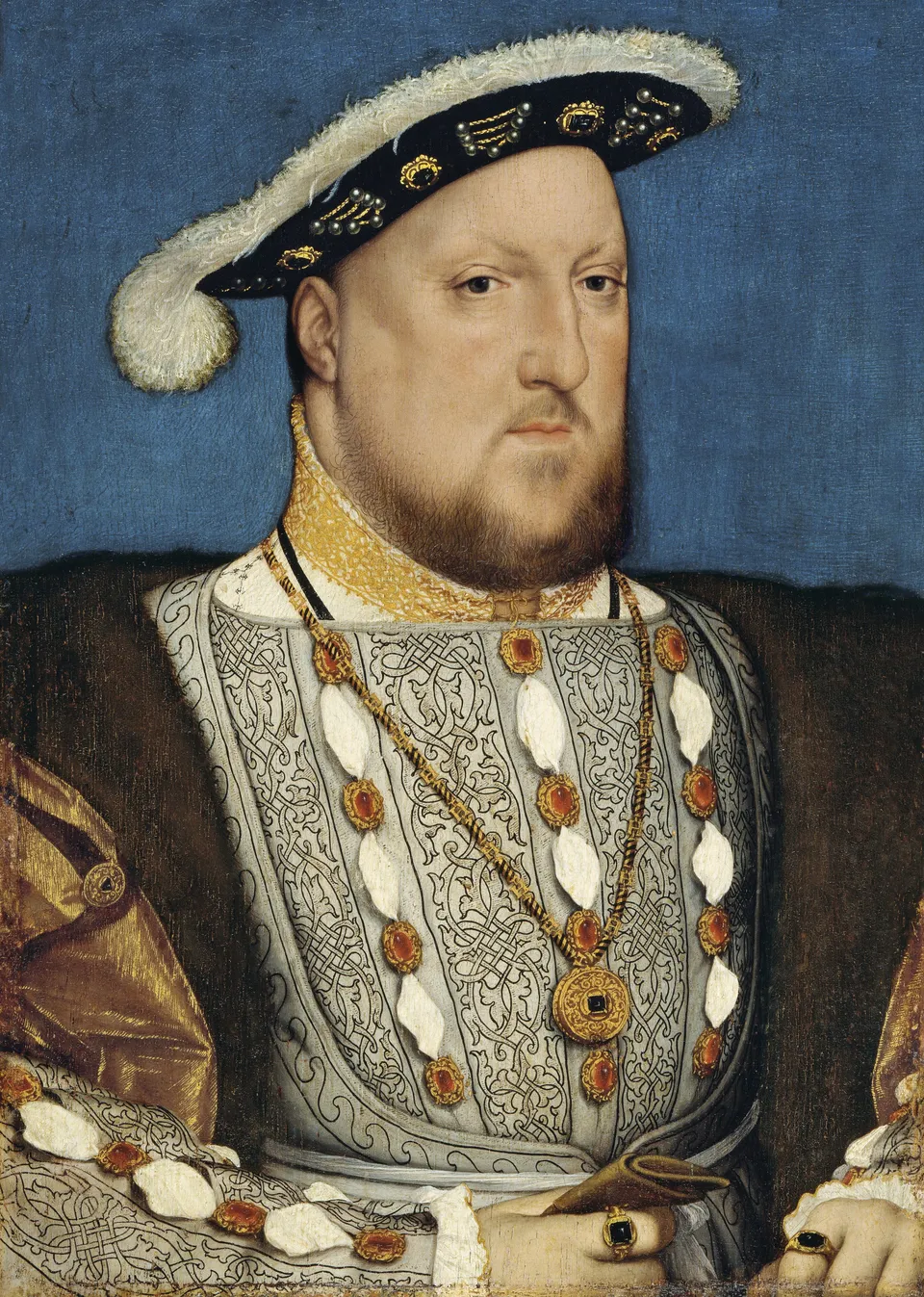
Hans Holbein the Younger · Public domain · Source
Lacking a son, Henry VIII asked the pope to annul his marriage to Queen Catherine, his brother’s widow and a Spanish princess, but the pope, wary of Catherine’s nephew Emperor Charles V, refused. In 1533 Henry had Archbishop Cranmer of Canterbury annul the marriage and wed Anne Boleyn.
In November 1534 Parliament passed the Act of Supremacy declaring the king “the only supreme head in earth of the Church of England”. Thomas More, who refused to accept it, was executed, and in 1536–1541 the monasteries were dissolved and their lands passed to the crown and the gentry. Yet doctrine and ritual under Henry stayed close to Catholicism.
England swung Protestant under Edward VI and back to Catholicism under Mary I; Elizabeth I issued a new Act of Supremacy and Act of Uniformity in 1559 and fixed the Church’s shape with the Thirty-nine Articles (1563). Calvinists who thought the Church insufficiently reformed became the Puritans. At the same time Joseon was ruled by King Jungjong, under whom the Neo-Confucian literati were regrowing.