Elizabeth I and the Defeat of the Spanish Armada
Also called: Spanish Armada, Invincible Armada, Battle of Gravelines
In 1588 the great fleet (the “Invincible Armada”) that Philip II of Spain sent against England was checked by the English navy in the Channel and then wrecked by storms — a starting point for England’s rise as a sea power.
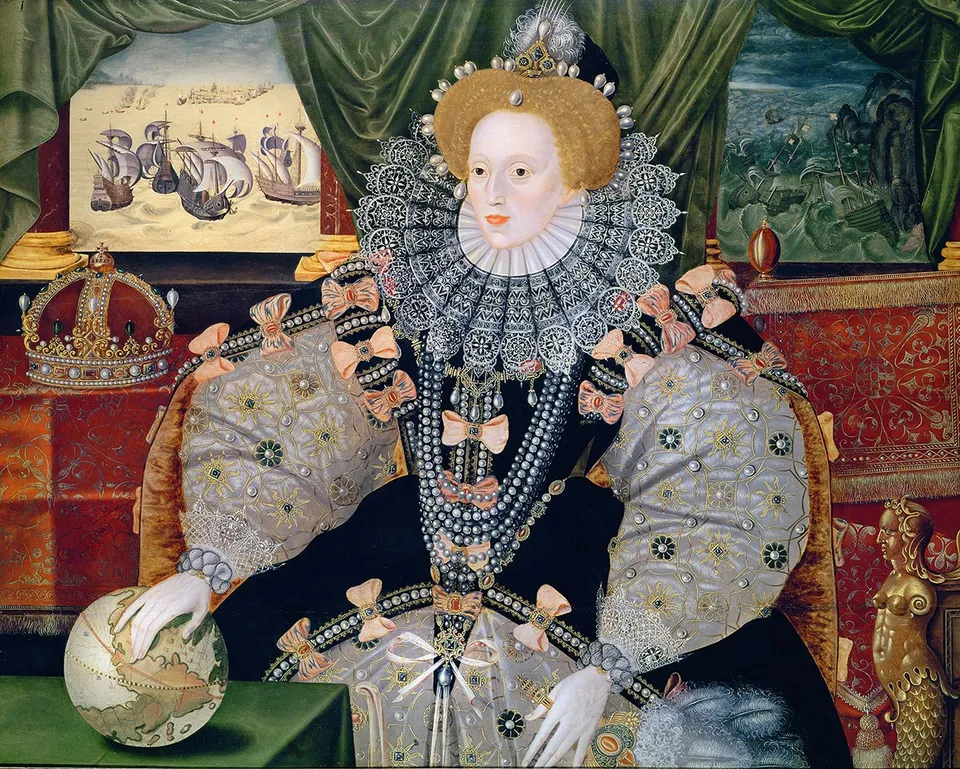
Formerly attributed to George Gower · Public domain · Source
Elizabeth I re-established the Church of England (1559) and set England on a Protestant course. As England aided the Dutch rebels and privateers such as Drake plundered Spain’s silver fleets, Philip II, champion of Catholicism, resolved to invade England after Mary, Queen of Scots, was executed (1587).
In the summer of 1588 a fleet of some 130 ships left Lisbon and entered the Channel. The English met it with faster, better-gunned ships; on the night of 7 August they sent fireships against the anchored fleet off Calais, breaking its formation, and won a major victory off Gravelines the next day. Unable to turn back, the Armada sailed around Scotland and Ireland, where storms cost it many ships and men.
The war went on until 1604 and Spain did not collapse at once, but the victory boosted Protestant England’s confidence and laid a foundation for overseas expansion; in 1600 Elizabeth chartered the East India Company. Four years later (1592) the Imjin War broke out in Joseon.