German Peasants’ War
Also called: Peasants’ Revolt, Twelve Articles, Deutscher Bauernkrieg
In 1524–1525 peasants across southern and central Germany, inspired by the Reformation, rose up demanding the end of serfdom and other reforms, but were crushed by the princes — with Luther on the princes’ side.
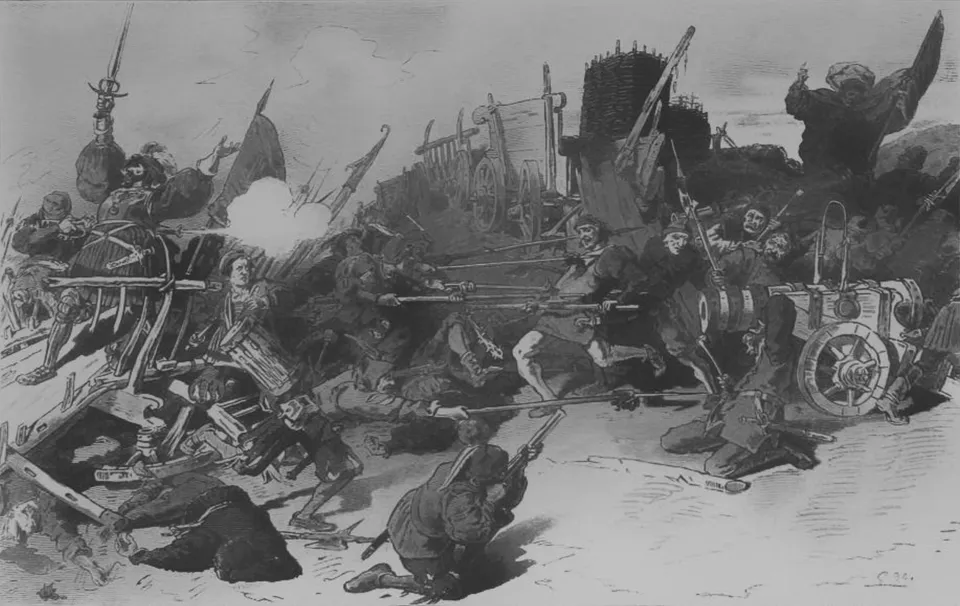
Otto Emil Lau · Public domain · Source
In south-western Germany, where lords’ demands were growing heavier, peasants rose in the summer of 1524, and the next year the revolt spread to Swabia, Franconia, Thuringia and the Tyrol. The Twelve Articles drawn up at Memmingen in March 1525 demanded, on the authority of scripture, the right of each community to choose its pastor, the abolition of serfdom, and an end to unjust dues and the seizure of common land. In Thuringia the radical reformer Thomas Müntzer led a peasant army to build the kingdom of God.
Luther, who at first appealed to both sides, wrote Against the Murderous, Thieving Hordes of Peasants as the revolt spread, urging the princes to crush it. On 15 May 1525 Müntzer’s army was routed at Frankenhausen and he was executed. Some 100,000 peasants are thought to have died.
From then on the Lutheran Reformation became a reform “from above” led by the princes, while the radicals lived on in the Anabaptists. Around the same time in Joseon, the meritorious-elite faction had regained control of the court after the Gimyo Purge.