Absolutism of Louis XIV
Also called: Sun King, Divine right of kings, Mercantilism, Colbertism, Palace of Versailles
Ruling in person from 1661, Louis XIV invoked the divine right of kings and perfected absolute monarchy through a standing army, a bureaucracy and Colbert’s mercantilism, moving his court to the Palace of Versailles in 1682.
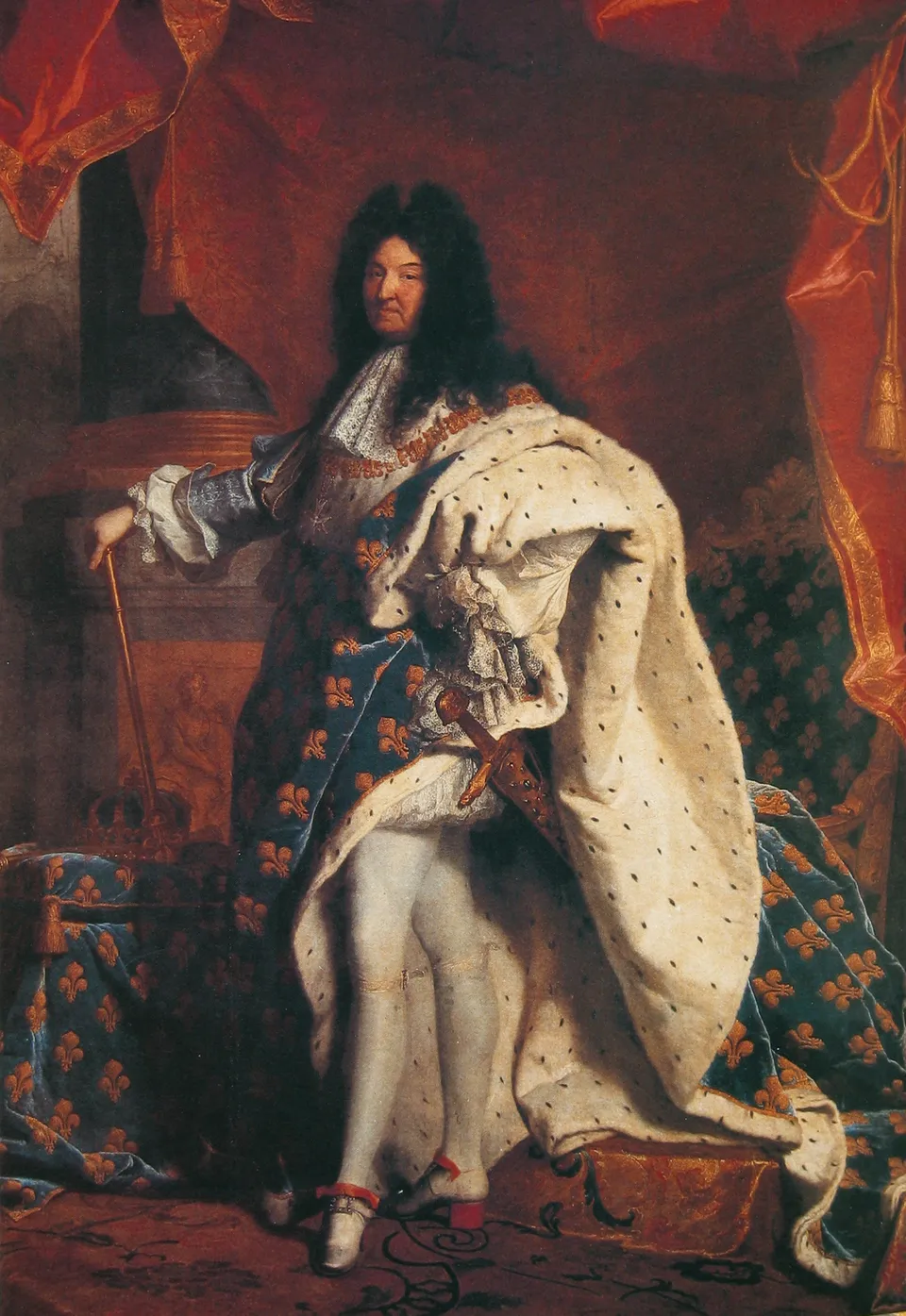
Hyacinthe Rigaud · Public domain · Source
Crowned at the age of four, Louis XIV lived through the nobles’ revolt of the Fronde (1648–1653), and from March 1661, when Cardinal Mazarin died, he ruled in person without a chief minister. “L’État, c’est moi” (“I am the state”) is attributed to him, and Bossuet justified his rule with the divine right of kings — that royal power comes from God. Absolutism rested on two pillars: a bureaucracy that obeyed the king’s orders and a standing army.
To increase the nation’s wealth, Colbert, controller-general of finances, kept out foreign goods with protective tariffs, founded royal manufactories such as the Gobelins, created an East India Company and built canals and roads. This mercantilism, which sought power by accumulating gold and silver, was the economic policy of absolutism. In May 1682 Louis moved his court to the splendid Baroque Palace of Versailles, ruling with the nobles kept close at hand, and his court culture became the model for Europe’s royal houses.
But repeated wars, such as the Dutch War and the War of the Spanish Succession, and the revocation of the Edict of Nantes (1685) strained the treasury, and the resulting debt became a background to the French Revolution. At the same time in Joseon, King Sukjong (r. 1674–1720) strengthened royal power through sudden changes of ruling faction (hwanguk).