Peace of Augsburg
Also called: Augsburg Settlement, Cuius regio, eius religio
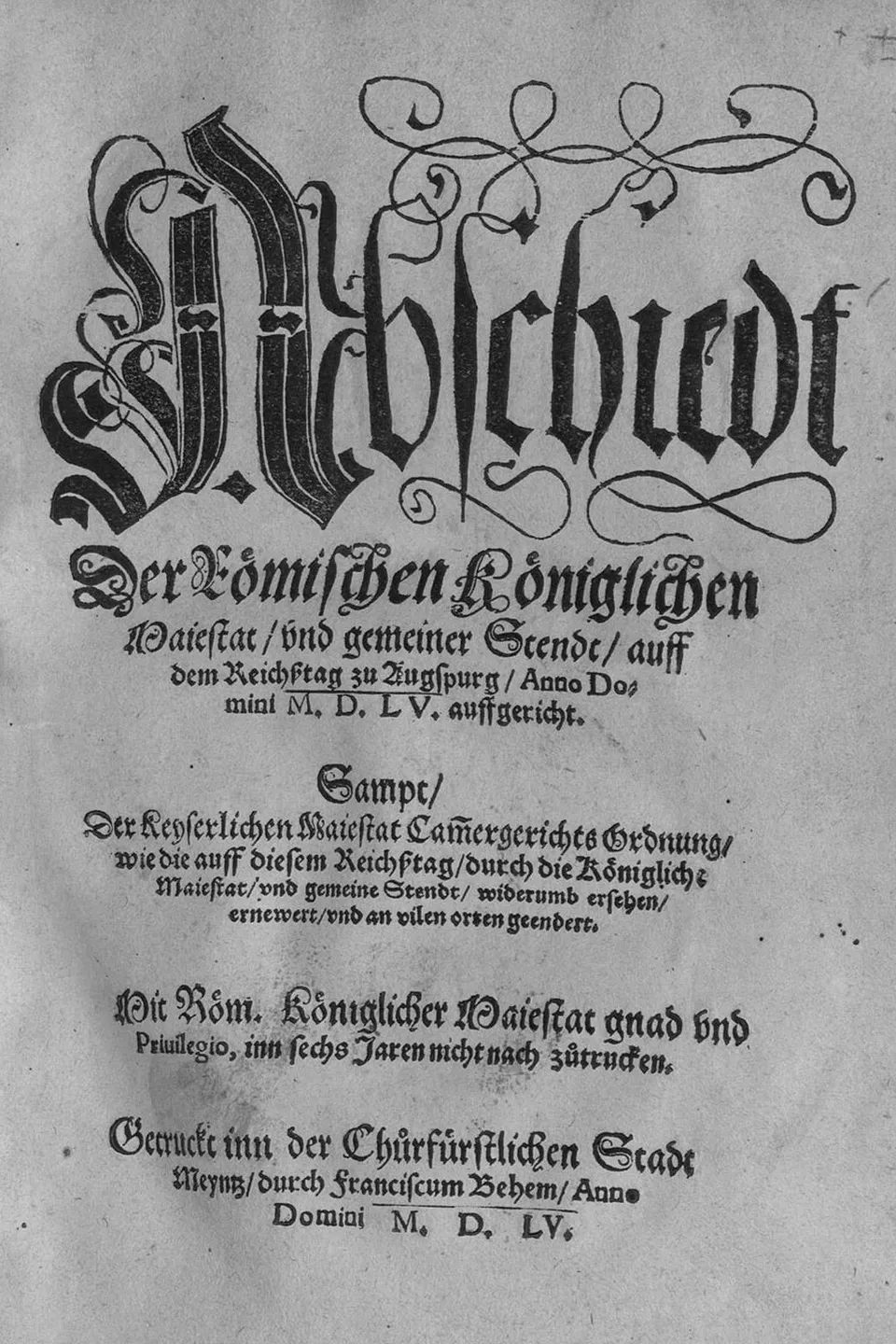
At the 1555 Imperial Diet of Augsburg, the princes of the Holy Roman Empire won the right to choose Catholicism or Lutheranism for their lands; individual freedom of belief and Calvinism were not recognised.
User:Michail · Public domain · Source
Charles V defeated the Schmalkaldic League of Lutheran princes in the Schmalkaldic War (1546–1547), but when Elector Maurice of Saxony turned against him he could no longer suppress Protestantism. On 25 September 1555 the Diet of Augsburg allowed princes and imperial cities to choose between Catholicism and Lutheranism, with their subjects to conform or emigrate — a principle later summed up as “whose realm, his religion” (cuius regio, eius religio).
Lutheranism was recognised for the first time, but faith was the prince’s choice, not the individual’s, and Calvinism was left out — limits that led on to the Thirty Years’ War. The next year Charles V abdicated, leaving Spain and the Netherlands to his son Philip II and Austria and the imperial title to his brother Ferdinand I, splitting the Habsburgs in two. In the same year (1555) Japanese pirates raided Joseon in the Eulmyo Incident, after which the Border Defence Council (Bibyeonsa) became a standing body.