Religion27 September 1540

Founding of the Society of Jesus

Also called: Jesuits, Society of Jesus

In 1540 Pope Paul III approved Ignatius of Loyola’s Society of Jesus, which through education and overseas missions became the spearhead of the Catholic Reformation (Counter-Reformation).
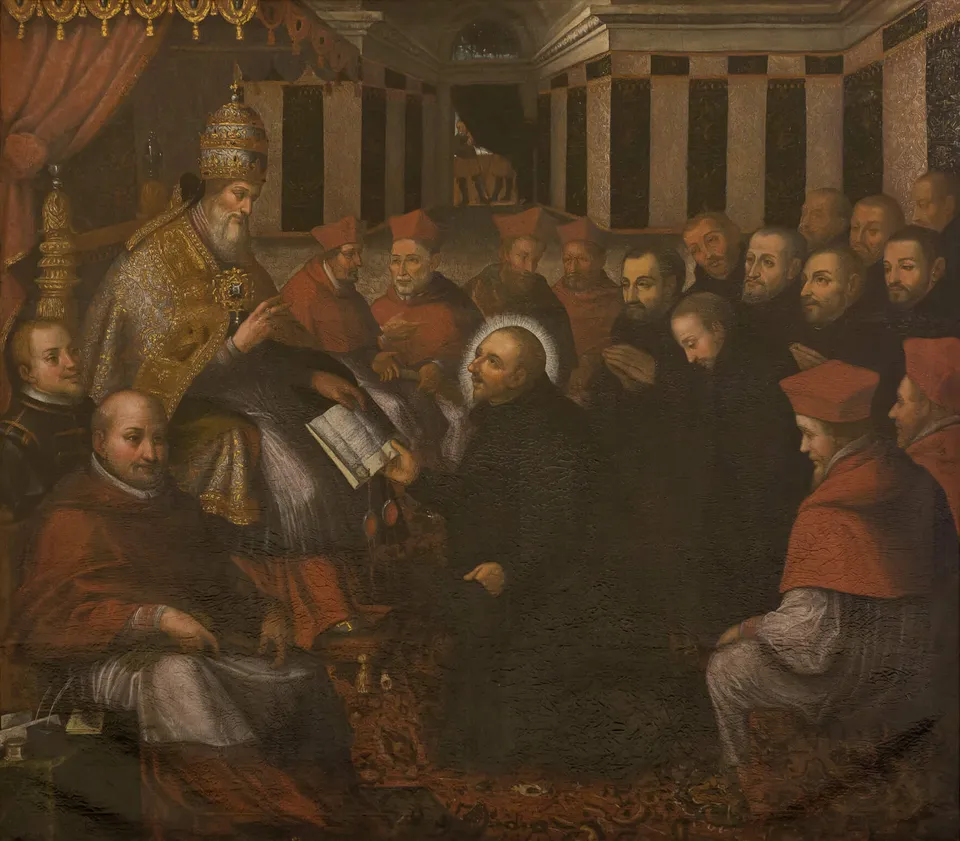
Pope Paul III approving the Society of Jesus — painting by Domingos da Cunha, c. 1640 (New Cathedral, Coimbra, Portugal)

Domingos da Cunha · Public domain · Source

Ignatius of Loyola, a Spaniard whose soldiering ended with a wound, wrote the Spiritual Exercises and in 1534 in Paris took vows of poverty and chastity with companions including Francis Xavier. Approved by a bull of Paul III on 27 September 1540, the Jesuits swore special obedience to the pope and kept a discipline as strict as an army’s.

The Jesuits founded schools across Europe to win back lands lost to Protestantism and sent missionaries to Asia and the Americas along the new sea routes. Xavier brought Christianity to Japan in 1549, and Matteo Ricci published The True Meaning of the Lord of Heaven in Ming China. That book, noted in Yi Su-gwang’s Jibong yuseol (1614), became a starting point of Western Learning (seohak) in Joseon.

The map in 1540

OpenFreeMap © OpenMapTiles © OpenStreetMap contributors

States at the time
Papal States
Places
Rome

People

  • Ignatius of Loyola1491 – 1556

    creator · Basque soldier turned priest from Spain who founded the Society of Jesus with his companions in 1534, won papal approval in 1540 and became its first superior general

Before and after

Themes that include this event

  • Reformation and Absolutism1517 – 1796

    From Luther’s Ninety-five Theses to Catherine the Great — the wars of religion of a divided Christendom ended at Westphalia, and absolute monarchs armed with divine right, standing armies, bureaucracies and mercantilism, followed by the enlightened despots of eastern Europe, contended for the balance of power among sovereign states