Hwaseong Fortress built
Jeongjo built a new fortress at Suwon, where he had moved his father’s tomb. Jeong Yak-yong helped design it and introduced a crane; the work was recorded in a detailed royal protocol.
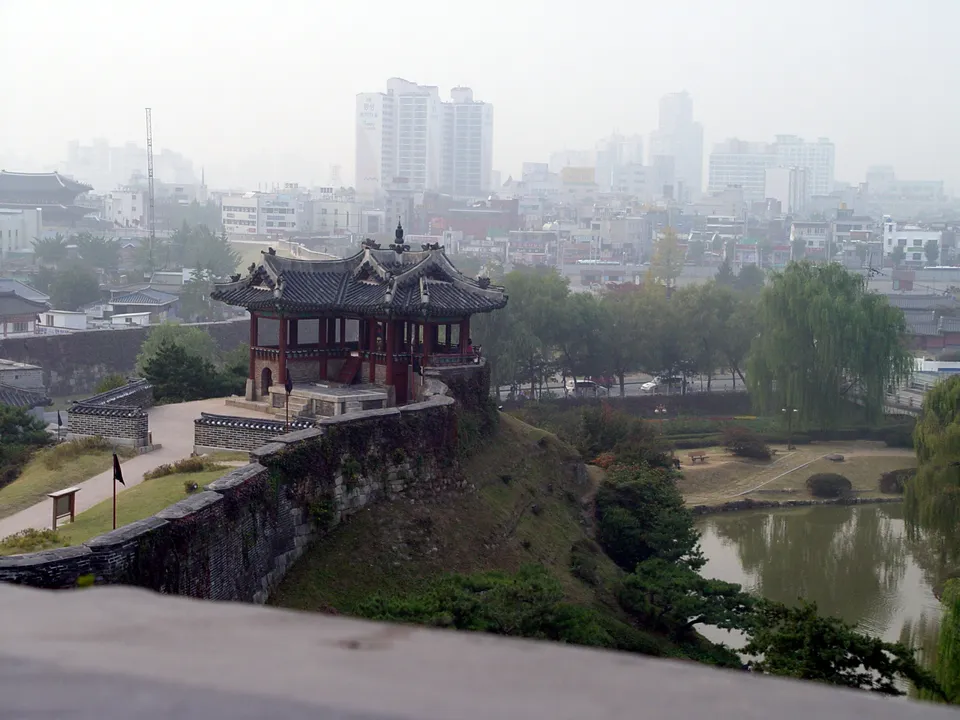
Jpbarrass · Public domain · Source
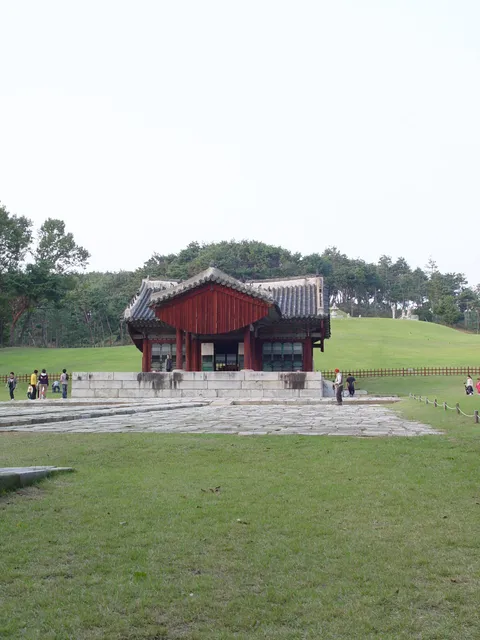
In 1789 Jeongjo moved Crown Prince Sado’s tomb from Mount Baebong in Yangju to Mount Hwa at Suwon, naming it Hyeollyungwon, and relocated the town of Suwon to the foot of Mount Paldal. Hwaseong was built around the new town.
Work began in the 1st month of 1794 and, though planned for ten years, finished in the 9th month of 1796, after two and a half. Drawing on a Chinese treatise on machines, Jeong Yak-yong designed a lifting crane and pulleys that made heavy stones easy to raise. Workers were hired for wages rather than conscripted. The walls combined stone and brick, with observation towers and cannon bastions.
Jeongjo stationed the outer division of his royal guard there and fostered trade, meaning the city to be a base of royal power; in 1795 he made a celebrated procession there for his mother Lady Hyegyeong’s sixtieth birthday. The construction record allowed the walls, damaged in the Korean War, to be restored faithfully, and the fortress became a UNESCO World Heritage Site in 1997.