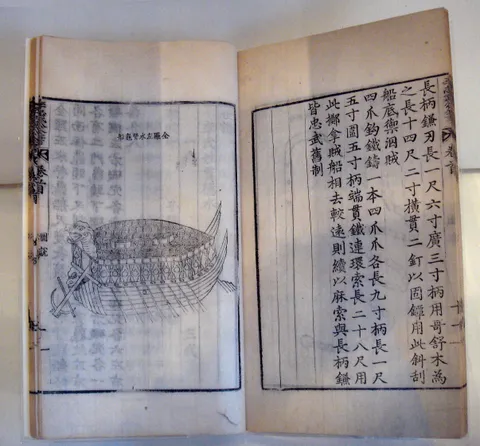
Conflict13 April 1592 – 19 November 1598(Lunar)

Imjin War

Also called: Japanese invasions of Korea (1592–1598)

A seven-year war that began with Japan's invasion of Joseon in 1592 and lasted until 1598. Ming China sent troops, turning it into an East Asian international war.
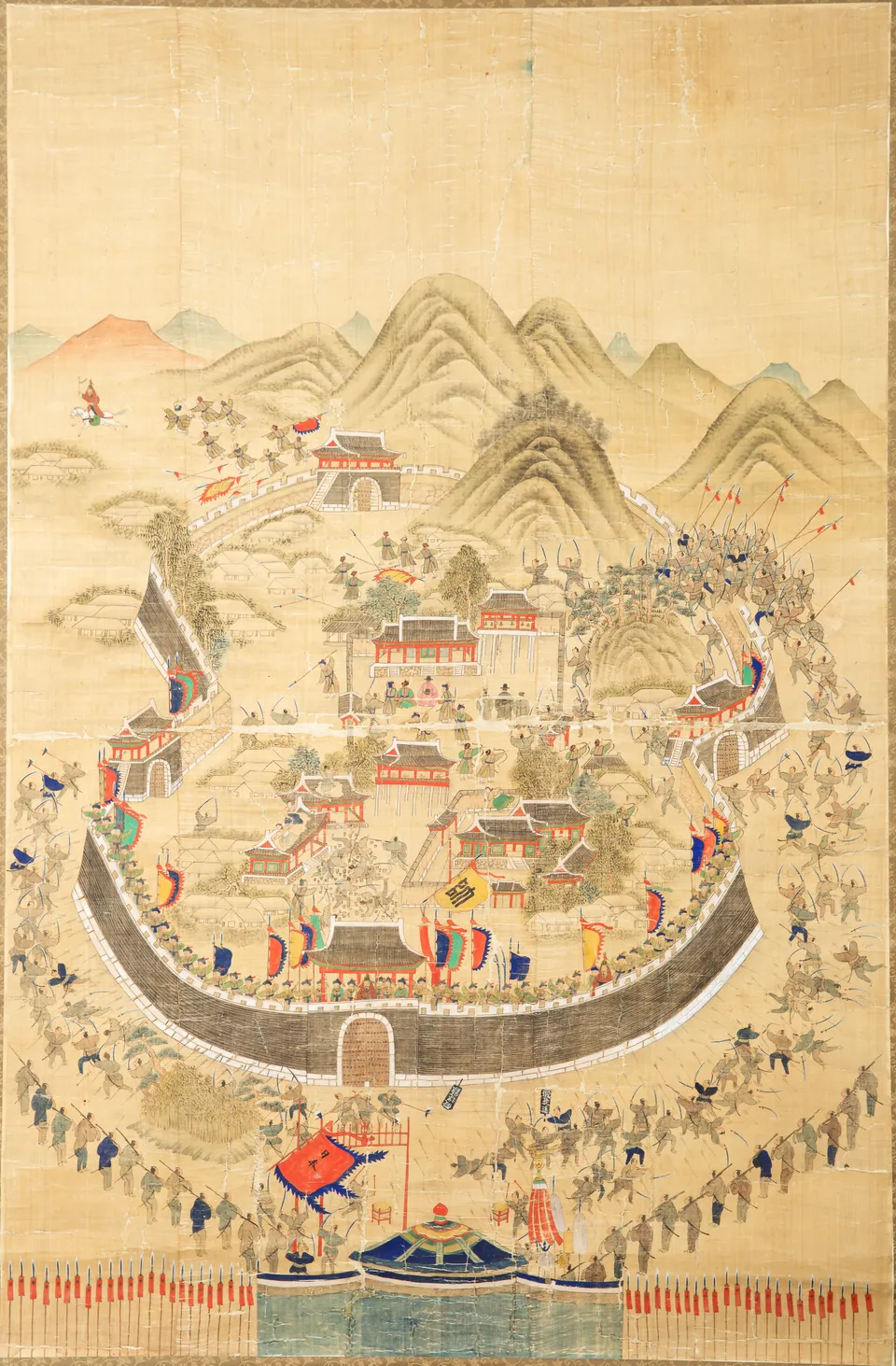
Dongnaebu Sunjeoldo — the 1592 siege of Dongnae Fortress, painted by Byeon Bak in 1760

변박 (卞璞) · Public domain · Source

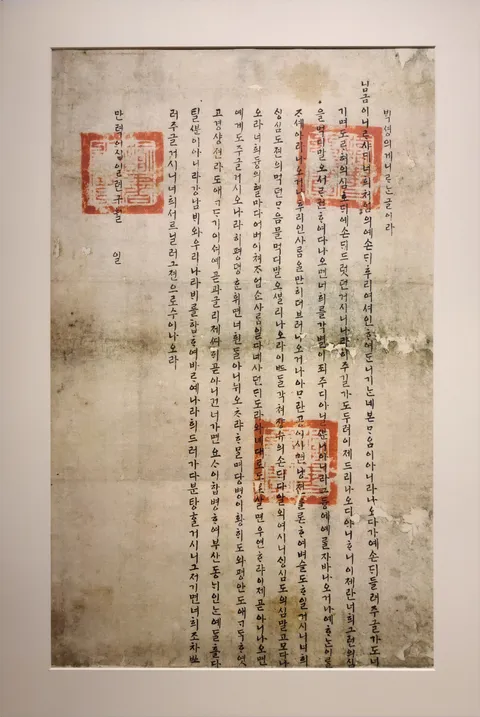
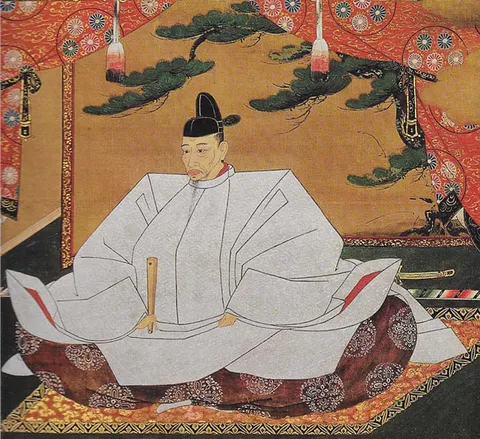
Having ended the Warring States period and unified Japan, Toyotomi Hideyoshi sought to turn his lords’ energies outward and expand onto the continent. He demanded that Korea let his armies pass to attack Ming — the demand Koreans call jeongmyeong gado, "conquer Ming, borrow the road". His letters of 1590–1591 actually told Korea to lead the way against Ming; Sō Yoshitoshi of Tsushima softened this to a request merely to let the army through. Korea, a tributary of Ming, saw it as a pretext for invasion and refused, and Hideyoshi used the refusal as grounds for war.

On 13 April 1592 (lunar calendar), the Japanese landed at Busan. Busanjin fell within a day. Before Dongnae the Japanese demanded "Fight if you will fight; if not, let us pass", and Magistrate Song Sang-hyeon answered "It is easy to die fighting, hard to let you pass" and died resisting. Hanyang was taken within twenty days, and King Seonjo fled north to Uiju and asked Ming for help.

At sea, the Joseon navy under Yi Sun-sin won a string of victories at Okpo, Hansando and elsewhere, cutting the Japanese supply lines, while volunteer militias rose across the country. After the allied Joseon and Ming forces retook Pyongyang in January 1593, the Japanese withdrew to the southern coast and peace talks began.

When the talks collapsed, Japan invaded again in 1597 (the Jeongyu War). Yi Sun-sin held off the Japanese fleet at Myeongnyang with only 13 ships. After Hideyoshi died in 1598 the Japanese withdrew, and Yi Sun-sin was killed in the final battle at Noryang.
The map in 1592

OpenFreeMap © OpenMapTiles © OpenStreetMap contributors

States and rulers at the time
Joseon · invaded — Seonjo
Japan · invader
Ming · reinforcements — Wanli Emperor
Places
Busanjin Fortress, Hanyang, Pyongyang Fortress, Waters off Hansando, Myeongnyang Strait, Waters off Noryang

People

  • King Seonjo1552 – 1608

    monarch · Fourteenth king of Joseon; fled to Uiju and asked Ming for help

  • Toyotomi Hideyoshi1537 – 1598

    leader · Unified Japan and launched the invasion of Korea

  • Yi Sun-sin1545 – 1598

    commander · Admiral of the Joseon navy, victorious at Okpo, Hansando and Myeongnyang

  • Ryu Seong-ryong1542 – 1607

    participant · Chief State Councillor who directed the war effort during the Imjin War, proposed the Hullyeon Dogam, and wrote the Jingbirok

  • Sin Rip1546 – 1592

    commander · General who made a back-to-the-river stand at Tangeumdae, Chungju, early in the Imjin War and died when routed by Konishi Yukinaga

  • Hyujeong (Seosan Daesa)1520 – 1604

    militia leader · Buddhist master who, as supreme commander of monks, raised monk soldiers across the country in the Imjin War and joined the recapture of Pyongyang

  • Yujeong (Samyeong Daesa)1544 – 1610

    militia leader · Hyujeong's disciple who led monk soldiers in the Imjin War and after the war went to Japan to negotiate and bring captives home

29 parts of this event

  1. 1

    The first Japanese division under Konishi Yukinaga landed at Busan and took Busanjin Fortress in a day. Its commander Jeong Bal died defending it.

  2. 2

    The day after Busanjin fell, the Japanese surrounded Dongnae. Its magistrate Song Sang-hyeon died resisting, declaring "It is easy to die fighting, hard to let you pass".

  3. 3

    About ten days into the war Gwak Jae-u raised a volunteer militia in Uiryeong, and militias soon rose across the country.

  4. 4

    Yi Il met the Japanese at Bukcheon, Sangju, with hastily gathered men, who broke before the muskets. Yi fled alone to join Sin Rip at Chungju.

  5. 5

    Sin Rip made a stand with a river at his back at Tangeumdae, Chungju, against Konishi Yukinaga’s Japanese army, but was routed and died. When Chungju fell, King Seonjo fled the capital.

  6. 6

    At news of the defeat at Chungju, King Seonjo left Hanyang in the rain before dawn on the 30th. He went by Gaeseong and Pyongyang to Uiju on the Yalu and asked Ming for help.

  7. 7

    Twenty days after landing at Busan, the Japanese entered the capital: Konishi Yukinaga through the East Gate on the 2nd of the fifth month, Kato Kiyomasa through the South Gate on the 3rd.

  8. 8

    The Joseon navy under Yi Sun-sin won its first major victory over the Japanese fleet at Okpo on Geoje Island.

  9. 9

    Yi Sun-sin’s fleet destroyed 13 Japanese ships at Sacheon. The turtle ship fought for the first time, and Yi was shot in the shoulder.

  10. 10

    After King Seonjo left, Konishi Yukinaga’s army crossed the Taedong and took Pyongyang, where it stayed until January 1593.

  11. 11

    The Japanese drive on Jeonju was stopped at the passes of Ungchi and Ichi. Holding Jeolla, the granary of the south, gave Joseon the means to fight on.

  12. 12

    Yi Sun-sin lured the Japanese fleet out of the Gyeonnaeryang strait and crushed it off Hansando with his crane-wing formation, closing the western sea route to Japanese supply.

  13. 13

    Go Gyeong-myeong’s militia (seventh month) and Jo Heon and Yeonggyu’s militia and monk soldiers (eighth month) attacked the Japanese at Geumsan and died to a man. Jo Heon’s 700 lie in the Tomb of the Seven Hundred.

  14. 14

    Ming sent troops at Joseon’s request. Zu Chengxun’s first force was beaten at Pyongyang in July; while Shen Weijing bought time, Li Rusong crossed the Yalu with over 40,000 men in December.

  15. 15

    Yi Sun-sin attacked the Japanese base at Busan and destroyed some 100 ships at anchor. Jeong Un, commander of Nokdo, was killed.

  16. 16

    Magistrate Kim Si-min held Jinju Fortress for six days with about 3,000 men against some 20,000 Japanese troops, but died of his wounds.

  17. 17

    Ming relief forces under Li Rusong and Joseon troops retook Pyongyang, and Konishi Yukinaga's army fell back south.

  18. 18

    Gwon Yul repelled an assault by more than 30,000 Japanese troops on Haengju Fortress, with townspeople carrying stones to the defenders.

  19. 19
    1593 – 1596Peace Talks

    Shen Weijing of Ming and Konishi Yukinaga of Japan spent over three years arranging a peace that hid each side’s terms from the other; it collapsed in 1596, and Japan invaded again the next year (the Jeongyu War).

  20. 20

    Having lost Pyongyang and been checked at Byeokjegwan and Haengju, the Japanese left Hanyang under the peace talks. On the 20th of the fourth month Ming and Korean troops entered the capital after a year.

  21. 21

    On Hideyoshi’s orders to avenge the defeat of 1592, over 90,000 Japanese surrounded Jinju. It fell after nine days, and some 60,000 soldiers and townspeople inside were killed.

  22. 22
    1597 – 1598Jeongyu War

    When peace talks collapsed, Toyotomi Hideyoshi sent his armies again. The fighting lasted until his death the following year.

  23. 23

    The Joseon fleet under Won Gyun was ambushed and almost wiped out at Chilcheollyang off Geoje; Won Gyun himself was killed.

  24. 24

    In the second invasion over 50,000 Japanese entered Jeolla and surrounded Namwon. Defended by Ming and Korean troops, it fell in four days, and more than 10,000 soldiers and townspeople were killed.

  25. 25

    Ming troops stopped the Japanese advance through Chungcheong at the Sosa plain near Jiksan. The Japanese gave up the road to Hanyang and fell back south.

  26. 26

    Restored to command, Yi Sun-sin used the fierce currents of the Uldolmok strait to beat back some 130 Japanese ships with his remaining 13.

  27. 27
    1597 – 1598Siege of Ulsan

    Over 50,000 Joseon and Ming troops besieged the castle Kato Kiyomasa was building at Ulsan. The garrison ran out of food and water, but the allies withdrew when a Japanese relief force arrived.

  28. 28

    Toyotomi Hideyoshi died at Fushimi Castle in August 1598. Keeping his death secret, Japan ordered its army home from Korea, and the battle of Noryang was fought on the way out.

  29. 29

    The allied Joseon and Ming fleets intercepted the withdrawing Japanese navy at Noryang and won a major victory. Yi Sun-sin was killed in the battle.

Before and after

Related works

Dramatized works (films, dramas, novels) may differ from the historical record.

Themes that include this event

  • Imjin War1592 – 1598

    From the Japanese invasion to the Battle of Noryang — the righteous armies, Yi Sun-sin at sea, and Ming intervention

  • Ming, Qing and Edo Japan1500 – 1800

    The age when the Ming, shaken by northern raiders, southern pirates and the silver economy, fell to Li Zicheng’s rebels, and the Manchu Qing reached its greatest extent and prosperity under Kangxi, Yongzheng and Qianlong — as Japan was unified out of the Warring States into the Edo shogunate’s bakuhan order and closed country, and Joseon, after two great wars, met its neighbours through embassies to Edo and the Northern Learning

  • Islamic Empires and the Atlantic World1500 – 1800

    Three centuries in which the Ottomans of Suleiman I, the Mughals of Akbar and the Safavids of Abbas I flourished and then faltered, while across the Atlantic the slave trade and colonies transformed the Americas, leading to American independence

  • Reformation and Absolutism1517 – 1796

    From Luther’s Ninety-five Theses to Catherine the Great — the wars of religion of a divided Christendom ended at Westphalia, and absolute monarchs armed with divine right, standing armies, bureaucracies and mercantilism, followed by the enlightened despots of eastern Europe, contended for the balance of power among sovereign states