World history1500 – 180041 events

Ming, Qing and Edo Japan

The age when the Ming, shaken by northern raiders, southern pirates and the silver economy, fell to Li Zicheng’s rebels, and the Manchu Qing reached its greatest extent and prosperity under Kangxi, Yongzheng and Qianlong — as Japan was unified out of the Warring States into the Edo shogunate’s bakuhan order and closed country, and Joseon, after two great wars, met its neighbours through embassies to Edo and the Northern Learning

「강희남순도」 제3권 — 지난에서 타이산까지, 강희제의 남쪽 순행을 그린 왕휘 등의 두루마리 (1698년 무렵)

Wang Hui · Public domain · Source

At a glance

TopicMing and QingJapan (Edo)Joseon
16th-century crisisAltan Khan; later wokouWarring States; pirate base HiradoPirate raids (1510, 1555)
TaxationSingle Whip → merged land-poll taxTaikō land survey (kokudaka)Daedong, Yeongjeong, Gyunyeok laws
UnificationNurhaci unites Jurchens (1583–)Nobunaga and Hideyoshi unify (1590)Factions split (1575)
Imjin WarSends army; finances drainedHideyoshi invades; Toyotomi fallSeven-year war; new army
New regimesLater Jin (1616) → Qing (1636)Sekigahara (1600) → Edo (1603)Gwanghaegun → Injo coup (1623)
Ming–Qing changeLi Zicheng; Qing enters (1644)Ignores Ming loyalists’ pleasNorthern Expedition plans
GovernmentAutocracy; Qing Grand CouncilBakuhan system; alternate attendanceKing and yangban; Border Council
Foreign tradeSea ban eased → Canton only (1757)Closed country — DejimaBusan Japan House; border markets
Korean envoysYearly embassies from JoseonHosts Korean missions (12)Envoys to Beijing and Edo
Western learningRicci; Western calendarDutch learning (1774)Western Learning → Catholicism
ScholarshipEvidential learning; Siku quanshuOfficial Neo-Confucianism; kokugakuNeo-Confucianism; Silhak
Popular cultureNovels such as Dream of the Red ChamberTownsmen: ukiyo-e, kabukiPansori, vernacular novels
TerritoryTaiwan, Mongolia, Xinjiang addedSatsuma invades Ryukyu (1609)Baekdusan stele (1712)
Western approachMacartney refused (1793)Russian envoy Laxman (1792)Catholic persecution (1791)

The theme on the map

OpenFreeMap © OpenMapTiles © OpenStreetMap contributors

41 events in this theme

  1. A succession dispute over the shogun Ashikaga Yoshimasa, entangled with feuds among powerful shugo houses, set off the Ōnin War in Kyoto, which lasted eleven years from 1467. The shogunate’s authority collapsed and the Warring States (Sengoku) period began, with rival daimyo fighting amid gekokujō — “the low overthrowing the high”.

  2. Japanese residents of Busanpo, Jepo and Yeompo rose up with help from Tsushima; after it was put down, trade was sharply curtailed.

  3. A ship carrying Portuguese reached Tanegashima in Japan, bringing the first matchlock guns. Soon mass-produced in Japan, they transformed the wars of the Sengoku period and the Imjin War.

  4. In the mid-sixteenth century the Ming suffered at once from Mongol raids under Altan Khan in the north and from wokou pirates mixed with smugglers along the southern coast. Only around 1570, by lifting the sea ban and making peace with the Mongols, did it gain some relief.

  5. Japanese raiders in some seventy ships landed at Dalyang in Jeolla and ravaged Yeongam, Jangheung and other counties; afterwards the Border Defence Council (Bibyeonsa) became a permanent body.

  6. Portuguese merchants began to reside at Macau on the Pearl River estuary with Ming permission. Macau became a hub of trade linking China, Japan and Europe and a base for Christian missions.

  7. Spain found a return route across the Pacific from the Philippines to Mexico and founded Manila. For 250 years galleons crossed the Pacific, exchanging American silver for Chinese silk and porcelain.

  8. For ten years at the start of the Wanli reign the senior grand secretary Zhang Juzheng re-surveyed the land and tightened official discipline, and in 1581 extended across the empire the Single Whip law, which merged taxes and labour service into one payment in silver.

  9. Oda Nobunaga ended the Muromachi shogunate in 1573 and opened the way to unification with his musketeers; his successor Toyotomi Hideyoshi ended the Warring States era and unified Japan in 1590.

  10. 1592 – 1598Imjin War

    A seven-year war that began with Japan's invasion of Joseon in 1592 and lasted until 1598. Ming China sent troops, turning it into an East Asian international war.

  11. 1597 – 1598Jeongyu War

    When peace talks collapsed, Toyotomi Hideyoshi sent his armies again. The fighting lasted until his death the following year.

  12. In 1600 Tokugawa Ieyasu defeated Ishida Mitsunari’s Western Army at Sekigahara, and in 1603 he became shogun and established his government at Edo. The Edo shogunate lasted some 260 years, until 1867.

  13. The Jesuit Matteo Ricci entered Beijing in 1601 and, through his world map and The True Meaning of the Lord of Heaven, introduced Western geography, science and Catholicism in Chinese. Carried home by envoys, these works reached Korea as “Western Learning” (Seohak).

  14. Diplomatic embassies Joseon sent to the Edo shogunate after the Imjin War — twelve missions to Japan between 1607 and 1811 that sustained relations and cultural exchange.

  15. After the Imjin War Joseon reopened trade with Japan through a treaty with Tsushima, opening only the port of Busan and limiting trade ships to twenty a year.

  16. The Edo shogunate built the bakuhan system, in which the shogun’s government (bakufu) and the daimyo domains (han) shared rule over land and people, and bound the daimyo with the Laws for Military Houses (1615) and alternate attendance (1635).

  17. Nurhaci of the Jianzhou Jurchens united the Jurchens, created the Eight Banners and founded the Later Jin at Hetu Ala in 1616. His son Hong Taiji renamed the state Qing in 1636.

  18. In 1619 Nurhaci’s Later Jin defeated, one after another around Sarhu, the Ming armies advancing along four routes and Gang Hong-rip’s Korean force. The battle reversed the balance between Ming and Later Jin.

  19. At Ming request Joseon sent an army under Gang Hong-rip against the Later Jin; when the Ming were routed at Sarhu, Gang surrendered, and Gwanghaegun kept Joseon neutral between Ming and Jurchens.

  20. The Later Jin invaded with 30,000 troops; King Injo fled to Ganghwa, and the war ended with a pact making the two states “elder and younger brothers”.

  21. Qing invaded Joseon. King Injo held out at Namhansanseong before surrendering at Samjeondo.

  22. 1637 – 1638Shimabara Rebellion

    In 1637 the peasants and Christians of Shimabara and Amakusa in Kyushu rose against crushing taxes and persecution and held out in Hara Castle, but were crushed by the shogunate’s army in 1638.

  23. To keep out Christianity the Edo shogunate forbade Japanese to go abroad, expelled Portuguese ships in 1639 and in 1641 moved the Dutch trading post to Dejima in Nagasaki, confining trade with the West to that island.

  24. In 1644 Li Zicheng’s peasant army took Beijing and the Chongzhen Emperor killed himself, ending the Ming. Soon Wu Sangui opened the Shanhai Pass, and the Qing army came in, drove Li out and made Beijing its capital.

  25. Hyojong, once a hostage in Qing, expanded the Eoyeongcheong army and recruited Song Si-yeol and others to prepare a campaign against the Qing; the plan died with him.

  26. On Kim Yuk’s advice Joseon adopted the Shixian calendar, made in Qing on the basis of Western astronomy.

  27. 1653 – 1666Hamel’s shipwreck

    The Dutch ship Sperwer was wrecked on Jeju. Hendrick Hamel and his crew spent 13 years in Joseon before escaping, and his account introduced Korea to Europe.

  28. At Qing’s request, Joseon musketeers twice marched to the Amur region and defeated Russian forces moving south.

  29. After the fall of the Ming, Gu Yanwu and others called for learning of practical use and pioneered the testing of claims against ancient texts — a method that flowered in eighteenth-century Qing China as evidential scholarship on the classics.

  30. The Kangxi Emperor put down the Revolt of the Three Feudatories, begun by Wu Sangui and others in 1673, within eight years, and in 1683 took Taiwan from the Zheng regime, securing Qing rule over China.

  31. In the Genroku era of the late seventeenth century a literature, theatre and art enjoyed by wealthy merchants and artisans — the chōnin, or townsmen — flourished around Osaka and Kyoto.

  32. In 1689 Qing China and Russia signed a treaty at Nerchinsk fixing their border along the Stanovoy Range and the Argun River — the first treaty the Qing concluded with a European state on equal terms.

  33. As commoners grew wealthier in late Joseon, pansori, mask dance, Hangul novels and narrative sijo flourished, along with the genre paintings of Kim Hong-do and Sin Yun-bok and anonymous folk painting.

  34. Joseon and Qing officials climbed Mount Baekdu, fixed the border and set up a stele; its mention of the “Tomun” River later fed the Gando dispute.

  35. The Yongzheng Emperor set up the Grand Council to handle state affairs at his side and extended across the empire the merger of the poll tax into the land tax, payable in silver.

  36. The Qianlong Emperor destroyed the Dzungars and conquered the Tarim Basin, giving the Qing its greatest extent, and gathered the empire’s books into the Complete Library of the Four Treasuries.

  37. 1757 – 1842The Canton System

    In 1757 the Qianlong Emperor confined Western shipping to Guangzhou (Canton), where only the licensed merchant guild, the Cohong, could deal with foreigners. The system ended with the Treaty of Nanjing (1842) after the Opium War.

  38. Dutch learning (rangaku) — Western knowledge acquired through the Dutch post at Dejima — took root in Japan, and in 1774 Sugita Genpaku and others published the New Text on Anatomy (Kaitai shinsho), translated from a Dutch anatomy book.

  39. Back from Qing, Park Je-ga wrote Bukhagui urging Korea to learn from Qing, use carts and ships to build up commerce and industry, and stop preaching thrift alone, since consumption spurs production.

  40. Park Ji-won joined the embassy for the Qianlong Emperor’s birthday, travelling to Beijing and Rehe; his Yeolha ilgi urged Korea to learn from Qing.

  41. In 1793 Britain’s Macartney embassy met the Qianlong Emperor at Rehe and asked for wider trade and a resident envoy; the emperor refused everything, declaring that the Celestial Empire “possesses all things in abundance”.

Key people

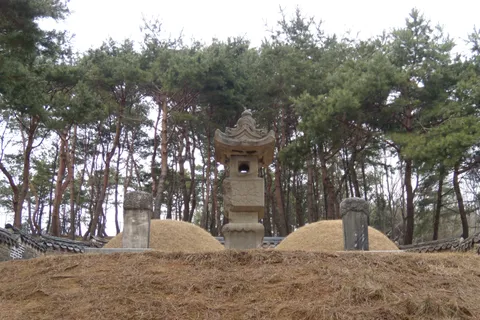
  • Hyojong1619 – 1659

    Seventeenth king of Joseon; a former hostage in Qing who planned a northern campaign and sent troops against Russia

  • Wanli Emperor (Shenzong of Ming)1563 – 1620

    Ming emperor (r. 1572–1620) who, after Zhang Juzheng’s death, long refused to hold court; the “three great campaigns” including the Korean war and the defeat at Sarhu drained the dynasty

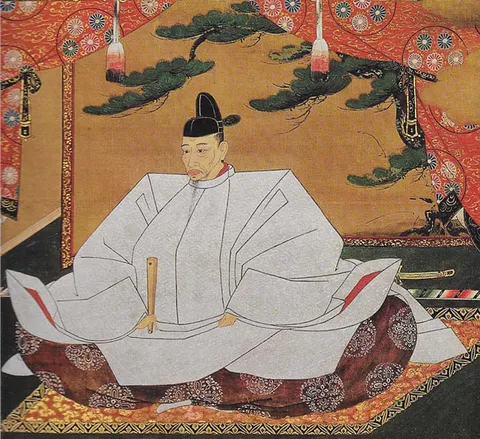
  • Toyotomi Hideyoshi1537 – 1598

    Unified Japan and launched the invasion of Korea

  • Tokugawa Iemitsu1604 – 1651

    Third Tokugawa shogun (r. 1623–1651), who institutionalised alternate attendance and completed the ban on Christianity and the closed-country system

  • Hong Taiji1592 – 1643

    Khan of the Later Jin and first emperor of Qing, who invaded Joseon twice

  • Qianlong Emperor (Gaozong of Qing)1711 – 1799

    Sixth Qing emperor (r. 1735–1796), who destroyed the Dzungars and conquered Xinjiang, giving the Qing its greatest extent, and had the Complete Library of the Four Treasuries compiled

  • Tokugawa Ieyasu1543 – 1616

    Founder of the Edo shogunate, who won at Sekigahara in 1600, became shogun in 1603 and destroyed the Toyotomi house in 1615

  • Gwanghaegun1575 – 1641

    Fifteenth king of Joseon who began the Daedong law and balanced Ming and the Later Jin; deposed in 1623

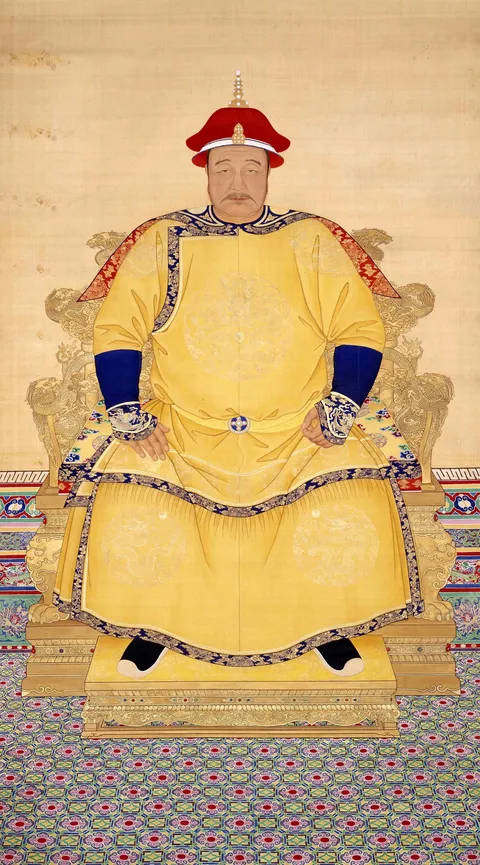
  • Nurhaci (Taizu of Qing)1559 – 1626

    Jianzhou Jurchen chief who united the Jurchens and founded the Later Jin in 1616 (r. 1616–1626), created the Eight Banners and the Manchu script and defeated the Ming at Sarhu

  • Gang Hong-rip1560 – 1627

    Commander of the Joseon army sent at Ming request against the Later Jin in 1619, who surrendered to the Jurchens after the defeat at Sarhu

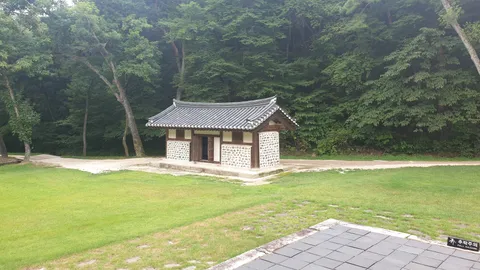
  • Injo1595 – 1649

    Sixteenth king of Joseon, enthroned by coup; endured two Manchu invasions and surrendered at Samjeondo

  • Wu Sangui1612 – 1678

    Ming general who opened the Shanhai Pass to the Qing in 1644, became a feudatory prince in Yunnan and launched the Revolt of the Three Feudatories in 1673