Yongzheng’s Grand Council and Tax Reform
Also called: Grand Council, Junjichu, Tanding rumu
The Yongzheng Emperor set up the Grand Council to handle state affairs at his side and extended across the empire the merger of the poll tax into the land tax, payable in silver.
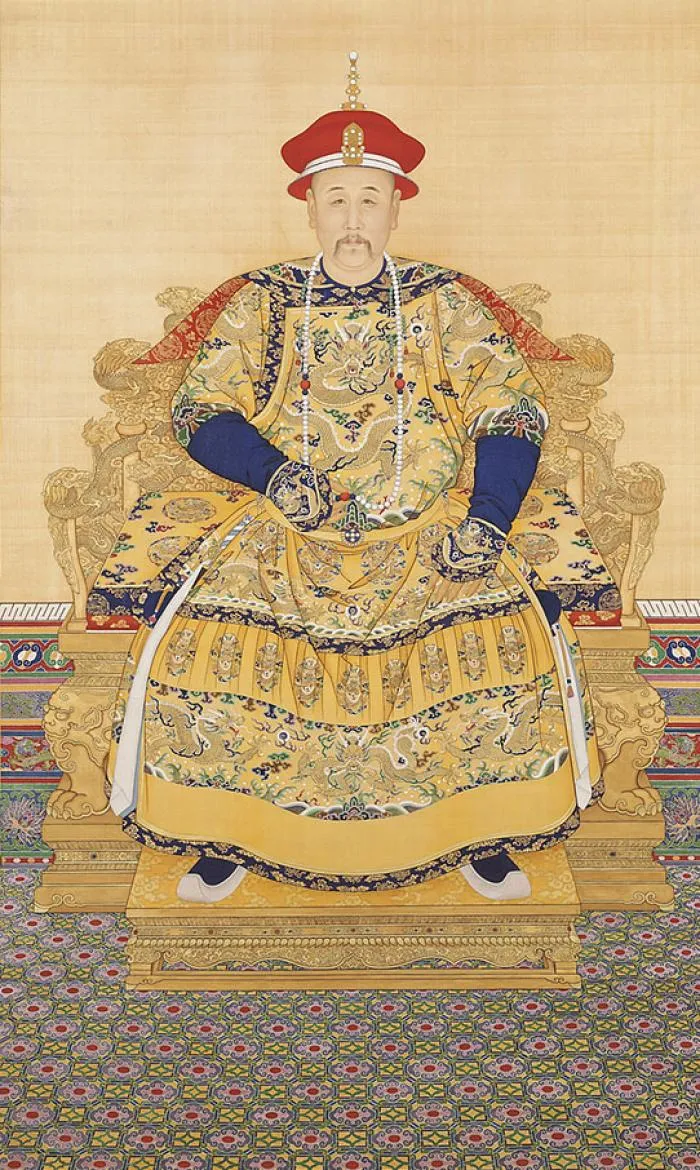
Unknown author · Public domain · Source
The Kangxi Emperor’s fourth son, Yongzheng took the throne after a succession struggle with his brothers and spent thirteen years tightening imperial power. Around 1729 a small office set up in the palace to handle secret business of the war with the Dzungars grew into the Grand Council (Junjichu), whose few councillors met the emperor daily to decide state affairs. The Grand Secretariat inherited from the Ming became a formality, and the Grand Council remained the supreme policy body until the end of the Qing. Provincial officials sent secret memorials straight to the emperor, who supervised them by writing replies in vermilion ink.
In finance he extended across the empire the merging of the poll tax (dingyin) into the land tax (diyin), so that tax was paid in silver according to land held (tanding rumu). This was possible because Kangxi had frozen the poll-tax quota in 1712. With the head tax effectively gone, fewer people hid from the registers, and the population grew sharply in the eighteenth century. Thought was tightly policed, however, through literary inquisitions against anti-Manchu writing and the ban on Christian preaching (1724).