ConflictDecember 1637 – April 1638

Shimabara Rebellion

Also called: Shimabara–Amakusa uprising

In 1637 the peasants and Christians of Shimabara and Amakusa in Kyushu rose against crushing taxes and persecution and held out in Hara Castle, but were crushed by the shogunate’s army in 1638.
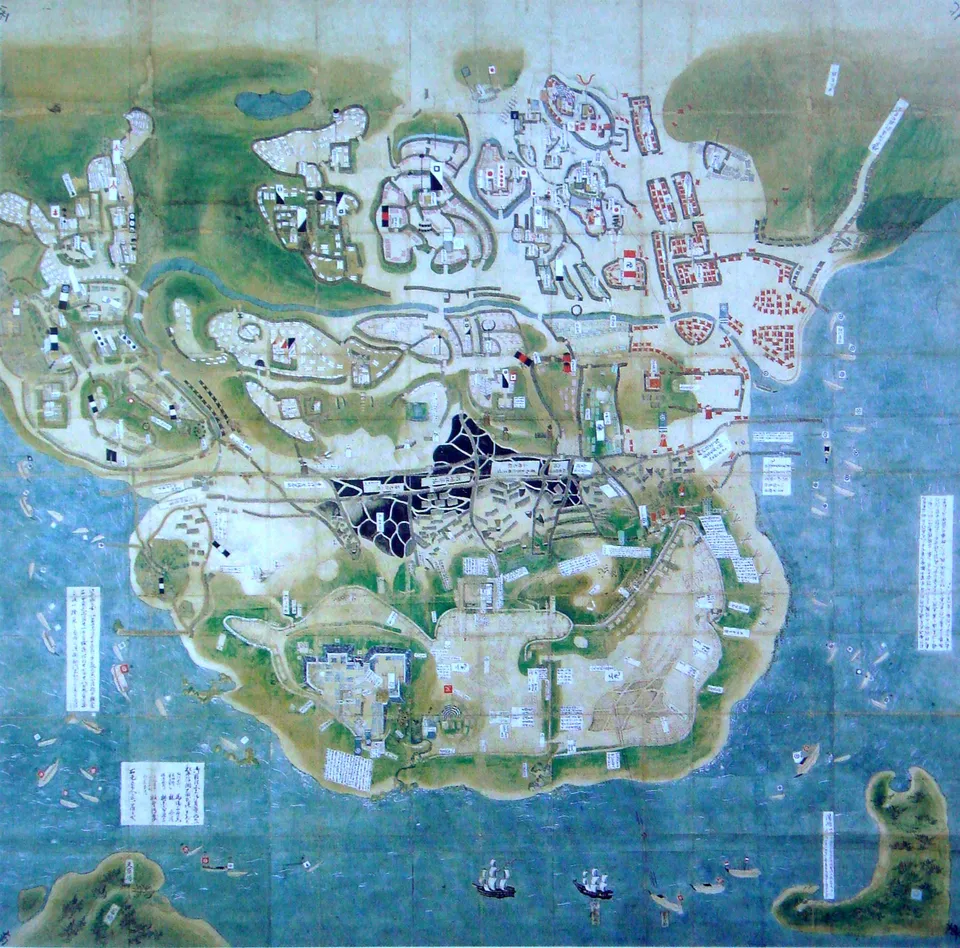
Map of the siege of Hara Castle, showing the rebels’ castle and the surrounding shogunate camps (17th century)

Japanese painting Anonymous 17th century · Public domain · Source

The Edo shogunate banned Christianity on its own lands in 1612 and nationwide in 1614, expelling the missionaries and persecuting believers. In Shimabara and Amakusa in Kyushu, heavy taxes, failed harvests and harsh lords on top of the persecution drove the peasants in 1637 to rise under the youth Amakusa Shirō. Some 30,000 held out in the ruins of Hara Castle, but the shogunate brought over 120,000 troops, and even bombardment from a Dutch ship, took the castle in 1638 and killed nearly everyone inside.

After the revolt the shogunate, more fearful than ever of Christianity, barred Portuguese ships in 1639. Hidden believers were rooted out by requiring everyone to be certified as a member of a Buddhist temple (terauke) and by making people tread on images of Jesus or Mary (fumie).

The map in 1637

OpenFreeMap © OpenMapTiles © OpenStreetMap contributors

States at the time
Japan
Places
Hara Castle

People

  • Amakusa Shirō1638

    leader · Christian youth hailed as leader of the Shimabara Rebellion (1637–1638), killed when Hara Castle fell

  • Tokugawa Iemitsu1604 – 1651

    monarch · Third Tokugawa shogun (r. 1623–1651), who institutionalised alternate attendance and completed the ban on Christianity and the closed-country system

Before and after

Themes that include this event

  • Ming, Qing and Edo Japan1500 – 1800

    The age when the Ming, shaken by northern raiders, southern pirates and the silver economy, fell to Li Zicheng’s rebels, and the Manchu Qing reached its greatest extent and prosperity under Kangxi, Yongzheng and Qianlong — as Japan was unified out of the Warring States into the Edo shogunate’s bakuhan order and closed country, and Joseon, after two great wars, met its neighbours through embassies to Edo and the Northern Learning