The Bakuhan System and Alternate Attendance
Also called: Sankin-kōtai, Buke shohatto, Bakuhan taisei
The Edo shogunate built the bakuhan system, in which the shogun’s government (bakufu) and the daimyo domains (han) shared rule over land and people, and bound the daimyo with the Laws for Military Houses (1615) and alternate attendance (1635).
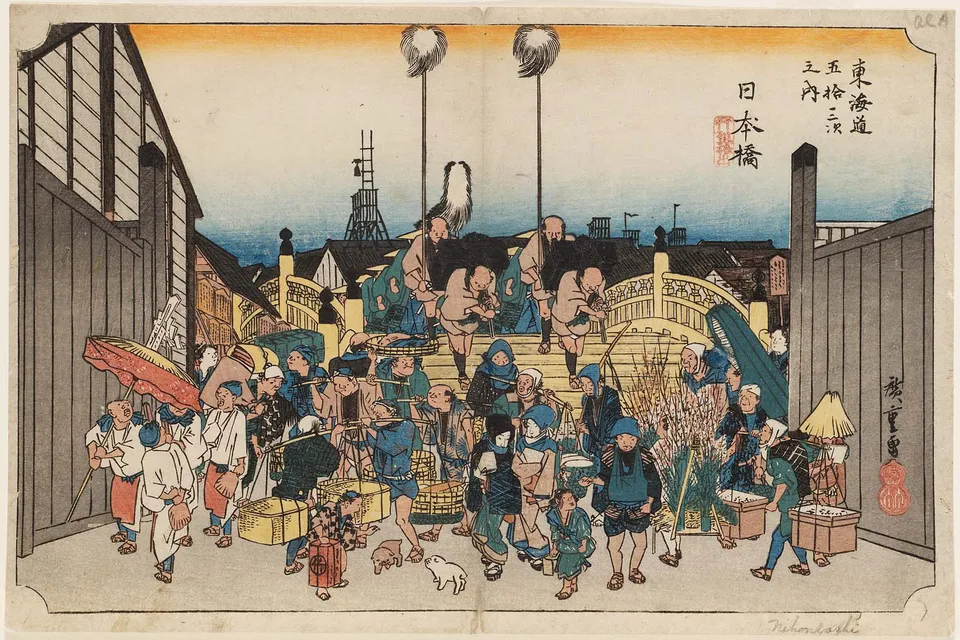
Utagawa Hiroshige · Public domain · Source
The Edo shogunate held the largest domain in the country, the great cities of Edo, Osaka and Kyoto and the main mines, and left the rest to some 260 daimyo, each holding a fief of over 10,000 koku and ruling it as a domain (han). This sharing of rule between shogun and daimyo is called the bakuhan system. The daimyo were divided into Tokugawa kinsmen (shinpan), hereditary vassals (fudai) and “outside” lords who had submitted after Sekigahara (tozama); the less trusted tozama were placed far from Edo.
Right after the Osaka campaign of 1615 the shogunate issued the Laws for Military Houses (Buke shohatto), forbidding daimyo to build new castles or marry without permission. The third shogun, Tokugawa Iemitsu, revised the laws in 1635 to make alternate attendance (sankin-kōtai) a system: daimyo had to live alternate years in Edo and in their domains, leaving their wives and heirs in Edo.
The processions and Edo mansions sapped the daimyo’s strength, but they also brought well-kept highways such as the Tōkaidō with their post towns, and made the three cities of Edo, Osaka and Kyoto grow — the foundation for the flowering of commerce and townsman culture. Society was strictly divided into warriors, farmers, artisans and merchants.