Kangxi Crushes the Three Feudatories and Takes Taiwan
Also called: Revolt of the Three Feudatories, Qing conquest of Taiwan
The Kangxi Emperor put down the Revolt of the Three Feudatories, begun by Wu Sangui and others in 1673, within eight years, and in 1683 took Taiwan from the Zheng regime, securing Qing rule over China.
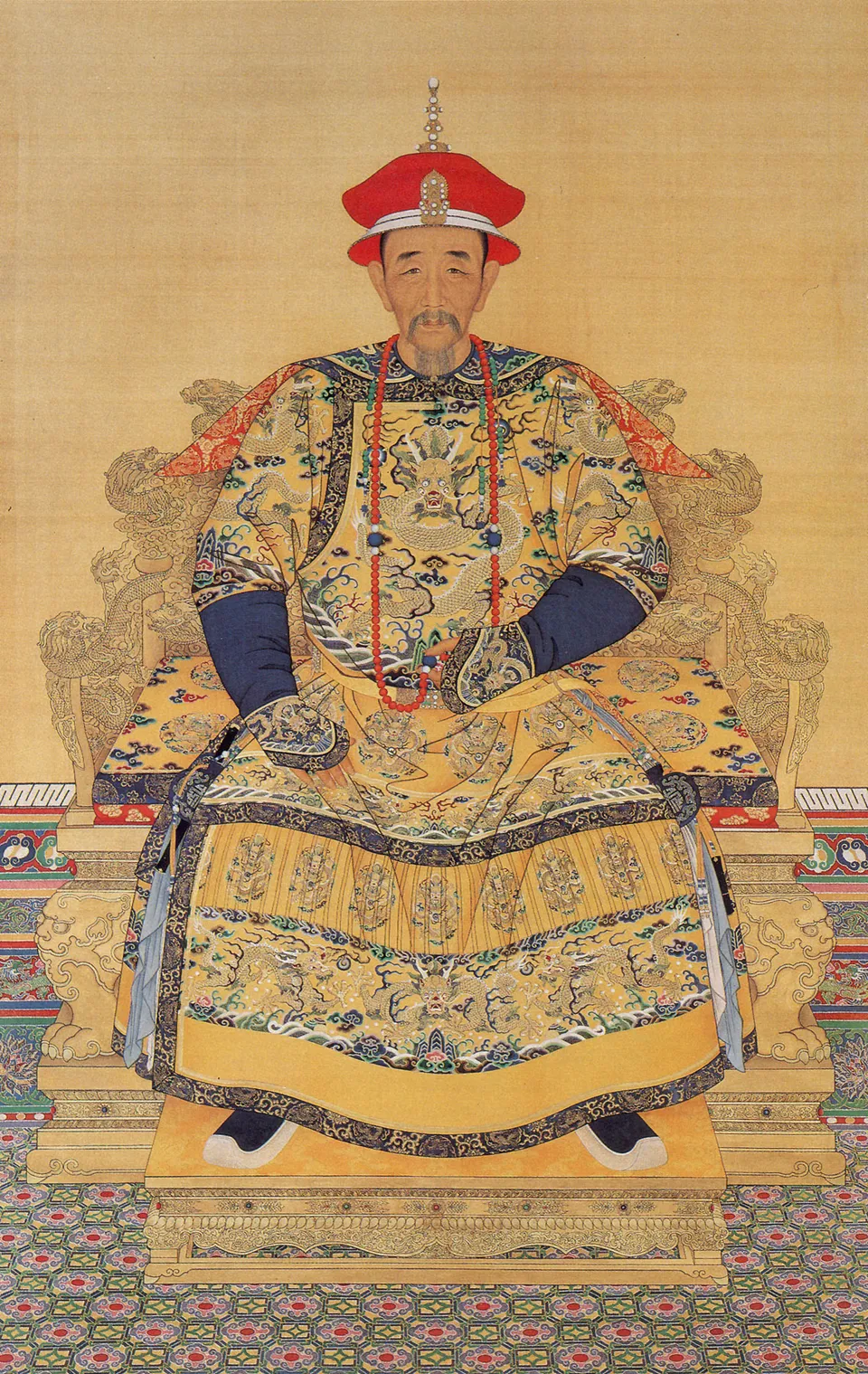
Anonymous Unknown author Qing Dynasty Court Painter · Public domain · Source
Enthroned as a child in 1661, the Kangxi Emperor took personal power in 1669 by removing the overbearing regent Oboi. In the south at that time three Han generals who had helped the Qing conquer China ruled great territories with their own armies as feudatory princes: Wu Sangui in Yunnan, Shang Kexi in Guangdong and Geng Jingzhong in Fujian. When Kangxi decided in 1673 to abolish the feudatories, Wu rebelled and the other two followed, and for a time almost everything south of the Yangtze was lost. Mobilising even the Han Green Standard troops, Kangxi crushed the revolt in 1681.
On Taiwan, Zheng Chenggong (Koxinga), bent on restoring the Ming, had driven out the Dutch in 1662 and made the island his base, and his son Zheng Jing joined the revolt. The Qing isolated the Zheng by forcing coastal people to move inland (the Great Clearance), and when Shi Lang’s fleet won the Battle of Penghu in 1683 the Zheng surrendered. The next year Taiwan became a prefecture of Fujian, the first time the main island was brought under a Chinese dynasty’s administration — and the sea ban was lifted to allow private overseas trade again.
Kangxi went on to sign the Treaty of Nerchinsk with Russia and to fight the Dzungars, bringing Outer Mongolia (the Khalkha) under Qing rule. He patronised scholarship, sponsoring the Kangxi Dictionary, and in 1712 froze the poll tax at that year’s count of adult males. In the same year the Qing and Joseon set up the Baekdusan boundary stele.