Evidential Learning (Kaozheng)
Also called: Kaozheng, Qian–Jia school, Evidential research
After the fall of the Ming, Gu Yanwu and others called for learning of practical use and pioneered the testing of claims against ancient texts — a method that flowered in eighteenth-century Qing China as evidential scholarship on the classics.
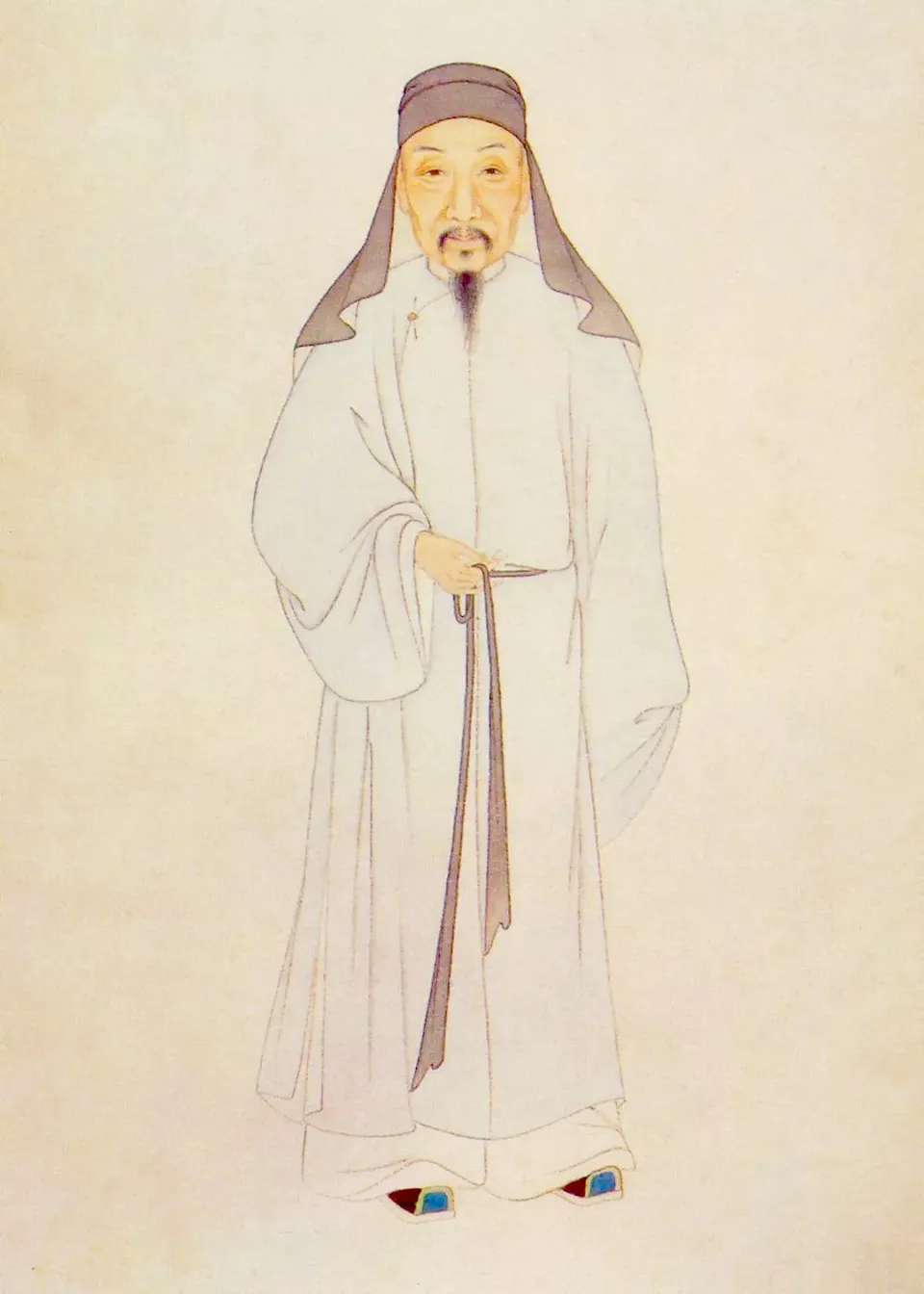
葉衍蘭輯,黃小泉摹繪, · Public domain · Source
After the Ming fell, scholars such as Gu Yanwu and Huang Zongxi blamed its collapse on the empty speculation of late Wang Yangming learning and called for scholarship of practical use to the world (jingshi zhiyong). In his Record of Daily Knowledge Gu showed how to establish facts by comparing ancient texts one against another, while Huang’s Waiting for the Dawn criticised autocratic rule. Their method flowered in the Qianlong and Jiaqing eras of the eighteenth century as evidential learning (kaozheng), the empirical study of the words, sounds and institutions of the classics.
Scholars’ retreat from political debate into textual study under the Qing literary inquisitions is also seen as one cause. Evidential scholars led the compilation of the Complete Library of the Four Treasuries, and the method influenced Korean scholars who visited Beijing, leading to Kim Jeong-hui’s epigraphy.