The Canton System
Also called: Cohong, Thirteen Factories, Canton trade
In 1757 the Qianlong Emperor confined Western shipping to Guangzhou (Canton), where only the licensed merchant guild, the Cohong, could deal with foreigners. The system ended with the Treaty of Nanjing (1842) after the Opium War.
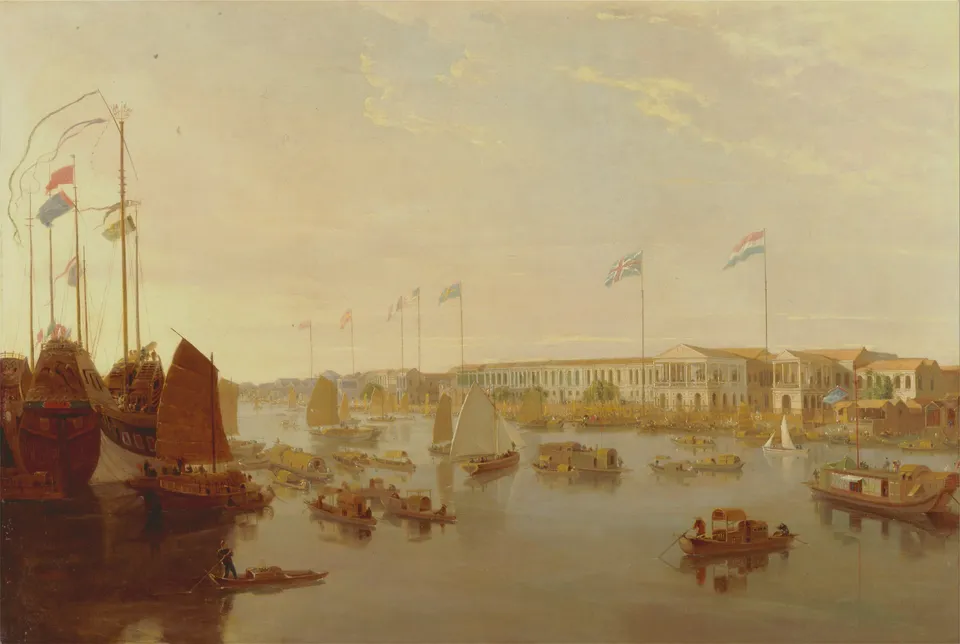
William Daniell · Public domain · Source
The Kangxi Emperor lifted the sea ban in 1684 and opened customs houses at Guangzhou, Xiamen, Ningbo and Shanghai. As European ships crowded in for tea, silk and porcelain, the Qianlong Emperor in 1757 restricted Western trade to Guangzhou alone. There only the government-licensed merchant guild, the Cohong (gonghang), could trade with foreigners, and foreign merchants could stay only during the trading season, in the Thirteen Factories on the river outside the city walls.
As tea became Britain’s national drink in the eighteenth century, the British East India Company shipped great amounts of silver to China to pay for it. Resenting the trade deficit, the Cohong monopoly and officials’ fees, Britain sent the Macartney embassy in 1793 to seek wider trade and was refused; it then turned to smuggling Indian opium to win back its silver. The Canton system ended with the Treaty of Nanjing in 1842, after the Opium War, which abolished the Cohong and opened five ports.