Genroku Culture and the Townsmen
Also called: Genroku culture, Chōnin culture, Ukiyo-e
In the Genroku era of the late seventeenth century a literature, theatre and art enjoyed by wealthy merchants and artisans — the chōnin, or townsmen — flourished around Osaka and Kyoto.
Template:Haga · Public domain · Source
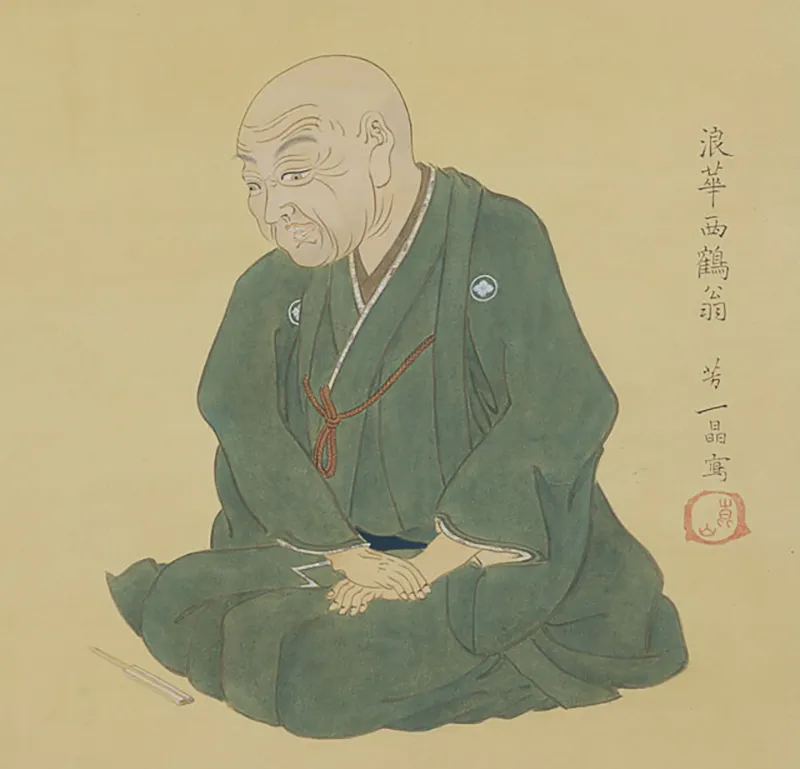
As peace held and commerce grew in the Edo period, the merchants and artisans of the three cities of Edo, Osaka and Kyoto — the chōnin, or townsmen — grew in number and wealth. In the Genroku era (1688–1704) under the fifth shogun Tsunayoshi, a culture for the townsmen flourished around Osaka and Kyoto. Ihara Saikaku wrote “books of the floating world” about townsmen’s money-making and love affairs, Chikamatsu Monzaemon wrote plays for the jōruri puppet theatre and kabuki, and Matsuo Bashō raised haiku to an art.
The woodblock prints of the floating world (ukiyo-e), pioneered by Hishikawa Moronobu, developed in the mid-eighteenth century into multi-coloured nishiki-e and, carried to Europe in the nineteenth century, influenced the Impressionists. In the same period the growth of commerce in Joseon nurtured a commoners’ culture of pansori, vernacular novels and genre painting.