Culture18th – 19th centuries

Rise of Commoner Culture

As commoners grew wealthier in late Joseon, pansori, mask dance, Hangul novels and narrative sijo flourished, along with the genre paintings of Kim Hong-do and Sin Yun-bok and anonymous folk painting.
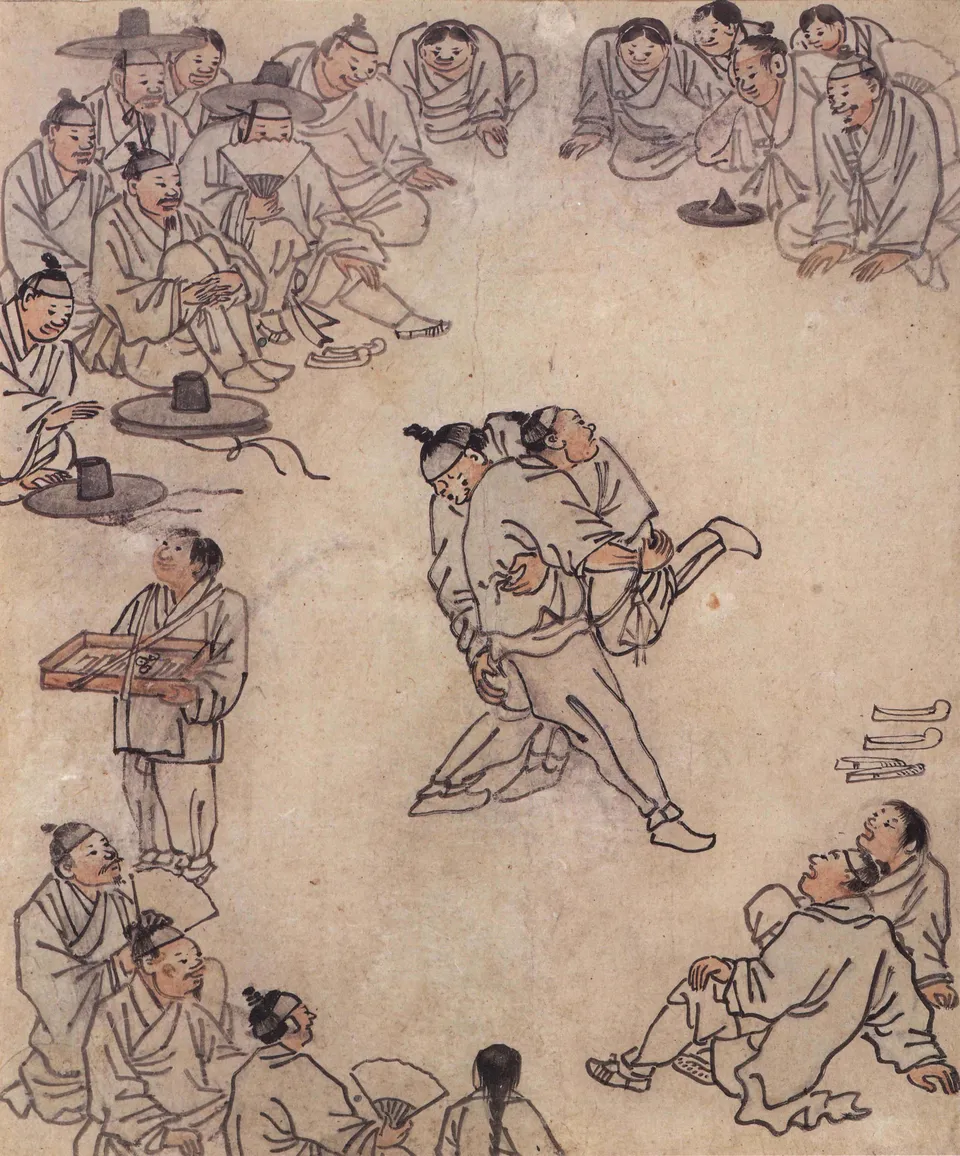
Kim Hong-do, Ssireum (wrestling), from the Danwon pungsokdo album

Kim Hong-do · Public domain · Source

Literature and performance: after Heo Gyun’s Tale of Hong Gil-dong, Hangul novels such as Chunhyang-jeon and Simcheong-jeon were widely read, rented from lending shops and recited by professional storytellers. Free-form narrative sijo voiced feelings frankly. In pansori a single singer narrates a story in song to a drummer’s beat; in the late nineteenth century Sin Jae-hyo set down six of the cycles. Mask dances and sandae plays mocked yangban hypocrisy and corrupt monks.

Painting: Kim Hong-do portrayed commoners at work and play — the village school, ssireum wrestling, dancing boys — with easy humour; Sin Yun-bok painted the pleasures of urban aristocrats and women in delicate line and bright colour. Anonymous folk paintings (minhwa) of magpies and tigers or ornamental characters decorated homes with commoners’ hopes.

The map in 1700

OpenFreeMap © OpenMapTiles © OpenStreetMap contributors

States and rulers at the time
Joseon — Sukjong

People

  • Kim Hong-do (Danwon)1745

    creator · Court painter who portrayed King Jeongjo and is best known for genre scenes of commoners such as The Village School and Ssireum; he died around 1806

  • Sin Yun-bok (Hyewon)1758

    creator · Painter of the leisure and romance of urban aristocrats and women in fine line and colour, as in Dano pungjeong and Portrait of a Beauty; year of death unknown

  • Heo Gyun1569 – 1618

    author · Writer traditionally credited with the Korean-script novel Hong Gil-dong jeon; his Homillon spoke of the power of the people, and he was executed for treason

Before and after

Themes that include this event

  • Ming, Qing and Edo Japan1500 – 1800

    The age when the Ming, shaken by northern raiders, southern pirates and the silver economy, fell to Li Zicheng’s rebels, and the Manchu Qing reached its greatest extent and prosperity under Kangxi, Yongzheng and Qianlong — as Japan was unified out of the Warring States into the Edo shogunate’s bakuhan order and closed country, and Joseon, after two great wars, met its neighbours through embassies to Edo and the Northern Learning

  • Intangible and World Heritage2000 BC – 1850

    From the dolmens to Namhansanseong on the World Heritage List, from Jongmyo ritual music to ssireum on the Intangible Heritage lists — where each came from and when it was inscribed