ConflictJanuary 1597 – November 1598(Lunar)

Jeongyu War

When peace talks collapsed, Toyotomi Hideyoshi sent his armies again. The fighting lasted until his death the following year.
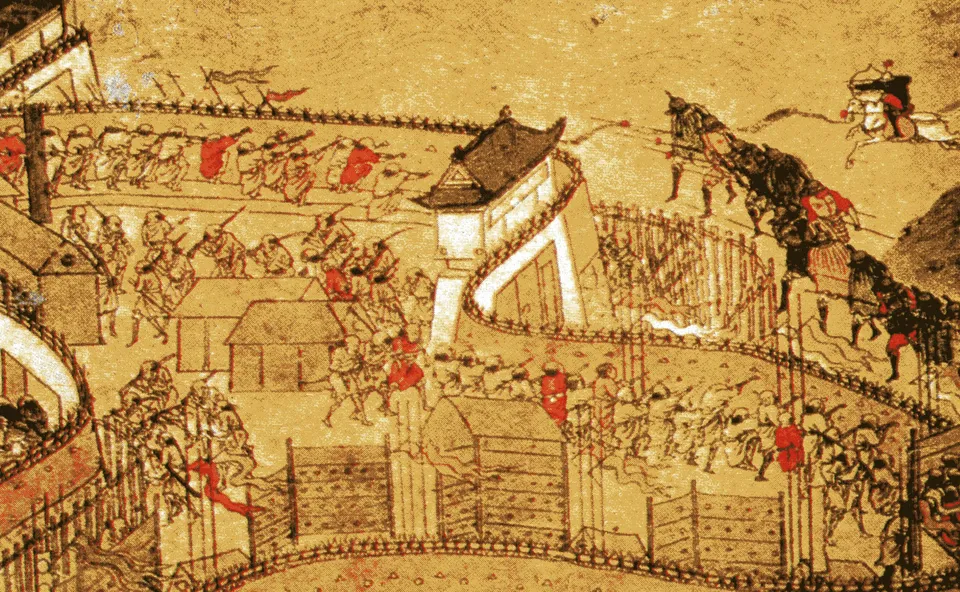
Zhengwo jigong tujuan — Ming scroll of the 1598 battles between the allied and Japanese armies

Unknown author · Public domain · Source

After Pyongyang was retaken, Ming and Japan negotiated. Toyotomi Hideyoshi demanded a Ming princess as consort for the Japanese emperor, the cession of the four southern provinces of Joseon, and the reopening of licensed tally trade. Ming offered only to invest him as "King of Japan" in 1596, and the talks collapsed.

In 1597 some 140,000 Japanese troops crossed again. After Won Gyun’s fleet was destroyed at Chilcheollyang in the seventh month, they pushed into Jeolla, took Namwon in the eighth month and reached Jeonju. In the ninth month, however, they were halted by the allies at Jiksan and beaten at sea by Yi Sun-sin at Myeongnyang, and fell back south, holding out in coastal forts at Ulsan, Suncheon and elsewhere.

When Hideyoshi died in the eighth month of 1598 the Japanese began to withdraw, and the war ended with the Battle of Noryang in the eleventh month. Many Koreans were carried off as captives; the potters among them had a lasting influence on Japanese ceramics.
The map in 1597

OpenFreeMap © OpenMapTiles © OpenStreetMap contributors

States and rulers at the time
Joseon · invaded — Seonjo
Japan · invader
Ming · reinforcements — Wanli Emperor

People

Before and after

Related works

  • TV episode: Naked Korean History Episode 19: 1597: Why Did Yi Sun-sin Contemplate Death?TV episode · 2022 · Lee Min-woong · tvN STORY

Themes that include this event

  • Imjin War1592 – 1598

    From the Japanese invasion to the Battle of Noryang — the righteous armies, Yi Sun-sin at sea, and Ming intervention

  • Ming, Qing and Edo Japan1500 – 1800

    The age when the Ming, shaken by northern raiders, southern pirates and the silver economy, fell to Li Zicheng’s rebels, and the Manchu Qing reached its greatest extent and prosperity under Kangxi, Yongzheng and Qianlong — as Japan was unified out of the Warring States into the Edo shogunate’s bakuhan order and closed country, and Joseon, after two great wars, met its neighbours through embassies to Edo and the Northern Learning