Council of Trent
Also called: Counter-Reformation, Catholic Reformation, Concilium Tridentinum
In 1545–1563 the Catholic Church held the Council of Trent, reaffirming papal authority and traditional doctrine while reforming the Church from within — the heart of the Counter-Reformation (Catholic Reformation).
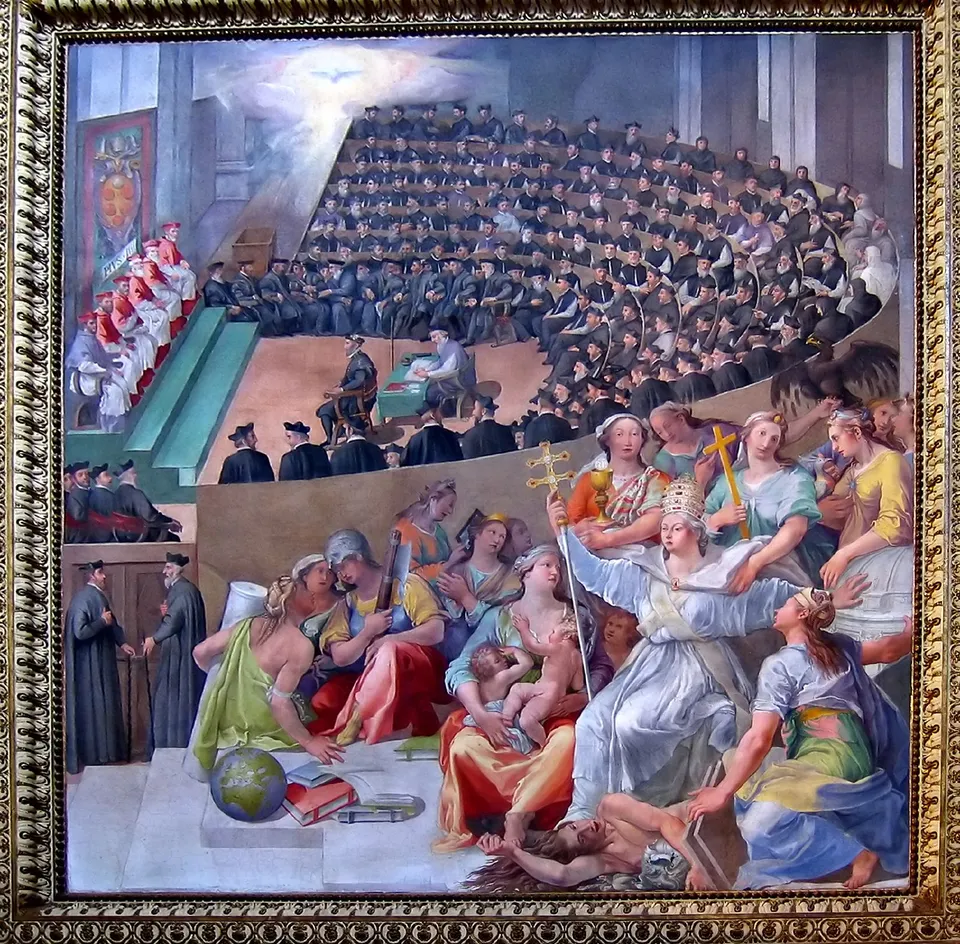
Pasquale Cati · Public domain · Source
As Protestantism spread, Pope Paul III opened a council on 13 December 1545 at Trento (Trent), south of the Alps. Twice interrupted by war and plague, it met in three periods until 1563.
Rejecting the Protestant positions, the council declared that salvation requires good works as well as faith, that both scripture and Church tradition are sources of faith, and that there are seven sacraments; it made the Latin Vulgate the authoritative Bible. At the same time it banned simony and the holding of several benefices, required bishops to reside in their dioceses and ordered seminaries to train priests, correcting abuses within the Church. Earlier the papacy had revived the Inquisition (1542) and issued an Index of Forbidden Books.
Catholicism thus regained strength in southern Europe, southern Germany and Poland, while the split with Protestantism hardened. Baroque art, with its emotional appeal, expressed the spirit of Catholic reform. In the same year (1545) King Myeongjong came to the throne in Joseon amid the Eulsa Purge.