World history1000 – 153330 events

Turkic-Islamic Empires and Other Civilizations

From the Ghaznavid raids on India to the Mughal Empire and Suleiman I — five centuries in which Turkic-led Islamic empires took western Asia and India, while Africa, Southeast Asia and the Americas raised civilisations of their own
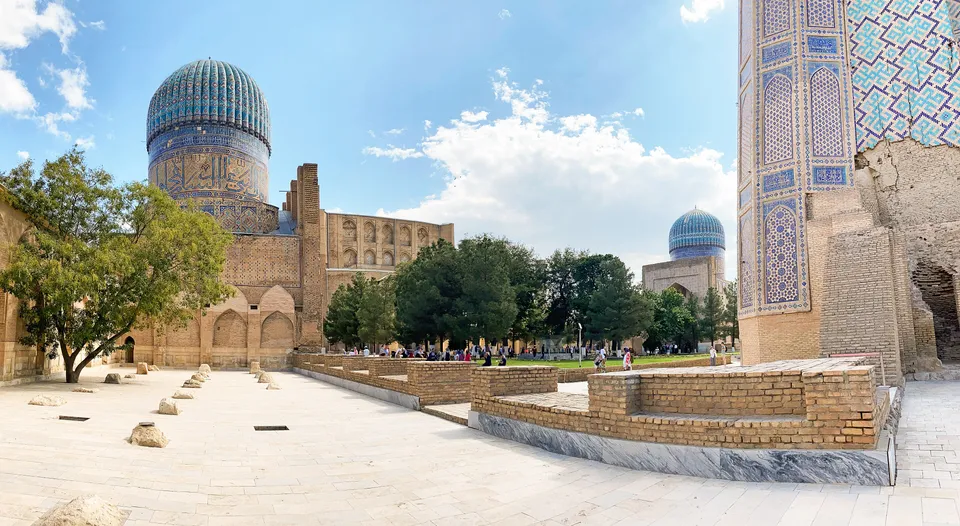
사마르칸트의 비비하눔 모스크 — 티무르가 인도 원정에서 돌아와 세우게 했다

Bgag · CC0 · Source

At a glance

YearRegionState · eventKey point
1001–1027IndiaGhaznavid raidsMahmud; Islam enters India
1071AnatoliaBattle of ManzikertSeljuk win → background to Crusades
Early 12th c.Southeast AsiaKhmer · Angkor WatSuryavarman II; temple to Vishnu
1206IndiaDelhi SultanateAibak’s Slave dynasty; Qutb Minar
1250–1517EgyptMamluk sultanateBeat Mongols, Crusaders; Cairo thrives
c. 1299AnatoliaOttoman state foundedOsman I; janissaries
1324West AfricaMali · Mansa MusaGold-laden hajj; Timbuktu
1325–1354Islamic worldIbn BattutaRihla; India, China, Mali
c. 1325MexicoAztec · TenochtitlanLake city; Triple Alliance 1428
1370Central AsiaTimurid EmpireSamarkand; Ankara; Ulugh Beg
c. 1400Southeast AsiaMalacca SultanateStraits entrepôt; Islam spreads
c. 1438AndesInca · PachacutiCusco; quipu; Machu Picchu
1453BalkansOttoman · Mehmed IIByzantium falls → Istanbul
1501IranSafavid dynastyIsmail I; Shia state religion; shah
1526IndiaMughal EmpireBabur; Battle of Panipat
1526 · 1529Hungary · AustriaOttoman · Suleiman IMohács; siege of Vienna

The theme on the map

OpenFreeMap © OpenMapTiles © OpenStreetMap contributors

30 events in this theme

  1. From 1001 Mahmud of the Turkic Ghaznavid dynasty of Afghanistan repeatedly invaded northern India, opening the way for Islamic power in the subcontinent.

  2. Tughril Beg of the Seljuk Turks entered Baghdad, drove out the Shia Buyids, and was recognised by the Abbasid caliph as sultan.

  3. The Seljuk sultan Alp Arslan routed the Byzantine army at Manzikert in eastern Anatolia and took Emperor Romanos IV prisoner.

  4. Suryavarman II of the Khmer Empire built Angkor Wat, a vast temple to the Hindu god Vishnu, at his capital Angkor.

  5. Aibak, a Turkic slave general of the Ghurids, made himself sultan at Delhi and founded the Slave dynasty. Muslim dynasties ruled northern India for 320 years.

  6. 1220 – 1450Great Zimbabwe

    A Shona kingdom of southern Africa built a great stone-walled city, prospering by selling gold and ivory into the Indian Ocean trade.

  7. The slave soldiers (mamluks) of Egypt’s Ayyubid dynasty killed their sovereign and seized the state. The Mamluk sultanate held off the Mongols and the Crusaders and made Cairo the centre of the Islamic world.

  8. Hulagu, brother of Möngke Khan, took Baghdad and executed the caliph. The Abbasid Caliphate, over five centuries old, came to an end, and Hulagu founded the Ilkhanate.

  9. The Mamluks of Egypt under Qutuz and Baybars defeated the Mongols at Ain Jalut in Palestine, halting the Mongol advance to the west.

  10. For some eighty years after the return to Gaegyeong, Goryeo was a son-in-law state of the Yuan under its interference: its institutions were downgraded, territory lost, and pro-Yuan magnates rose to power.

  11. In northwestern Anatolia, where the Sultanate of Rum had broken up under Mongol pressure, the Turkish chieftain Osman I built a state by fighting Byzantium — the beginning of an empire that lasted over six hundred years.

  12. Mansa Musa, king of Mali in West Africa, made the pilgrimage to Mecca with a vast retinue and a great deal of gold. Mali’s wealth became so famous that the price of gold was said to have fallen in Cairo, where he passed through.

  13. The Mexica of the Mexican highlands founded the city of Tenochtitlan on an island in Lake Texcoco. In the 15th century they formed the Triple Alliance and built the Aztec Empire.

  14. Ibn Battuta of Tangier in Morocco set out on the pilgrimage to Mecca and spent some thirty years travelling the Islamic world, India, China and Africa, leaving his famous Travels.

  15. In a Central Asia where the Chagatai Khanate had split, the Turkic commander Timur built a state with its capital at Samarkand and, proclaiming the revival of the Mongol empire, swept across western Asia.

  16. Malacca on the Malay Peninsula prospered as an entrepôt between east and west, and its ruler embraced Islam. Following the merchants, Islam spread across the Malay Peninsula and Indonesia.

  17. Kim Sa-hyeong, Yi Mu and Yi Hoe combined Yuan maps with maps of Joseon and Japan to make the world map Honil gangni yeokdae gukdo jido.

  18. Timur defeated the Ottoman army near Ankara and captured Sultan Bayezid I, plunging the Ottoman state into civil war for a time.

  19. At Cusco in the Andes, Pachacuti became king and set out to conquer. The Inca state became an empire stretching some 4,000 km from Ecuador to Chile.

  20. Yi Sun-ji, Kim Dam and others completed the Chiljeongsan, a calendar computing the motions of the sun, moon and five planets for the meridian of Hanyang.

  21. The Ottoman Empire conquered the Byzantine capital, an event often taken to mark the end of the Middle Ages.

  22. 1464 – 1591The Songhai Empire

    Songhai, centred on Gao on the middle Niger, replaced Mali as the great power of West Africa under Sonni Ali and reached its height under Askia Muhammad.

  23. Portugal’s Vasco da Gama sailed round southern Africa and reached Calicut in India. A direct sea route from Europe to Asia was open, transforming world trade.

  24. Ismail I proclaimed himself shah at Tabriz and founded the Safavid dynasty. Making Shia Islam the state religion, it confronted the Sunni Ottoman Empire.

  25. Portugal’s Afonso de Albuquerque took Goa in India and Malacca, the key to Southeast Asian trade. Portugal sought to control the Indian Ocean spice trade through a network of fortified ports.

  26. Selim I’s Ottoman army defeated the Mamluks in Syria and Egypt and destroyed the Mamluk sultanate. The Ottoman Empire became the leading power of the Islamic world and protector of Mecca and Medina.

  27. Spain’s Hernán Cortés, allied with Indigenous peoples hostile to the Aztecs, took the capital Tenochtitlan. The Aztec Empire fell and New Spain (Mexico) was founded.

  28. Babur, a descendant of Timur, defeated Ibrahim Lodi of the Delhi Sultanate at the Battle of Panipat and founded the Mughal Empire.

  29. The Ottoman sultan Suleiman I destroyed the Hungarian army at Mohács and three years later besieged Habsburg Vienna. The Ottomans had driven deep into Europe and reached the height of their power.

  30. Spain’s Francisco Pizarro entered an Inca Empire divided by civil war, captured and executed the emperor Atahualpa at Cajamarca, and took the capital Cusco, bringing down the empire.

Key people

  • Qutuz1260

    Mamluk sultan who defeated the Mongols at Ain Jalut in 1260 and was assassinated by Baybars and others on the way home

  • Baybars1223 – 1277

    Mamluk sultan, vanguard commander at Ain Jalut, who as sultan held off both the Mongols and the crusaders

  • Hulagu Khan1217 – 1265

    Grandson of Genghis Khan who took Baghdad in 1258, ending the Abbasid Caliphate, and founded the Ilkhanate

  • Bayezid I1360 – 1403

    Ottoman sultan (r. 1389–1402), called “the Thunderbolt”, who crushed a crusade at Nicopolis but was captured by Timur at the Battle of Ankara

  • Timur1336 – 1405

    Conqueror who founded the Timurid Empire (r. 1370–1405), sweeping across western and Central Asia from his capital Samarkand; he died marching on Ming China

  • Manuel I of Portugal1469 – 1521

    King of Portugal who sent the voyages of Vasco da Gama and Cabral and built Portugal’s Asian trading empire

  • Charles V1500 – 1558

    King of Spain (as Charles I) and Holy Roman Emperor, who sponsored Magellan’s voyage and under whom the Aztec and Inca empires were conquered

  • Mahmud of GhazniAD 971 – 1030

    Ruler of the Ghaznavid dynasty (r. 998–1030) whose some seventeen raids into northern India opened the way for Islamic power in the subcontinent

  • Tughril Beg1063

    Sultan who founded the Seljuk Empire; he entered Baghdad in 1055, drove out the Buyids and was recognised as sultan by the Abbasid caliph

  • Alp Arslan1029 – 1072

    Seljuk sultan (r. 1063–1072), nephew of Tughril Beg, who captured the Byzantine emperor at Manzikert in 1071

  • Romanos IV Diogenes1072

    Byzantine emperor (r. 1068–1071) who was captured by the Seljuks at Manzikert and, after his release, was overthrown in a coup

  • Suryavarman II

    King of the Khmer Empire (r. 1113–c. 1150) who built Angkor Wat, a temple dedicated to Vishnu