Founding of the Timurid Empire
Also called: Timurid dynasty, Empire of Tamerlane
In a Central Asia where the Chagatai Khanate had split, the Turkic commander Timur built a state with its capital at Samarkand and, proclaiming the revival of the Mongol empire, swept across western Asia.
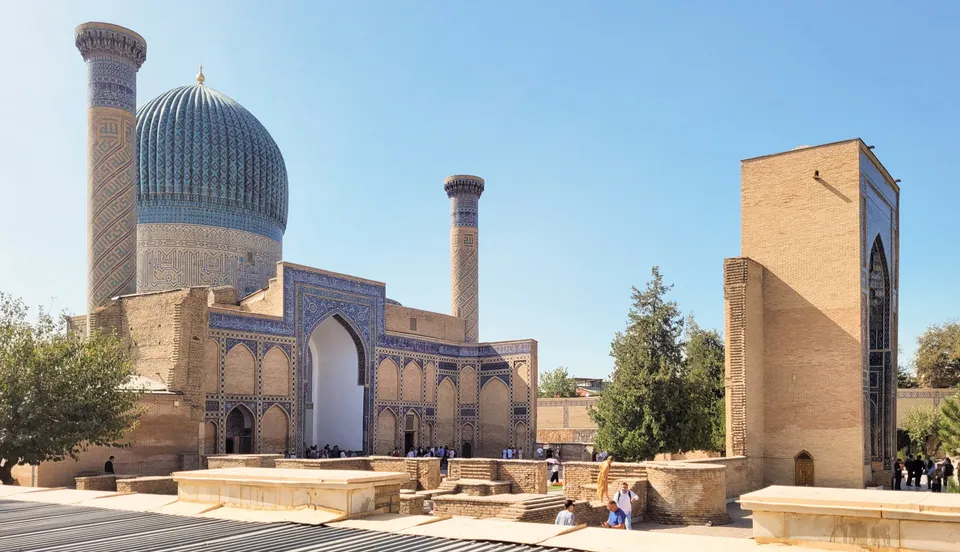
By the mid-14th century the Chagatai Khanate had split into east and west, and in western Transoxiana (Mawarannahr) Mongolised Turkic tribes fought among themselves. Timur of the Barlas tribe overcame his rivals and became master of the land in 1370. Not being a descendant of Genghis Khan, he did not call himself khan but married a princess of Genghis’s line and took the title güregen, “royal son-in-law”.
He conquered Iran, Iraq and the Caucasus, struck the Golden Horde, sacked Delhi in 1398 and in 1402 captured the Ottoman sultan at the Battle of Ankara. Bringing artisans and scholars from conquered lands to Samarkand, he raised buildings of blue tile such as the Bibi-Khanym Mosque and his own tomb, the Gur-e Amir. He died at Otrar in 1405 while marching on Ming China. In the east, meanwhile, Goryeo had fallen and Joseon had been founded (1392).
The empire soon divided, but around his son Shah Rukh at Herat and his grandson Ulugh Beg at Samarkand, Persian and Turkic literature, miniature painting and astronomy flourished. Ulugh Beg built a great observatory and compiled a star catalogue. At about the same time King Sejong of Joseon compiled the Outer Volume of the Chiljeongsan, drawing on the Islamic calendar that had reached Korea through Yuan and Ming. Driven out by the Uzbeks in the early 16th century, the dynasty lived on when Timur’s descendant Babur went to India and founded the Mughal Empire.