Founding of the Delhi Sultanate
Also called: Mamluk dynasty of Delhi, Slave dynasty
Aibak, a Turkic slave general of the Ghurids, made himself sultan at Delhi and founded the Slave dynasty. Muslim dynasties ruled northern India for 320 years.
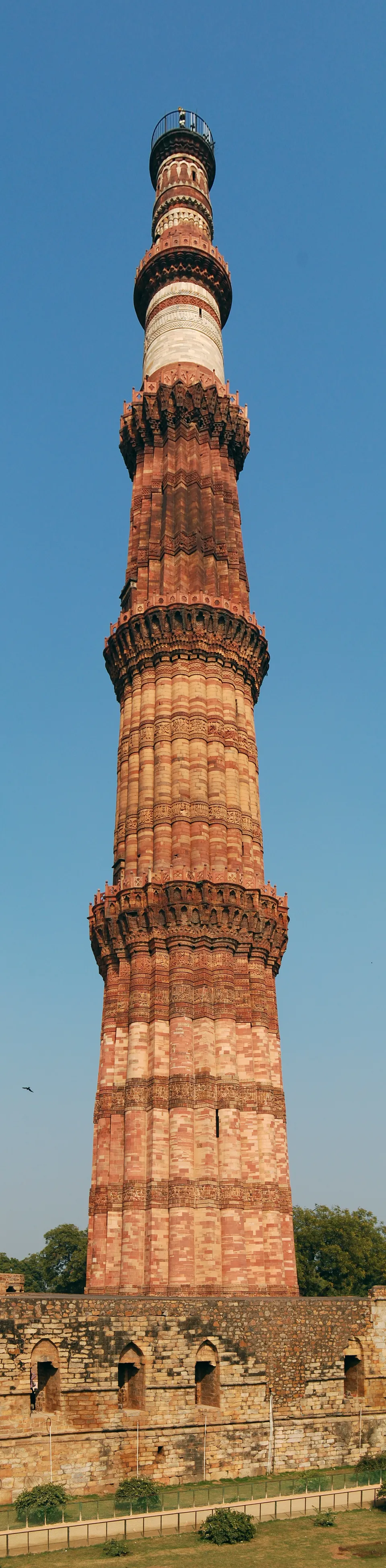
Sfu · CC BY-SA 4.0 · Source
In the late 12th century Muhammad of Ghor, of the Ghurid dynasty of Afghanistan, invaded northern India, defeated a Rajput coalition at Tarain in 1192 and took Delhi. When he was assassinated in 1206, Qutb ud-Din Aibak, the Turkic former slave general in charge of India, declared himself sultan. Because he and his successors were of slave (mamluk) origin, the dynasty is called the Slave dynasty.
The Khalji, Tughlaq, Sayyid and Lodi dynasties followed, all ruling northern India from Delhi; together the five are called the Delhi Sultanate. In the 13th century it fended off the Mongols. Islam became the faith of the ruling class and spread through the preaching of Sufi mystics, and by mixing with Hindu culture it gave rise to Indo-Islamic culture. The Qutb Minar, begun by Aibak, marks its beginning, and the mingling of Persian with Indian speech later produced Urdu. The sultanate ended when the Lodi dynasty fell to Babur at Panipat in 1526.