Building of Angkor Wat
Suryavarman II of the Khmer Empire built Angkor Wat, a vast temple to the Hindu god Vishnu, at his capital Angkor.
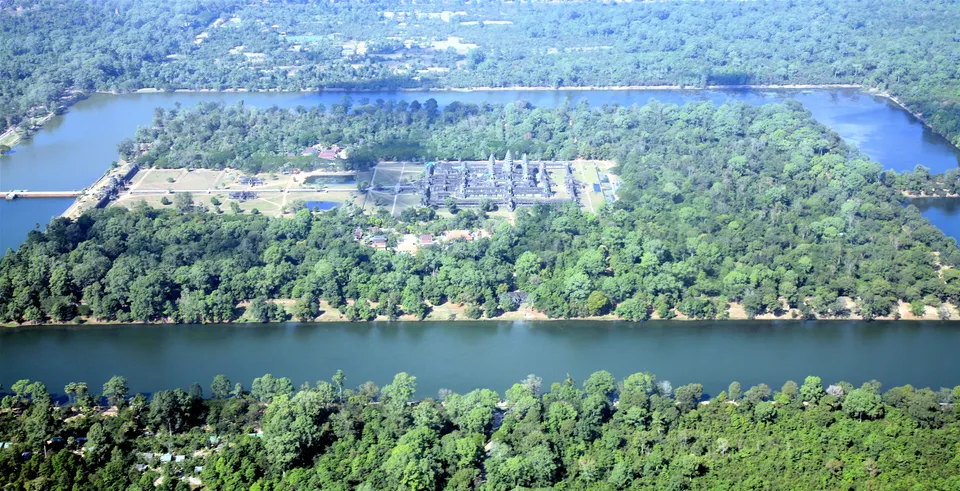
From the reign of Jayavarman II in the early 9th century the Khmer Empire ruled most of mainland Southeast Asia from Angkor, north of the Tonle Sap lake in present-day Cambodia. Great reservoirs (barays) and canals sustained its rice farming, and its kings, drawing on Hinduism and Buddhism from India, were identified with the gods. Suryavarman II, who took the throne in 1113, had Angkor Wat built as a temple to Vishnu and as his own funerary monument.
Surrounded by a moat, the temple raises five towers modelled on Mount Meru, the centre of the universe, and its galleries are lined with reliefs of scenes from the Ramayana and Mahabharata and royal processions. In the late 12th century the Buddhist king Jayavarman VII built Angkor Thom and the Bayon, and Angkor Wat itself later became a Buddhist temple. After attacks from Ayutthaya around 1431 the capital moved south, but the temple stayed in use; today it appears on the Cambodian flag and is a World Heritage Site. In Goryeo, at about the same time, inlaid celadon was flourishing.