Seljuk Turks Enter Baghdad
Also called: Seljuk conquest of Baghdad, Sultanate
Tughril Beg of the Seljuk Turks entered Baghdad, drove out the Shia Buyids, and was recognised by the Abbasid caliph as sultan.
Ktrinko MapMaster · CC BY-SA 4.0 · Source
From the late 9th century the power of the Abbasid caliphs waned and effectively independent dynasties arose across their lands. In 945 the Buyids, a Shia dynasty from Iran, took Baghdad and made the Sunni caliph a figurehead. Meanwhile Turks from Central Asia entered the Islamic world as slave soldiers (mamluks), and in the 10th century tribes that had embraced Sunni Islam began moving west.
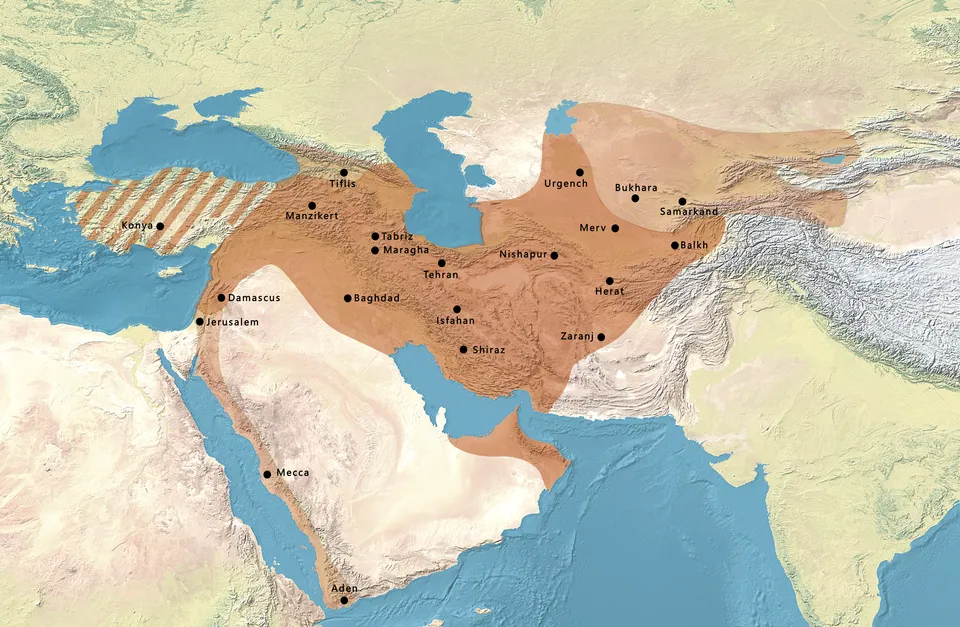
Tughril Beg of the Seljuk family defeated the Ghaznavids at Dandanaqan in 1040, took Khurasan and pushed west, entering Baghdad in December 1055 and driving out the Buyids. The caliph recognised him as sultan, “holder of power”. From now on the caliph kept only religious authority, while real political and military power lay with the sultan, who styled himself protector of Sunni Islam.
The Seljuks ruled Iran and Iraq, and at Manzikert in 1071 they captured the Byzantine emperor and pushed into Anatolia. The vizier Nizam al-Mulk founded Nizamiyya colleges in many cities to promote Sunni learning. As the Seljuks took Jerusalem and pressed Byzantium, the Byzantines appealed to western Europe for help — and the Crusades began.