Greece and Rome
From the Aegean civilisation to the fall of the Western Roman Empire — the classical civilisation built by the democracy of the polis and the Roman republic and empire
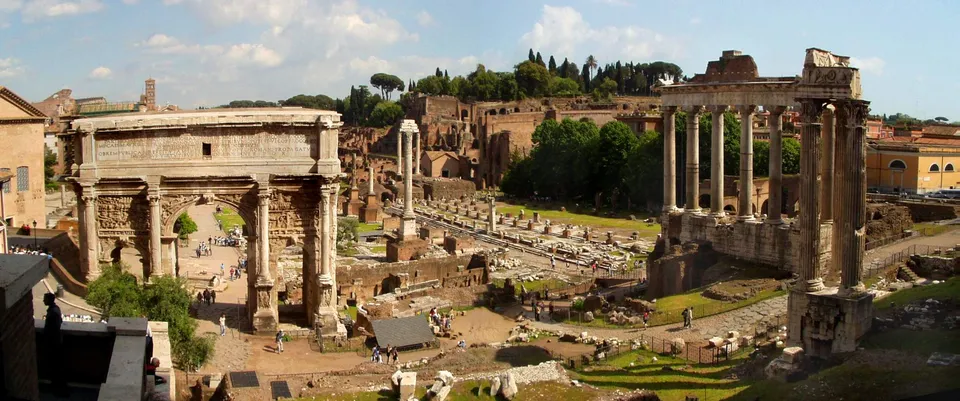
Hans E C Johansson · CC BY-SA 3.0 · Source
From the Aegean civilisation to the fall of the Western Roman Empire — the classical civilisation built by the democracy of the polis and the Roman republic and empire

Hans E C Johansson · CC BY-SA 3.0 · Source
| Year | State | Event | Key point |
|---|---|---|---|
| 594 · 508 BC | Athens | Solon and Cleisthenes | Timocracy → ten tribes, ostracism |
| 509 BC | Rome | Republic founded | Two consuls, patrician Senate |
| 494–287 BC | Rome | Conflict of the Orders | Tribunes, Twelve Tables, Hortensian law |
| 492–479 BC | Greece | Persian Wars | Marathon, Salamis → poor citizens rise |
| 478–429 BC | Athens | Delian League, Pericles | Direct democracy completed, Parthenon |
| 431–404 BC | Greece | Peloponnesian War | Sparta wins, poleis decline |
| 399 BC | Athens | Death of Socrates | Against Sophists → Plato, Aristotle |
| 334–323 BC | Macedon | Alexander’s campaigns | Persia conquered → Hellenistic world |
| 264–146 BC | Rome | Punic Wars | Mediterranean mastery, latifundia |
| 133–121 BC | Rome | Reforms of the Gracchi | Small farmers not saved → civil wars |
| 60–44 BC | Rome | Caesar’s rise and murder | First Triumvirate → dictator for life |
| 27 BC | Roman Empire | Title Augustus | Principate |
| 96–180 | Roman Empire | Five Good Emperors | Pax Romana, greatest extent (117) |
| 235–305 | Roman Empire | Soldier emperors, Diocletian | Tetrarchy, dominate |
| 313 · 325 | Roman Empire | Edict of Milan, Nicaea | Christianity legal, Athanasian orthodoxy |
| 476 | Western Roman Empire | Fall of the West | Germanic migrations, Odoacer |
Around 2000 BC the Minoan civilisation centred on the palace of Knossos arose on Crete, followed by the Mycenaean civilisation of fortress kingdoms on the Greek mainland — the forerunners of Greek civilisation.
In the 8th century BC city-states (poleis) arose across Greece. Though each governed itself, they gathered for the festival of Zeus at Olympia and shared a sense of being Greeks.
In an Athens torn between nobles and commoners, Solon graded political rights by wealth; after a period of tyranny, Cleisthenes reorganised the tribes and introduced ostracism, laying the groundwork of democracy.
In 509 BC, by tradition, the central Italian city-state of Rome expelled its Etruscan king and set up a republic governed by two annually elected consuls and the Senate.
Plebeians who bore the burden of war pressed the patricians for rights, winning tribunes of the plebs and the written Twelve Tables; in 287 BC the Hortensian law made the plebeian assembly’s resolutions binding law.
Achaemenid Persia invaded Greece three times, but an alliance of city-states led by Athens and Sparta drove it back at Marathon, Salamis and Plataea.
In 490 BC Athenian hoplites defeated a Persian army that had landed on the plain of Marathon in Attica.
In 480 BC the Greek fleet led by Themistocles defeated Xerxes’ Persian fleet in the straits of Salamis.
Leading the Delian League against a renewed Persian threat, Athens reached its height; under Pericles its direct democracy, in which all citizens decided affairs in the assembly, took its full form.
The Athenian-led Delian League and the Spartan-led Peloponnesian League fought for twenty-seven years until Sparta won; the world of the Greek poleis declined in its wake.
In 399 BC an Athenian court sentenced Socrates to death for corrupting the young. His disciple Plato and Plato’s pupil Aristotle built the framework of Western philosophy.
Alexander of Macedon overthrew the Persian Empire and built an empire reaching the Indus.
After Alexander’s empire broke apart, a Hellenistic culture blending Greek and Near Eastern traditions flourished, centred on Alexandria in Egypt; the natural sciences advanced especially.
Rome and Carthage fought three wars for mastery of the western Mediterranean. Having survived Hannibal’s invasion of Italy, Rome destroyed Carthage and took control of the Mediterranean.
In 202 BC a Roman army under Scipio defeated Hannibal’s Carthaginians at Zama in North Africa, ending the Second Punic War.
The tribunes Tiberius and Gaius Gracchus tried to revive the small farmers by limiting large landholdings, but both were killed in the face of senatorial opposition.
Having conquered Gaul, Caesar won a civil war and became dictator for life, but was assassinated in a meeting of the Senate on 15 March 44 BC by Brutus and others who sought to save the republic.
The Senate granted Octavian the title "Augustus", ending the Republic and beginning the Principate.
In Roman-ruled Palestine Jesus preached God’s love and salvation. Spread across the empire by Paul and others, Christianity was long persecuted for refusing to worship the emperor.
For about two centuries from Augustus the Roman Empire enjoyed peace without major wars. It reached its height under the Five Good Emperors, and its greatest extent under Trajan.
In the 3rd century Rome suffered turmoil as armies made and unmade emperors. Diocletian divided rule of the empire four ways and founded the dominate, in which the emperor was revered like a god.
In 313 Emperor Constantine legalised Christianity with the Edict of Milan, and in 325 he convened the Council of Nicaea, which made the position of Athanasius orthodox.
Beginning around 375, when Visigoths driven by the Huns from Asia crossed the Danube into the Roman Empire, many Germanic peoples moved onto Roman soil and founded kingdoms there.
When Emperor Theodosius died in 395 he left the empire to his two sons, splitting it into the Western Roman Empire and the Eastern Roman (Byzantine) Empire.
The Germanic commander Odoacer deposed the last emperor, Romulus Augustulus, ending the Western Roman Empire.
King of Achaemenid Persia (r. 522–486 BC) who organized the empire through satrapies and the Royal Road
King of Achaemenid Persia (r. 486–465 BC), son of Darius I, who invaded Greece in 480 BC and was defeated at Salamis
Athenian statesman and general who built up the navy and defeated the Persian fleet at Salamis in 480 BC
Statesman of Athens at its height who led the city for some thirty years, completed its direct democracy and built the Parthenon
Carthaginian general who crossed the Alps into Italy in the Second Punic War and crushed the Romans at Cannae, but was defeated at Zama
Roman general of the Second Punic War who carried the fight to Spain and Africa and defeated Hannibal at Zama in 202 BC
First Roman emperor (r. 27 BC – AD 14); as Octavian, Caesar’s adopted heir, he won at Actium and founded the principate
Athenian statesman and poet who, as archon in 594 BC, ended debt slavery and graded political rights by wealth
Athenian statesman who around 508 BC reorganised the tribes and introduced ostracism, laying the foundations of democracy
Athenian philosopher who sought universal truth by questioning others into recognising their ignorance, and was executed for corrupting the young
Disciple of Socrates who founded the Academy in Athens and wrote dialogues such as the Republic, setting out the theory of Forms and rule by philosopher-kings
Pupil of Plato and tutor of Alexander who founded the Lyceum and systematised logic, ethics, politics and natural science